

Santiago de Compostela (Cancelón catchment) represents a dense, historic urban area characterised by limited space for conventional infrastructure upgrades and a combined sewer system prone to overflow during intense rainfall events. As a UNESCO World Heritage site, interventions are constrained by heritage protection, making decentralised strategies particularly relevant. In Santiago de Compostela's two principal industrial areas, Blue–Green Infrastructures are installed to intercept and treat urban runoff at source, addressing diffuse pollution (suspended solids, hydrocarbons, metals, nutrients) before discharge to receiving natural bodies.
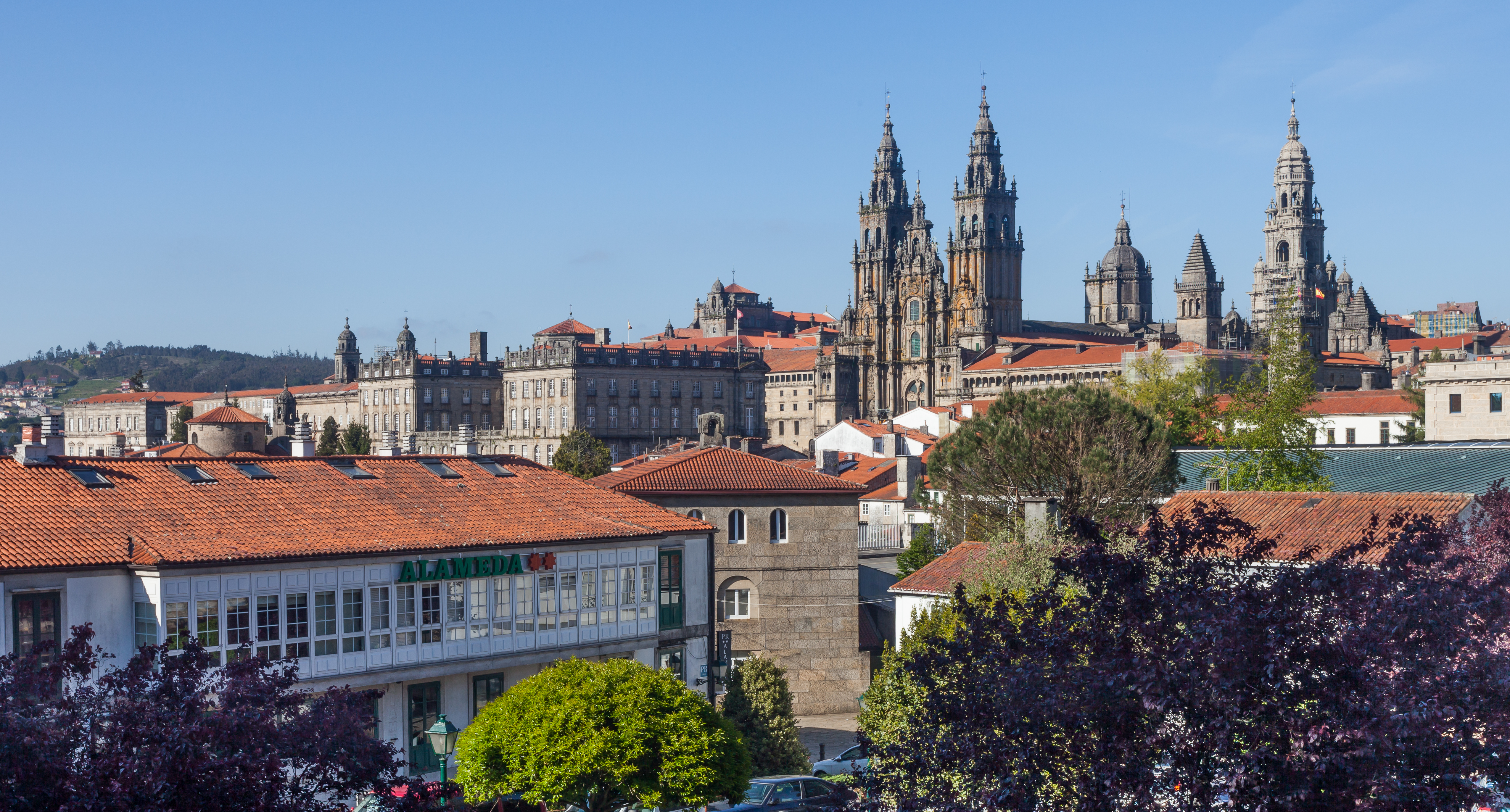
Figure 1: Santiago de Compostela. Cathedral and rear of the Manor House of Raxoi (Galicia, Spain). Source: BUGALLO (2013)
Site context
Santiago de Compostela is one of three case studies (alongside Aarhus and Amman) chosen to obtain data and to elaborate, perform and validate the proposed WATERUN methodology. These case studies have been selected according to different climate conditions, land use and level of implementation of measures for diffuse pollution, in order to validate the tools in different scenarios.
In Santiago, the project's Blue–Green Infrastructure deployment is concentrated in two principal industrial areas: Ptolomeo street in the Tambre Industrial Area and the Sionlla Industrial Park. The approach is grounded in Water-Sensitive Urban Design (WSUD) and Nature-Based Solutions (NBS) to jointly manage water quality, quantity, biodiversity and climate resilience.
WATERUN activities at this site
All four WATERUN tools were applied in Santiago. Detailed protocols, datasets and results are described in the corresponding tool factsheets:
- Tool 1 - Portable monitoring system to identify the presence of microplastics and PAHs in-situ - the PAHs and MPs sensors were validated with real water runoff samples during the summer (July 2025) and winter (January 2026) seasons. The bioremediation treatment train at the Sionlla Industrial Park (influent, two intermediate points and effluent) and the biofiltration system at Ptolomeo street in the Tambre Industrial estate were sampled, both during dry weather and rainy conditions, and the collected samples were analysed for PAHs and MPs presence.
- Tool 2 - CleanCityCover was parameterised for four sub-areas in the city: Area 1 in the heart of the city close to the Cathedral (commercial land use); Area 2, a residential area north of the city with a road of medium traffic; Area 3, a commercial area close to the national highway; and Area 4, one of the WATERUN case study areas, of commercial land use and located to the north-east of the city, with roads of significant traffic volume.
- Tool 3 - MUST-B Planning Toolkit was applied to the Cancelón catchment to investigate how urban blocks can be used as hydrological response units to support early-stage planning of low-impact development (LID) measures, focusing on their potential to reduce combined sewer overflow (CSO) volumes under realistic spatial constraints. The analysis applies block-scale LID pre-sizing and routes runoff through a synthetic combined sewer network to evaluate CSO behaviour under design storms derived from IDF analysis.
- Tool 4 - Decision support system based on health and environmental risk: implemented to assess both microbiological and chemical risks associated with the discharge and reuse of stormwater collected at the Sionlla Park bioretention system. The analysis was based on monitored physicochemical and microbiological data measured at the biofilter influent and effluent, and was applied to evaluate microbiological risks for stormwater reuse scenarios (QMRA), assess compliance with EU Regulation 2020/741 for agricultural irrigation based on E. coli concentrations, evaluate chemical risks for phenanthrene (assumed to be the most relevant PAH contaminant), and evaluate compliance with Directive (EU) 2024/3019 based on total nitrogen (TN) and COD measured concentrations.
Blue-Green Infrastructure deployed in Santiago
To assess the performance of the blue-green infrastructure, four main groups of parameters were considered: (i) hydrological parameters; (ii) hydraulic parameters; (iii) water quality parameters; and (iv) road-deposited sediments (RDS). These data enable the generation of hydrographs and pollutographs which are used to evaluate the performance, environmental life cycle, and techno-economic feasibility of the WATERUN methodology for urban runoff management using blue-green infrastructure.
Ptolomeo street — Biofiltration area (Tambre Industrial Area)
The biofiltration area treats runoff from a 4,300 m² catchment including transit and parking areas. The filtration capacity of the technique (which evolves over time) determines the treated flow rate. The detention volume (approximately 61 m³) ensures that the most contaminated runoff volume is captured and filtered over a period exceeding 12 hours. During heavy rainfall events, once the 'first flush' has been captured, the flow is diverted into a control chamber located upstream of the system. Existing vegetation also plays a role in the hydrological processes through evapotranspiration and the gradual clogging of the upper filter layer. The biofiltration medium is sand (10 cm) and filter substrate (80 cm). The treated water is stored in the lower part of the system within specially designed modular plastic units, allowing its potential use (e.g. for irrigation or street cleaning).
Sionlla Industrial Park — Active filtration unit
Runoff from part of the industrial park, covering approximately 40 ha (including roads, car parks, and storage areas), is directed through a network of collectors to a sedimentation pond. To enhance the treatment of contaminated runoff and assess its potential use, an active filtration system was installed to treat a portion of the flow leaving the pond.
The pilot technique consists of two filters (6.7 m² each) with two types of filter media: sand (50 cm) and sand (50 cm) combined with a layer of crushed bivalve shells (10 cm). The filters work in line when the water level in the sedimentation pond exceeds a certain level. The runoff treatment process therefore consists of two stages: (i) a sedimentation pond retains coarse and floating solids, removing suspended solids from the runoff; and (ii) a filtration system using sand or sand combined with additional active media layers, which, due to their specific grain sizes, enhance contaminant removal and provide some adsorption capacity for dissolved pollutants, particularly heavy metals. Sand filters are well known for their high efficiency in removing sediments, chemical oxygen demand (COD), particle-bound heavy metals, and other micropollutants associated with suspended solids.
Sionlla Industrial Park — Bioremediation unit
This unit is fed with runoff water by the same point as the active filtration unit. It is composed of two coupled-in-series, vertical and horizontal biofilters. The feeding pump works two times a day to feed the system. The first step of the overall system is a settler (400 × 340 cm) addressed mainly to remove solid particles. The next stage is a bioremediation system designed with the capability of depolluting both the highly polluted first flush and the following lower-loaded runoff water. The prototype design was conceptualised for treating approximately 10–15 m³/day. The previously settled water is irrigated from the top to the bottom of the vertical filter. In this vertical stage, a 340 × 400 cm vertical filter was constructed and planted with phytoremediation specialised species (Phragmites australis), where most of the pollution is degraded.
In the horizontal phase, a polishing step based on biofiltration strips provides a polished quality to the outlet water. This treatment was conceptualised as a horizontal wetland (2,200 × 400 cm). At 640 cm and 1,380 cm length, measuring from the left side, two 100 cm strips were installed to provide further bioremediation treatment, planted with Phragmites australis and Rumex hydrolapathum.
Stormwater treatment capability and lessons learned
- Capability (mechanisms). Blue-green infrastructure treats industrial runoff via sedimentation, filtration, adsorption/ion exchange and biodegradation/plant uptake, with both documented and analyzed effectiveness for TSS, nutrients, metals and hydrocarbons — performance depends on design, loading, and maintenance. More than 90% of turbidity and solids will be removed and a slight polish of organic carbon is expectable. Moreover, the elimination of pathogens and PAH can be up to 100%.
- Indicative evidence (collected results and literature). Studies report substantial reductions for nutrients and metals in raingardens/biofiltration under routine events (often >50%, with higher values observed in some cases), though media leaching (e.g., alkalinity) can occur and should be monitored. Under extreme storms, performance variability increases; long-term monitoring and adaptive design are recommended to ensure resilience.
- Lessons learned (for Santiago and replication):
- Installing NBS has been offered as a cost-effective solution for treating first flushes and sewer overloads in industrial parks.
- Essential, but not intensive in any case, maintenance was needed for maintaining the quality adequation of the water.
- Apart from the NBS themselves, a habitual checkup of the water infrastructures (underdrains, bypasses, check-dams) is requested to cope with variable industrial loads and intense events.
- Co-creation with administrative authorities improves the feasibility and deployment over time; governance and financing models for NBS.
- To follow the evolution of the risks related to the pricing of building materials. Depending on the conjunctural circumstances, those can be extremely impacted.
Cathedral and rear of the Manor House of Raxoi, Santiago de Compostela, Galicia (Spain)
Deliverable D3.4. Manual of the planning tool to model the reduction of pollution runoff, CSO and pollution discharge to water bodies
Manual of the MUST-B block-based planning toolkit, applied in the Cancelón catchment of Santiago to assess the potential of decentralised low-impact development measures to reduce combined sewer overflow volumes. This document is not currently publicly available.
WATERUN CONSORTIUM (2026): Deliverable D3.4. Manual of the planning tool to model the reduction of pollution runoff, CSO and pollution discharge to water bodies. In: WATERUN Project, EU Horizon Europe Grant Agreement No. 101060922. Lead Beneficiary: UFZ.:Deliverable D5.3. Decision-support framework and mapping tool for water quality and risk analysis provision
Report with the description of the final implementation of the risk-based DSS in the CS of Santiago and Aarhus, including the algorithms for QMRA and QCRA analysis and the display of results in the GIS-based mapping tool for different reuse scenarios. This document is not currently publicly available.
WATERUN CONSORTIUM (2026): Deliverable D5.3. Decision-support framework and mapping tool for water quality and risk analysis provision. WATERUN Project, EU Horizon Europe Grant Agreement No. 101060922..Deliverable D5.4: Implementation of EWS for a safe UWR reuse and management
Report describing the development, configuration and complete structure of the Early Warning System, including outcomes of the performed simulations in the case studies of Santiago and Aarhus. This document is not currently publicly available
THE WATERUN CONSORTIUM (2022): Deliverable D5.4: Implementation of EWS for a safe UWR reuse and management. In: WATERUN Project, EU Horizon Europe Grant Agreement No. 101060922.:Deliverable D5.6. Guidance Document on WATERUN Tools for IUWMP Support
This document consolidates the working procedures and implementation protocols of the four WATERUN tools (PRODUCT1–PRODUCT4) and presents their application to the Santiago de Compostela, Aarhus and Amman case studies, including the Blue-Green Infrastructure deployed in the Tambre and Sionlla industrial areas of Santiago. This document is not currently publicly available.
WATERUN CONSORTIUM (2025): Deliverable D5.6. Guidance Document on WATERUN Tools for IUWMP Support. WATERUN Project, EU Horizon Europe Grant Agreement No. 101060922. Lead Beneficiary: UFZ.WATERUN Project
This is the official webpage of WATERUN, an EU-funded Horizon Europe research project focused on sustainable urban water runoff management. It develops innovative methodologies based on Water-Sensitive Urban Design (WSUD), offering cities both preventive and mitigation solutions for urban water challenges.
WATERUN.EU (2022): https://www.waterun.eu/ [Accessed: 15.04.2026]CleanCityCover tool (parameterised for Santiago de Compostela)
Shiny web application of the CleanCityCover tool parameterised for four sub-areas in Santiago de Compostela.
Technical University Berlin (n.d.): https://boneyj.shinyapps.io/app_Santiago/ [Accessed: 15.04.2026]