

Amman (Al-Zuhour catchment) represents a steep, topographically complex urban area characterised by rapid runoff generation and flash flooding during intense rainfall events. The existing stormwater system conveys runoff toward downstream storage and outfalls at the Al-Zuhour Triangle, where recent infrastructure upgrades, including a 2,100 m³ underground detention tank and a 750 m³ bioretention system, provide flood relief to downstream areas. Despite these measures, the catchment remains hydraulically challenging due to strong elevation gradients and fast flow concentration.
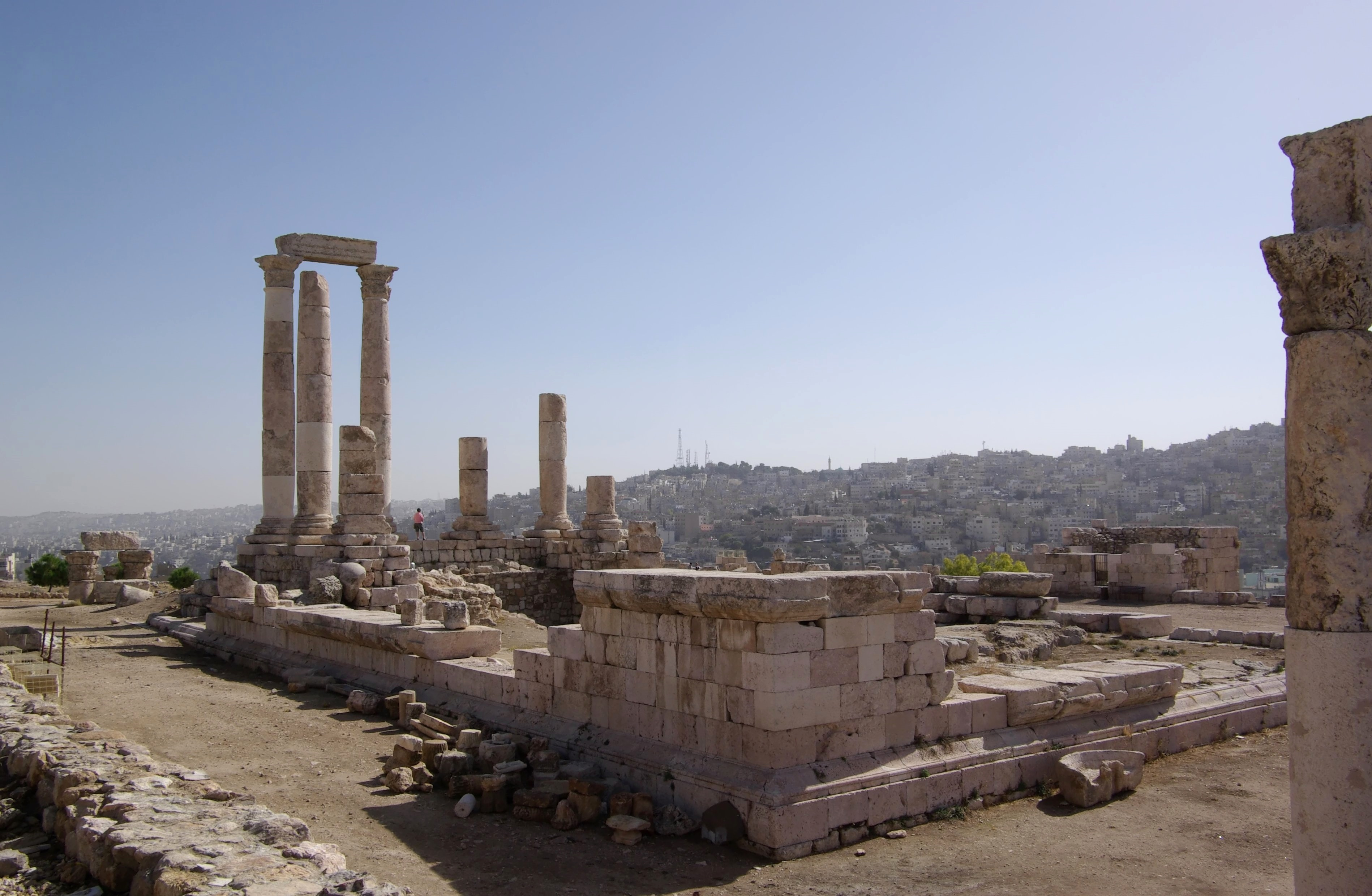
Figure 1: Ruins of the temple of Hercules (Amman, Jordan). Source: WERNER (2009)
Site context
Amman is one of three case studies (alongside Santiago de Compostela and Aarhus) chosen to obtain data and to elaborate, perform and validate the proposed WATERUN methodology. These case studies have been selected according to different climate conditions, land use and level of implementation of measures for diffuse pollution, in order to validate the tools in different scenarios.
Within WATERUN, the Amman case study applies a data-reduced, block-based representation to evaluate how decentralised interventions can supplement the existing system and reduce runoff pressures during design storms. No Blue-Green Infrastructure was deployed in Amman as part of WATERUN; the case study contribution is a planning-level analysis of the Al-Zuhour catchment using the MUST-B Planning Toolkit.
WATERUN activities at this site
Amman provided the application context for one of the four WATERUN tools. Detailed methodology, datasets and results are described in the corresponding tool factsheet:
- Tool 3 - MUST-B Planning Toolkit was applied with a data-reduced, block-based representation to evaluate how decentralised interventions can supplement the existing system and reduce runoff pressures during design storms. Results show that targeted block-scale measures significantly reduce surface flooding and downstream discharge, with performance improvements achieved even when combined with simplified network configurations. The analysis highlights that a limited number of blocks dominate runoff contributions, making targeted interventions more effective than uniform implementation. This case demonstrates how the toolkit supports early-stage screening in data-scarce and complex urban environments, identifying where decentralised measures provide the greatest added value to existing infrastructure.
Ruins of the temple of Hercules in Amman (Jordan)
Deliverable D3.4. Manual of the planning tool to model the reduction of pollution runoff, CSO and pollution discharge to water bodies
Manual of the MUST-B block-based planning toolkit, applied in the Cancelón catchment of Santiago to assess the potential of decentralised low-impact development measures to reduce combined sewer overflow volumes. This document is not currently publicly available.
WATERUN CONSORTIUM (2026): Deliverable D3.4. Manual of the planning tool to model the reduction of pollution runoff, CSO and pollution discharge to water bodies. In: WATERUN Project, EU Horizon Europe Grant Agreement No. 101060922. Lead Beneficiary: UFZ.:Deliverable D5.6. Guidance Document on WATERUN Tools for IUWMP Support
This document consolidates the working procedures and implementation protocols of the four WATERUN tools (PRODUCT1–PRODUCT4) and presents their application to the Santiago de Compostela, Aarhus and Amman case studies, including the Blue-Green Infrastructure deployed in the Tambre and Sionlla industrial areas of Santiago. This document is not currently publicly available.
WATERUN CONSORTIUM (2025): Deliverable D5.6. Guidance Document on WATERUN Tools for IUWMP Support. WATERUN Project, EU Horizon Europe Grant Agreement No. 101060922. Lead Beneficiary: UFZ.WATERUN Project
This is the official webpage of WATERUN, an EU-funded Horizon Europe research project focused on sustainable urban water runoff management. It develops innovative methodologies based on Water-Sensitive Urban Design (WSUD), offering cities both preventive and mitigation solutions for urban water challenges.
WATERUN.EU (2022): https://www.waterun.eu/ [Accessed: 15.04.2026]