

Compiled by: Johanna von Toggenburg, seecon international gmbh
Reviewed by: Dr. Darla N. Nickel, Berliner Wasserbetriebe
About this Toolbox
This toolbox is not official EU guidance. The IUWMP Journey presented in this Toolbox was developed by seecon within the WATERUN project. It offers one way of translating the Annex V requirements into a coherent planning process. The guide walks you through the four stages of preparing an IUWMP, from understanding your system to monitoring results.
It draws on:
- The Directive and Annex V themselves, which define the mandatory content of an IUWMP.
- Established urban drainage planning practice, in particular the SuDS Manual (WOODS BALLARD et al. 2015), the source–pathway–receptor framing, and risk-based catchment planning as practised under the Water Framework Directive.
- Existing drainage and wastewater planning frameworks from comparable jurisdictions, that provide practical precedents for each of the stages 1–4, such as:
- VSA Leitfaden GEP 2025 and Basel GEP (REGIERUNGSRAT BASEL-STADT 2012) in Switzerland,
- Statutory DWMP guidelines (DEFRA et al. 2025) and WFD risk assessment methodology (ENVIRONMENT AGENCY 2017) in the UK,
- France’s Plan d’action eaux pluviales (Ministère de la Transition écologique 2021),
- CSO planning guidance from the US EPA (1995) and MAINE DEP (1994).
- Relevant literature on stormwater pollution, nature-based solutions, and urban runoff modelling.
What are the specific requirements of the EU Directive 2024/3019
EU Directive 2024/3019 requires Integrated Urban Wastewater Management Plans (IUWMPs) for agglomerations of 100,000 p.e. and above by 31 December 2033, and for smaller agglomerations (10,000–100,000 p.e.) where stormwater poses identified risks, by 31 December 2039 (EUROPEAN PARLIAMENT & COUNCIL OF THE EU, 2024; hereafter Directive (EU) 2024/3019). The Directive sets a headline target: stormwater overflow should represent no more than 2% of your city’s annual dry-weather wastewater load, measured using BOD₅, COD, TOC and TSS (Directive (EU) 2024/3019).
Annex V sets out what the plan must contain, but the detailed methodology is still being worked out: the Commission's technical guidance is not expected before January 2028, and national rules will follow after that.
The stages of the IUWMP
The four stages translate this into actionable plans:
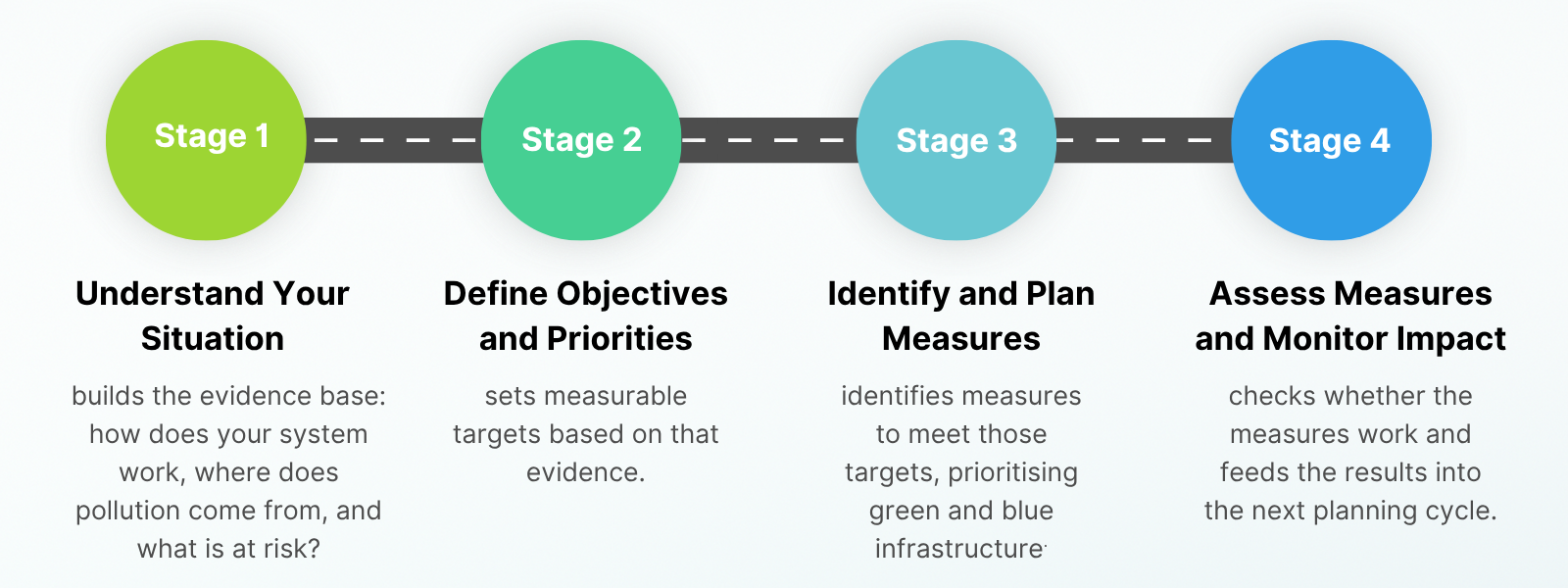
Figure 1: Overview of the IUWMP Stages. Source: OWN ELABORATION ( 2026)
The process is iterative. You may find that Stage 1 reveals data gaps that prevent you from setting credible targets in Stage 2. That is normal. Go back, fill the gaps, and continue.
How can I prepare for an effective IUWMP process? There are a few things to sort out before you start the technical work to prepare your IUWMP. The first three aim to set up your team and the last three to anchor your plan in the wider institutional landscape.
Who leads? Clarify who coordinates the IUWMP, who contributes data, and who formally approves the plan. This varies: it may be a municipal department, a utility, or a shared arrangement.
How will data flow? Poor data exchange between departments is consistently the main non-technical barrier. Agree on formats, responsibilities, and handover protocols before you start.
Who needs to be involved? Set up a standing stakeholder group with environmental agencies, operators, urban planning, roads and transport. You will need their input at every stage, not just at the beginning. Include departments not traditionally part of water management: urban planning, roads, parks and green spaces. Engagement is not a one-off consultation. Key decisions on which areas to prioritise, what risk is acceptable, which measures to implement all benefit from input by the people affected, the people implementing, and the people who will maintain the infrastructure.
Tackle organisational barriers early. Across cities and planning traditions, the main barriers are organisational: fragmented governance, inertia, staff turnover (STOPUP CONSORTIUM 2025). Address these at the start, not as an afterthought.
Connect to other municipal plans. The IUWMP does not exist in isolation. Link it to spatial planning, climate adaptation, flood risk management, biodiversity strategies, transport plans, and the WFD river basin management plan (EUROPEAN PARLIAMENT & COUNCIL OF THE EU 2000; EC 2021; DEMUZERE et al. 2014). Aim for it to become a binding planning instrument, not a document that sits on a shelf (REGIERUNGSRAT BASEL-STADT 2012).
Plan for institutional continuity. Urban water systems become visible mainly upon failure. Stakeholder engagement is easiest after a crisis but keeping it going requires deliberate effort. Document your decisions and their rationale. Make sure knowledge transfer survives staff changes.
----> You can directly continue to Stage 1 of the IUWMP Journey or go back to Resume. <----
Guidelines for Statutory Drainage and Wastewater Management Plans (DWMPs)
Mitigating and adapting to climate change: Multi-functional and multi-scale assessment of green urban infrastructure
Communication from the Commission to the European Parliament, the Council, the European Economic and Social Committee and the Committee of the Regions: EU Biodiversity Strategy for 2030: Bringing nature back into our lives
Directive 2000/60/EC (Water Framework Directive)
A Handbook of What Works: Solutions for the Local Implementation of the OECD Principles on Water Governance
This Regional Development Paper compiles and analyses 52 evolving water governance practices from cities, regions and basins in OECD and non-OECD countries to support sub-national implementation of the 12 Principles, identifying common pitfalls and lessons from both successful and challenging cases.
OECD (2024): A Handbook of What Works: Solutions for the Local Implementation of the OECD Principles on Water Governance. Paris: OECD Regional Development Papers, No. 72, OECD Publishing OECD Publishing. The Organisation for Economic Co-operation and Development (OECD). URL [Accessed: 20.04.2026] PDFDeliverable 4.5 – Urban Runoff Water Quality Management Plans (URUQ-MAP) for Each Case Study
This document is a research deliverable from the EU-funded STOPUP project focused on managing urban stormwater quality through a risk-based approach, developing tailored water quality management plans for several European case study cities. STOPUP emphasises identifying and mitigating pollution risks at source. The deliverable provides practical frameworks for assessing and controlling contaminants in urban runoff before they reach receiving water bodies.
STOPUP CONSORTIUM (2025): Deliverable 4.5 – Urban Runoff Water Quality Management Plans (URUQ-MAP) for Each Case Study. STOPUP Project, EU Horizon Europe Grant Agreement No. 101060428. Brussels: European Commission. URL [Accessed: 15.04.2026] PDFStakeholder Engagement for Inclusive Water Governance

Drawing on a survey of 215 stakeholders and 69 case studies worldwide, this report analyses the drivers, obstacles, mechanisms, costs and benefits of stakeholder engagement in the water sector and proposes six principles plus a Checklist for Public Action to guide governments in setting up enabling conditions for inclusive, outcome-oriented engagement.
OECD (2015): Stakeholder Engagement for Inclusive Water Governance. Paris: OECD Studies on Water, OECD Publishing. The Organisation for Economic Co-operation and Development (OECD). URL [Accessed: 20.04.2026] PDFDirective 2000/60/EC (Water Framework Directive)
Directive 2000/60/EC, also known as the Water Framework Directive, establishes the main legal framework for protecting and managing water resources across the European Union. It aims to prevent the deterioration of rivers, lakes, groundwater, and coastal waters while achieving “good” ecological and chemical status through sustainable water management. The directive requires EU Member States to manage water based on river basin districts, implement monitoring systems, and develop coordinated river basin management plans with public participation.
EUROPEAN PARLIAMENT & COUNCIL OF THE EU (2000): https://eur-lex.europa.eu/eli/dir/2000/60/oj [Accessed: 21.04.2026]Directive (EU) 2024/3019 on the Treatment of Urban Wastewater (Recast)
Directive (EU) 2024/3019 on the Treatment of Urban Wastewater modernizes the European Union’s framework for urban wastewater management as part of the EU Green Deal and Zero Pollution Action Plan. It introduces stricter requirements for wastewater collection and treatment, including the removal of nutrients, micropollutants, and emerging contaminants, while also promoting energy efficiency, water reuse, and circular economy approaches. The directive strengthens monitoring obligations, addresses stormwater overflows and public health surveillance, and applies the “polluter pays” principle to help finance advanced treatment technologies.
EUROPEAN PARLIAMENT & COUNCIL OF THE EU (2024): https://eur-lex.europa.eu/eli/dir/2024/3019/oj [Accessed: 27.04.2026]