The future of any business depends on the sustainability of water resources, which are increasingly under pressure. At the same time, consumer awareness and investors' increased scrutiny of corporate water risks have resulted in stronger expectations that companies should reveal their ‘water performance'. To respond effectively, the business community needs guidance, tools, standards and schemes to enable change to more sustainable practices. This is what this publication aims at providing.
WBCSD (2009): Water for Business. Initiatives guiding sustainable water management in the private sector. Geneva: WBDSC and IUCN URL [Accessed: 06.05.2019]Library
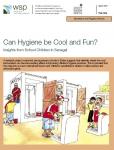
This research project conducted among primary schools in Dakar suggests that relatively simple low-cost interventions can have far-reaching effects in improving children’s hygiene practices. They take into account motivational factors and children’s sensitivities in relation to toilet practice and personal hygiene.
SIDIBE, M. and CURTIS, V. WSP (2007): Can hygiene be cool and fun?. Insights from school children in Senegal. Nairobi (Kenya): Water and Sanitation Programme (WSP) URL [Accessed: 06.05.2019]Academic discussion of the planned industrial symbiosis activities in Rotterdam Harbor around waste heat reuse and the unplanned industrial symbiosis and biogas activities in the forest industry of Oestergoetland, Sweden.
BAAS, L. (2011): Planning and Uncovering Industrial Symbiosis. Comparing the Rotterdam and Oestergoetland regions. In: Business Strategy & Environment, Special issue Industrial Ecology: Volume 20 , 428-440. URL [Accessed: 06.05.2019]This document explains how you can save water in beverage industry. It contains good strategies how to conserve water in different process steps.
UNEP (2007): Water Utilisation in African Beverage Industries: Current Practices and Prospects. Nairobi: UNEP, Division of Technology, Industry & Economics URL [Accessed: 06.05.2019]This presentation shows how hand washers can be made from tin cans and plastic bottles and cups. Hand washers of many types are easy to make and cost almost nothing. They should be fitted to every low cost (or high cost) toilet made.
SHANGWA, A. MORGAN, P. (2008): How to Make Simple Hand Washing Devices. Stockholm : Ecological Sanitation Research (EcoSanRes), Stockholm Environment Institute (SEI) URL [Accessed: 06.05.2019]Key messages of the world water development report No. 3 (2009). The World Water Development Report (WWDR), the only report of its kind, provides a triennial, comprehensive review and authoritative picture of the state of the world's freshwater resources.
WORLD WATER ASSESSMENT PROGRAMME WWAP (2009): Water in a Changing World - Overview of Key Messages of the United Nations World Water Development Report 3. Water in a Changing World. Paris and London: UNESCO & Earthscan URL [Accessed: 06.05.2019]This website from the Australian government provides information regarding wastewater reuse, reuse advantages and disadvantages, and treatment systems at the household level.
This document provides some easy adaptable water saving tips on household level.
NCDENR (2009): Water Efficiency Factsheet. Water Management Options. North Carolina: NCDENR URL [Accessed: 06.05.2019]A short article about the water consumption of urinals and how it can be reduced.
This guide published by the British Environmental Agency provides information for all aspects of greywater reuse at the household level. While some information is specific to the U.K., much of the guide can be useful in any location.
ENVIRONMENT AGENCY (2011): Greywater for Domestic Users: An Information Guide. Bristol, U.K.: Environment Agency URL [Accessed: 06.05.2019]The 2018 edition of the World Water Development Report (WWDR 2018) seeks to inform policy and decision-makers, inside and outside the water community, about the potential of nature-based solutions (NBS) to address contemporary water management challenges across all sectors, and particularly regarding water for agriculture, sustainable cities, disaster risk reduction and improving water quality.
(2018): The United Nations World Water Development Report 2018. United Nations Educational, Scientific and Cultural Organization (UNESCO) URL [Accessed: 06.05.2019] PDFThis paper explains how to use greywater at household level in order to counteract the water scarcity.
ALKHATIB R. Y. EDGERLY J. (2006): Water Conservation Techniques and Graywater Reuse at the Single Household Level. Fort Collins: Colorado State University URL [Accessed: 06.05.2019]An illustrated guide to building a bucket hand sink requiring a drill and plastic fittings.
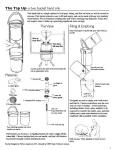
DANIELSSON, M. LIPPINCOTT, M. (2012): How to build a tap up hand sink. URL [Accessed: 06.05.2019]The H2O scenarios offer three stories about the role of business in relation to the growing issue of water in the world. These stories do not try to cover everything but attempt to bring to life a limited number of alternative future environments that will challenge our economic viability, social legitimacy, and global fitness in the marketplace.
WBCSD (2009): Business in the world of water: WBCSD Water Scenarios to 2025. Geneva: WBCSD URL [Accessed: 06.05.2019]A review of strategies for encouraging hand washing with soap in developing countries.
CURTIS, V. ; DANQUAH, L. ; AUNGER, R. (2009): Planned, motivated and habitual hygiene behavior: an eleven country review. In: Health Education Research, March 13: URL [Accessed: 06.05.2019]An academic review of industrial water reuse between mining industries in Australia. Barriers and triggers to cooperation are discussed.
BEERS, D. van ; CORDER, G. ; BOSSILKOV, A. ; BERKEL, R. van (2007): Industrial Symbiosis in the Australian Minerals Industry. In: Journal of Industrial Ecology : Volume 11 , 55-72. URL [Accessed: 06.05.2019]This document illustrates the water use in industry around the world.
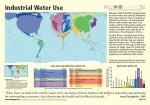
SASI GROUP (2006): Industrial Water Use. Sheffield: SASI Group URL [Accessed: 06.05.2019]Presentation with 60 slides on key issues in water saving at household level, containing backgrounds of decision making (policies and criteria) and a number of environmentally sound technologies storage, supply, use, reuse & recycling.
UNEP ; TU DELFT (2008): Every Drop Counts. PowerPoint Presentation. Osaka & Delft: United Nations Environment Programme (UNEP) and TU DELFT URL [Accessed: 06.05.2019]