This paper provides a very good understanding of the CHAST approach with its development and tools.
DE VREEDE, E. (2004): CHAST “Children’s Hygiene And Sanitation Training” In Somalia. The Netherlands: School Sanitation and Hygiene Education Symposium URL [Accessed: 26.04.2019]Library
Involving leaders: In order to raise awareness of the potential to use used toilet bags as fertilizer, demonstration plots were planted in Mymensingh Pourashava, Bangladesh. In one picture, a community leader from Kalibari community helps plant a lemon tree. In another one, the Mayor of Mymensingh Pourashava speaking to the Malgudam community after creating the demonstration plot. Both are pictures are from SuSanA on Flickr
Web page of the International Water and Sanitation Centre (IRC) with several publications on water supply systems operation and maintenance.
Cuerpos de Conservación Mexicanos, A.C. Young People conducting Environmental Tracking and Assessment for Health in the Yucatan Hydrological Basin. Short article that describes the participation of youth in a water-monitoring program in Yucatan, Mexico.
This Australian water education toolkit provides hundreds of water education resources. The Toolkit can assist teachers and schools to access national, state, territory, regional and urban water resources.
WaterAid presents country information sheets, which are good teaching and research materials for both the classroom and the home. Development issue sheets provide information on water related issues in the developing world. They are equally readable for pupils and teachers alike and their glossy format makes them an invaluable educational tool.
Language: Spanish
Case study of collaboration between the US EPA and the Earth Conservation Corps, a youth led organization, in protecting and cleaning the Anacostia Watershed in Washington DC, USA.
U.S. Environmental Protection Agency (2008): Youth Lead Community Efforts Toward a Cleaner, Greener Anacostia Watershed. URL [Accessed: 25.04.2019]This website provides information on Solar Cookers International (SCI), an organisation that began a two-year pilot project in 2007 to increase water quality awareness and to introduce the safe water packages and portable microbiology laboratory to communities in Western Kenya.
A comprehensive Guidebook to Environmental Health that helps promoters, development workers, educators, activists and community leaders take charge of their communities´ environmental health. Published by Hersperian Foundation the editors of the rural health bible “Where there is no Doctor”
CONANT, J. FADEM, P. (2008): A Community Guide to Environmental Health. Berkeley, CA: Hesperian Foundation URL [Accessed: 25.04.2019]The factsheet gives an overview on issues which arise in school sanitation and hygiene education (SSHE). This includes situational analysis, the actors and their roles, gender and poverty-sensitive approach, elements of programme strategy and the key references.
On this website, some practical documents on multi-stakeholder work can be found, including many ideas how to prepare a stakeholder analysis, platform etc.
With its practical approach, this guide is very helpful for multi-stakeholder work in the water and sanitation sector.
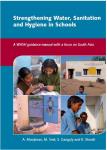
COULBY, H. (2009): A Guide to Multistakeholder Work. London: The Water Dialogues (Editor) URL [Accessed: 24.04.2019]This Manual is meant for managers and trainers involved in water, sanitation and hygiene (WASH) in school programmes operating at different levels, such as state/ province, district or block. It also provides many useful guidelines and activities that apply to similar programmes elsewhere. The manual can be used in various ways, such as to assist in the planning, designing, implementing and/or monitoring of schools programmes.
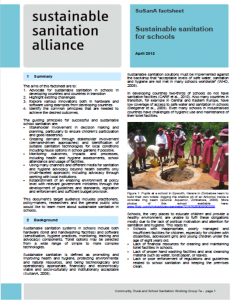
MOOIJMAN, A. SNEL, M. GANGULY, S. SHORDT, K. (2010): Strengthening Water, Sanitation and Hygiene in Schools – A WASH guidance manual with a focus on South Asia. (= Technical Paper Series No. 53 ). The Hague: IRC International Water and Sanitation Centre URL [Accessed: 22.04.2019]The aim of this Factsheet is to advocate for sustainable school sanitation by highlighting existing challenges, exploring the various innovations both in hardware and software from examples in Africa, Asia, and South America identifying the common principles that are needed for successful implementation.
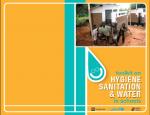
SUSANA (2012): Sustainable Sanitation for Schools. (= SuSanA Factsheet ). Sustainable Sanitation Alliance (SuSanA) URL [Accessed: 22.04.2019]Hygiene, Sanitation, and Water in Schools projects can create an enabling learning environment that contributes children's improved health, welfare, and learning performance. This Toolkit makes available information, resources, and tools that provide support to the preparation and implementation of hygiene, sanitation, and water in schools policies and projects.
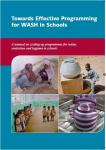
WORLD BANK ; UNICEF ; WSP (2001): Toolkit on Hygiene, Sanitation and Water in Schools. Washington, D.C.: The World Bank URL [Accessed: 22.04.2019]This manual deals with school water, sanitation and hygiene education. It describes many of the elements needed for scaling up programmes for water, sanitation and hygiene in schools while ensuring quality and sustainability. It contains many examples, most of which are drawn from a UNICEF-IRC pilot study for School Sanitation and Hygiene Education (SSHE) carried out in six countries (Burkina Faso, Colombia, Nepal, Nicaragua, Vietnam, and Zambia).
IRC (2007): Towards Effective Programming for WASH in Schools: A manual on scaling up programmes for water, sanitation and hygiene in schools . (= Technical Paper Series No. 48 ). Delft: IRC International Water and Sanitation Centre URL [Accessed: 22.04.2019]