This presentation describes the main dimensions of CSR as well as disadvantages and advantages.
HEIMANN, G (2008): Corporate Social Responsibility Global Standards & Policies in Practice. The Liberian International Ship & Corporate Registry URL [Accessed: 29.04.2019]Library
This is a paper which shows how to guarantee adequate and affordable water and sanitation services for vulnerable households. In the example of Chile, where the public authorities determine how the subsidy is applied, but mostly private companies deliver the service — under a scheme with built-in incentives to ensure cost-effective service delivery by the companies and low wastage by the customers.
GOMEZ-LOBO, A. (2001): Infrastructure Incentive-Based Subsidies. Designing Output-Based Subsidies for Water Consumption. Washington DC: The World Bank URL [Accessed: 29.04.2019]Unilever Indonesia has a factory in East Java, 5km from the Brantas river. The river becomes heavily polluted from local industries as it passes through Surabaya. In 2001, Unilever 'adopted' four riverside villages and with local actors improved basic communal sanitation, created a household waste management process and introduced a 'greening' programme.
CSR Europe (2001): Cleaning up the Brantas River, Indonesia. Brussels: CSR Europe URL [Accessed: 29.04.2019]Over 100 years of industrial activity has gravely polluted the soil around several Umicore sites. Today, Umicore wants to end the practice of passing on this inheritance of previous generations to the next and undertakes a large-scale sanitation project of the soil and groundwater on and around its four sites in Flanders.
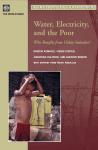
CSR Europe (2004): Covenant on Soil and Groundwater Sanitation. Government and Corporation Cooperating for a Healthier Environment. Brussels: CRS Europe URL [Accessed: 29.04.2019]This book systematically examines the targeting performance of consumer utility subsidies in 32 programs from 13 water utilities as well as a similar sample of electricity utilities. Most of the programs involve volume-based subsidies, which are common in the water sector.
KOMIVES, K. FOSTER, V. HALPERN, J. WODON, Q. (2005): Water, Electricity, and the Poor: Who Benefits from Utility Subsidies? . Washington DC: The World Bank URL [Accessed: 29.04.2019] PDFThis report is a comprehensive analysis of the data and information collected for the ‘Study on the Nepalese Private Sector’s Involvement in Water and Sanitation’. The main aim of this study was to understand the private sector’s willingness to partner up with development sector for water and sanitation issues as part of their CSR activities.
NEPALI, N ; SHRESTHA, R. (2008): Report On The Study of Nepalese Private Sector’s Involvement in Water and Sanitation . In: UN HABITAT Water for Asian Cities Programme Nepal: URL [Accessed: 29.04.2019]This is a publication describing the different faces of subsidies. However, it is mainly written from the sanitation point of view.
EVANS, B. VOORDEN, C. van der PEAL, A. (2009): Public Funding for Sanitation. The many Faces of Sanitation Subsidies. Geneva: Water Supply and Sanitation Collaborative Council URL [Accessed: 29.04.2019] PDFThis publication is aimed at creating awareness on the particular characteristics of CSR in Asia and points towards the challenges that businesses will have to deal with when operating in the region. As with other regions, CSR in Asia must address Asian challenges and the priorities of Asian stakeholders.
CSR ASIA (2009): CSR in Asia: the Real Picture. Lloyd’s Register Quality Assurance (LRQA) URL [Accessed: 29.04.2019]The International Institute for Sustainable Development’s Global Subsidies Initiative (GSI) is a project designed to put the spotlight on subsidies and the corrosive effects they can have on environmental quality, economic development and governance.
Since the 1980s, the Swiss federal government has actively pursued a policy to reduce the emission of pollutants from heating systems. The program bases upon three measures, which are regulatory in nature: emission thresholds, systems inspections with permits and heating controls.
KAUFMANN-HAYOZ, R. BAETTIG, C. BRUPPACHER, S. DEFILA, R. DI GIULIO, A. FLURY-KLEUBER, P. FRIEDERICH, U. GARBELY, M. JAEGGI, C. JEGEN, M. MOSLER, H.J. MUELLER, A. NORTH, N. ULLI-BEER, S. WICHTERMANN, J. (2001): A Typology of Tools for Building Sustainability Strategies. In: KAUFMANN-HAYOZ, R. ; GUTSCHER, H. (2001): Changing Things – Moving People. Strategies for Promoting Sustainable Development at the Local Level. Basel: 33-108. URL [Accessed: 29.04.2019]This guide provides a detailed description of the approach and his related core elements. The seven-step approach guides the reader and user through all important aspects of the PHAST planning process. Furthermore, important participatory methods for planning activities are described and training materials are included.
WHO (1998): PHAST Step-by-Step Guide: A Participatory Approach for the Control of Diarrhoeal Disease. Geneva: World Health Organisation WHO URL [Accessed: 26.04.2019]This paper provides a very good understanding of the CHAST approach with its development and tools.
DE VREEDE, E. (2004): CHAST “Children’s Hygiene And Sanitation Training” In Somalia. The Netherlands: School Sanitation and Hygiene Education Symposium URL [Accessed: 26.04.2019]Involving leaders: In order to raise awareness of the potential to use used toilet bags as fertilizer, demonstration plots were planted in Mymensingh Pourashava, Bangladesh. In one picture, a community leader from Kalibari community helps plant a lemon tree. In another one, the Mayor of Mymensingh Pourashava speaking to the Malgudam community after creating the demonstration plot. Both are pictures are from SuSanA on Flickr
Web page of the International Water and Sanitation Centre (IRC) with several publications on water supply systems operation and maintenance.
A site containing more than 150 curricula to educate young people about water issues (English) - ranging from acid rain to wise water use.
This factsheet book is a compilation of 13 thematic factsheets which were produced by the eleven SuSanA working groups (WGs): WG1 - Capacity development; WG 2 - Finance and economics; WG 3 - Renewable energies and climate change; WG 4 - Sanitation systems, technology options, hygiene and health; WG 5 - Food security and productive sanitation systems; WG 6 - Cities and planning; WG 7 - Community, rural and schools (with gender and social aspects); WG 8 - Emergency and reconstruction situations; WG 9 - Sanitation as a business and public awareness; WG 10 - Operation and maintenance; WG 11 - Groundwater Protection. What makes these factsheets special is that they are multi-authored by people from different organisations and by free-lance consultants. The factsheets were developed in a long process involving many discussions and review loops which were mostly carried out in public, e.g. at working group meetings, with the working group mailing lists or, since July 2011, also in the open SuSanA discussion forum.
MUENCH, E. von ; INGLE, R. ; MBALO, D ; KAPPAUF, L. (2012): Compilation of 13 Factsheets on Key Sustainable Sanitation Topics. Eschborn: Deutsche Gesellschaft für Internationale Zusammenarbeit (GIZ) GmbH URL [Accessed: 26.04.2019]WaterNet is a regional network of university departments and research and training institutes specialising in water. The network offers training, education, research and outreach by harnessing the complementary strengths of member institutions in the region and elsewhere. You can register for a newsletter and as a member you can log in for more information and networking.