Example - This site by the city of Longmont describes prohibitions for storm drain discharges directly to the river without treatment.
Library
This paper gives an overview of the water use on household level in Colorado. Furthermore, the document contains some water saving advices.
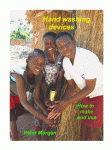
WASKOM, R. NEIBAUER, M. (2014): Water Conservation In and Around the Home. Colorado: Colorado State University. Fact Sheet No. 9.952. Consumer Series/Housing URL [Accessed: 06.05.2019]The information in this simple booklet has been accumulated over many years by the writer The school is perhaps the very best place with a special focus on promoting the importance of hand washing and teaching the simplest methods of making hand washers at schools.
MORGAN, P. (2011): Hand Washing Devices. How to Make and Use. Zimbabwe: Aquamor Pvt Ltd. URL [Accessed: 06.05.2019]The focus of this book is efficient water use in urban and domestic environments and the context is decision making about sustainable development of human settlements.
UNEP (2008): Every drop counts. Environmental sound technologies for urban and domestic water use efficiency. Osaka: United Nations Environment Programme (UNEP). URL [Accessed: 06.05.2019]This publication analyses the question whether water safety approaches can be implemented with the involvement of schools, and whether the approach can be used in order to mobilize the community for minimizing water related health risks. It describes the results and experiences from a case study in Romania, draws conclusions from this and discusses future perspectives of WSP.
SAMWEL, M. JORRITSMA, F. RADU, O. (2006): Lessons from Water Safety Plans for small-scale water supply systems as developed by schools in Romania. Utrecht, Annemasse Cedex, Munich: Women in Europe for a Common Future (WECF) URL [Accessed: 06.05.2019]This toolkit includes tools and resources to help hygiene advocates ensure that handwashing with soap is recognized as critical to health and development. It is designed to help users develop the ideas, tools, and messages to advocate to specific audiences to take action to promote and facilitate handwashing, to integrate handwashing messaging into existing advocacy campaigns and messages, and to engage others to advocate for handwashing.
GHP (2018): Clean Hands for All: A toolkit for Hygiene Advocacy. Global Handwashing Partnership (GHP) URL [Accessed: 06.05.2019] PDFPractical advice for starting a nationwide hand washing promotion campaign. Covers everything from financing the campaign to understanding the motivations of users.
WORLD BANK (2005): Hand washing Handbook: A guide to developing hygiene promotion program to increase hand washing with soap. Washington D.C.: World Bank URL [Accessed: 06.05.2019]The future of any business depends on the sustainability of water resources, which are increasingly under pressure. At the same time, consumer awareness and investors' increased scrutiny of corporate water risks have resulted in stronger expectations that companies should reveal their ‘water performance'. To respond effectively, the business community needs guidance, tools, standards and schemes to enable change to more sustainable practices. This is what this publication aims at providing.
WBCSD (2009): Water for Business. Initiatives guiding sustainable water management in the private sector. Geneva: WBDSC and IUCN URL [Accessed: 06.05.2019]This document explains how you can save water in beverage industry. It contains good strategies how to conserve water in different process steps.
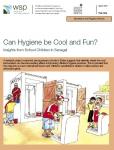
UNEP (2007): Water Utilisation in African Beverage Industries: Current Practices and Prospects. Nairobi: UNEP, Division of Technology, Industry & Economics URL [Accessed: 06.05.2019]This research project conducted among primary schools in Dakar suggests that relatively simple low-cost interventions can have far-reaching effects in improving children’s hygiene practices. They take into account motivational factors and children’s sensitivities in relation to toilet practice and personal hygiene.
SIDIBE, M. and CURTIS, V. WSP (2007): Can hygiene be cool and fun?. Insights from school children in Senegal. Nairobi (Kenya): Water and Sanitation Programme (WSP) URL [Accessed: 06.05.2019]Academic discussion of the planned industrial symbiosis activities in Rotterdam Harbor around waste heat reuse and the unplanned industrial symbiosis and biogas activities in the forest industry of Oestergoetland, Sweden.
BAAS, L. (2011): Planning and Uncovering Industrial Symbiosis. Comparing the Rotterdam and Oestergoetland regions. In: Business Strategy & Environment, Special issue Industrial Ecology: Volume 20 , 428-440. URL [Accessed: 06.05.2019]The website of UN DESA (UN Department of Economic and Social Affaires) contains a section dedicated to water issues, including publications about water tariffs and subsidies in the provision of water services in developing countries.
This paper presents a case for removing metropolitan permanent water restrictions by 2012 in Australian cities. To achieve this goal, a water industry reform will need to be pursued on a number of fronts.
ALLEN CONSULTING (2007): Saying Goodbye to Permanent Water Restrictions in Australia's Cities. Key Priorities for Achieving Water Security. ALLEN CONSULTING URL [Accessed: 03.05.2019]This paper focuses on the role of prices in the water sector and how they can be used to promote equity, efficiency, and sustainability.
ROGERS, P. ; SILVA, R. de ; BATHIA, R. (2001): Water is an Economic Good: How to use Prices to Promote Equity, Efficiency, and Sustainability. In: Water Policy : Volume 4 , 1–17. URL [Accessed: 03.05.2019]This paper provides an excellent overview on financing and cost recovery for the water supply and sanitation services sector in rural and low-income urban areas of developing countries. The document contains also case studies and mini reviews of best publications on financing and cost recovery.
CARDONE, R. FONSECA, C. (2003): Financing and Cost Recovery. Delft (The Netherlands): IRC (International Water and Sanitation Centre). Thematic Overview Paper 7. URL [Accessed: 03.05.2019]This is an extended case study. The purpose of these water quality standards is to facilitate sovereign self-determination and the restoration and preservation of traditional hunting, fishing, gathering and cultural uses in, on and around tribal surface waters.
SRMT (2007): Water Quality Standards. Tribe of Indians Americans. New York: Saint Regis Mohawk Tribe (SRMT), Environment Division URL [Accessed: 03.05.2019]