This publication offers a complete overview of UDDT functions, design considerations, common operation and maintenance issues and generalised installation costs. Its focus is on applications in developing countries and countries in transition, although UDDTs are also applicable in developed countries.
RIECK, C. MUENCH, E. HOFFMANN, H. (2012): Technology Review of Urine-Diverting Dry Toilets (UDDTs). Overview on Design, Management, Maintenance and Costs. (= Technology Review ). Eschborn: German Agency for Technical Cooperation (GTZ) GmbH URL [Accessed: 11.05.2019]Library
The Wikipedia description of the terra preta soil.
The paper describes the bacterial diversity and community structures of a pristine forest soil and an anthropogenic terra preta from the Western Amazonian forest using molecular methods to identify the predominant phylogenetic groups. The survey provides a detailed analysis of the composition and structure of bacterial communities in terra preta anthrosols.
KIM, J. S. ; SPAROVEK, G. ; LONGO, R. M. ; MELO, W. J. de ; CROWLEY, D. (2007): Bacterial diversity of terra preta and pristine forest soil from the Western Amazon. In: Soil Biology and Biochemistry: Volume 39 , 684-690. URL [Accessed: 11.05.2019]This poster illustrates how to transform faecal waste to usable compost.
NETWAS (n.y): Primary and Secondary Processing of Ecosan By-Products. Kampala: Network for Water and Sanitation (NETWAS) URL [Accessed: 11.05.2019]The objective of this study was to investigate the suitability of terra preta sanitation (TPS) systems as an alternative sanitation option. The effects of lactic-aid conditions in urine-separation dry toilets and a subsequent treatment by vermicomposting are assessed. Research focused on analysing standard chemical and biochemical properties of the toilet products to evaluate their stability and maturity, and establish nutrient status.
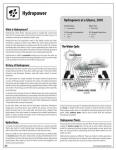
FACTURA, H. ; BETTENDORF, T. ; BUZIE, C. ; PIEPLOW, H. ; RECKIN, J. ; OTTERPOHL, R. (2010): Terra Preta Sanitation: re-discovered from an ancient Amazonian civilisation - integrating sanitation, bio-waste management and agriculture. In: Water Science and Technology, accepted for publication: URL [Accessed: 10.05.2019]In this document, the Need project describes the large-scale hydropower plants and summarizes technical aspects as well as some economic and environmental aspects.
THE NEED PROJECT (2011): Hydropower Fact Sheet. Manassas, Virginia: The Need Project URL [Accessed: 09.05.2019]This manual, Guidelines for Human Settlement Planning and Design, provides a guiding vision for South African settlement formation, addressing the qualities that should be sought after in our human settlements, and providing guidance on how these can be achieved. The publication has been developed over a period of more than two years through a participative process in which stakeholders and experts from various disciplines were involved.
CSIR (2000): Guidelines for Human Settlement Planning and Design. Pretoria: CSIR Building and Construction Technology, Vol II, Chapter 6, pp.1-39 URL [Accessed: 09.05.2019]This report presents the results of a study aiming to construct a model for the transfer and adaptation of watermills from Britain to Australia in the nineteenth century. It provides a model and a number of factors to consider when a country decides to import a technology from another country.
PEARSON, W. (1996): Water Power in Dry Continent: The Transfer of Watermill Technology from Britain to Australia in the Nineteenth Century. In: Australasian Historical Archaeology: Volume 14 , 46-62. URL [Accessed: 09.05.2019]This report describes the development of local capacities in planning, design, implementation and operation of Small-scale hydropower systems at local and sub-regional scale in Burundi, Ethiopia, Kenya, Rwanda, Tanzania and Uganda.
KASSANA, L. MASHAURI, D. CHAMBEGA, D.G. MKILAHA, I.S.N. MHILU, C.F. NGELEJA, J. NGELEJA, J. MAKHANU, S. CASIMIR, M. KIZZA, M. MUNIIMA, K. MTALO, F. PETRY, B. (2005): Small Scale Hydropower for Rural Development. Cairo, Egypt: Nile Basin Capacity Building Network (NBCBN) URL [Accessed: 09.05.2019]This publication is a manual about constructed wetlands used for stormwater management.
METROCOUNCIL (n.y): Constructed Wetlands: Stormwater Wetlands. Saint Paul: Metropolitan Council URL [Accessed: 09.05.2019]This presentation gives information on micro hydro projects, which includes definitions, power calculations and some technical aspects to civil works.
EERE (2011): Types of Hydro Power Facilities. Washington, D.C.: U.S. Department of Energy, Office of Energy Efficiency & Renewable Energy (EERE) URL [Accessed: 09.05.2019]This guide provides a concise technical guide to build a micro hydro system, with sufficient technological knowledge. Aspects such as capacity, equipment and permissions are discussed in this document. This report provides a special section on water wheels.
HILL, P. (2009): How to Develop a Micro Hydro Scheme. West Yorks, U.K.: Alternative Technology Centre URL [Accessed: 09.05.2019]The guideline document (the “Toolbox”) is intended to provide the above mentioned groups with a selection of methods and tools to mitigate the effects of stormwater run-off from countryside living areas. All these councils are committed to a policy of avoiding, remedying or mitigating the adverse effects from stormwater discharges on the receiving environment to the greatest extent possible.
ARC (2010): The Countryside Living Toolbox: A Guide for the Management of Stormwater Discharges in Countryside Living Areas in the Auckland Region. Auckland: Auckland Regional Council (ARC) URL [Accessed: 09.05.2019]This document presents general specifications on low head and small-scale hydroelectric power plants.
TOSHIBA (2011): Hydro-eKids Micro Hydro Power Generating Equipment. Tokyo: Toshiba Corporation URL [Accessed: 09.05.2019]This book describes in an easy-to-understand and picture-based way how to construct three different low cost sanitation solutions, namely arborloos, fossa alterna and urine diversion toilets.
MORGAN, P. EcoSanRes (2007): Toilets That Make Compost . Stockholm: Stockholm Environment Institute URL [Accessed: 09.05.2019]The present research paper discusses the health, environment and agriculture benefits of micro hydropower to final users in Nepal.
ANUP, G. ; BRYCESON, I. ; SANG-EUN, O. (2011): Micro-Hydropower: A Promising Decentralized Renewable Technology and its Impact on Rural Livelihoods. In: Scientific Research and Essays : Volume 6 , 1240-1248. URL [Accessed: 09.05.2019]The present report discusses a questionnaire approach to determine the effects of hydropower in terms of environmental and social impacts and the efficiency of applied mitigation measures implemented worldwide. A key element of this work was a questionnaire survey based on five topics: identification of key issues, verification of impacts, mitigation measures and regulatory approval process.
INTERNATIONAL ENERGY AGENCY (2000): Hydropower and the Environment: Survey of the Environmental and Social Impacts and the effectiveness of Mitigation Measures in Hydropower Development. Paris: International Energy Agency (IEA) URL [Accessed: 09.05.2019]