Critical article by environmental activist and Stockholm Water Price Laureate Sunita Narain, on why it is mindless to waste so much clean water to flush away excreta.
NARAIN, S. (2002): The Flush Toilet is Ecologically Mindless. In: Down to Earth: Volume 19 URL [Accessed: 12.05.2019]Library
This case study investigates whether toilet bags are a feasible sanitation alternative for poor urban settlements including the socio-cultural acceptance.
GTZ (2009): Results of a medium-scale trial of single-use, self-sanitising toilet bags in poor urban settlements in Bangladesh. Eschborn: German Agency for Technical Cooperation (GTZ) GmbH URL [Accessed: 12.05.2019]This study aims at finding out if the Peepoo meets the expectations and perceptions of end users, if it is biodegradable and also if it is economically viable in terms of generating organic manure for sale.
JAC (2009): Impact Assessment Report on the Peepoo bags, Silanga Village, Kibera, Nairobi-Kenya. Nairobi: Jean Africa Consultants (JAC) URL [Accessed: 12.05.2019]Fossa alterna with a urine diversion component (optional). Image from Flickr
Factsheet including information related to microbial die-off rates and health risks.
U.S. EPA (1999): Water Efficiency Technology Fact Sheet - Composting Toilets. Washington D.C. (USA): United States Environmental Protection Agency (US EPA), Office of Water. EPA 832-F-99-066 URL [Accessed: 12.05.2019]This GIZ publication explains the design, use and operational requirements of composting toilets. Ample examples for composting toilets from around the world are included in the publication to show that these types of toilets have a wide range of applications under a variety of circumstances (for wealthy or poor people; for cold, hot, wet or dry climates; for urban or rural settings). The appendix contains a listing of suppliers.
BERGER, W. (2011): Technology Review of Composting Toilets. Eschborn: Deutsche Gesellschaft für Internationale Zusammenarbeit (GIZ) URL [Accessed: 12.05.2019]This case study is about a demonstration project in the headquarters of GTZ in Eschborn, Germany. The project consists of 50 urine-diversion flush toilets, 23 waterless urinals and 10 m³ urine storage tank.
WINKER, M. SADOUN, A. (2011): Urine and brownwater separation at the GTZ main office building, Eschborn, Germany. (= SuSanA - Case Studies ). Eschborn: Sustainable Sanitation Alliance (SuSanA) URL [Accessed: 12.05.2019]End-product from 16 public mixed latrine style composting toilets (CTs) at 12 sites between 50 and 2100 m.a.s.l. in Western North America was tested in order to evaluate the effect of composting variables on compost quality and hygiene.
HILL, G. B. ; BALDWIN, S. A. ; VINNERAAS, B. (2013): Composting Toilets a Misnomer: Excessive Ammonia from Urine Inhibits Microbial Activity yet Is Insufficient in Sanitizing the End-Product. In: Journal of Environmental Management: Volume 119 , 29-35. URL [Accessed: 12.05.2019]From 2000 to 2006, the cross-cutting project Novaquatis explored the potential of urine source separation – also known as NoMix technology. Novaquatis comprises nine work packages, largely organized around the various stages of a nutrient cycle (e.g. user acceptation, sanitary technologies, storage and transport, urine treatment and fertiliser production, micropollutants in urine, urine-based fertilisers). The final report contains the results of all working packages as well as a practical guide for interested NoMix user.
LARSEN, T. A. LIENERT, J. (2007): Novaquatis final report. NoMix – A new approach to urban water management. Duebendorf: Swiss Federal Institute for Environmental Science (EAWAG) URL [Accessed: 12.05.2019]Critical article on the sustainability of burning biomass to produce terra preta for climate change mitigation.
KLEINER, K. (2009): The bright prospect of biochar. In: Nature reports climate change: Volume 3 , 72-74. URL [Accessed: 11.05.2019]Many people in developing countries rely upon untreated groundwater supplies for their drinking water (e.g. from drilled boreholes, tube wells, dug wells or springs). The introduction of on-site sanitation systems might lead to groundwater contamination. The purpose of this manual is to provide guidance on how to assess and reduce the risk of contamination of groundwater supplies from on-site sanitation systems and is aimed at those responsible for planning low cost water supply and sanitation schemes.
ARGOSS (2001): Guidelines for Assessing the Risk to Groundwater from On-Site Sanitation. (= Commissioned Report , 142 ). Keyworth: British Geological Survey URL [Accessed: 11.05.2019]This presentation introduces the new and innovative concept of the addition of charcoal; lacto-fermentation and subsequent vermicomposting to treat the products of urine diversion dry toilets. The new process is inspired by the practices of the pre-Colombian culture in the Amazonian region that produced highly fertile anthropogenic soil (terra preta).
OTTERPOHL, R. (n.y): a: Terra Preta Sanitation- full reuse in sanitation and bio-waste-management. Hamburg: Institute of Wastewater Management and Protection (aww), Technical University Hamburg-Harburg (TUHH) URL [Accessed: 11.05.2019]This paper gives a short overview on the historical background and the formation of terra preta in the Amazon region. The composition of terra preta and the importance of charcoal and other ingredients for the formation and their carbon sequestration capacity are discussed. There is an outlook on how to recreate this very useful and nutrient rich type of earth in a synthetic way by mentioning current sources and studies.
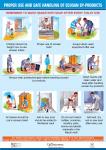
GLASER, B. ; HAUMAIER, L. ; GUGGENBERGER, G. ; ZECH, W. (2001): The ‘Terra Preta’ phenomenon: a model for sustainable agriculture in the humid tropics. In: Naturwissenschaften: Volume 88 , 37-41. URL [Accessed: 11.05.2019]This poster illustrates how to use Ecosan toilets and handle faecal compost in a safe way.
NETWAS (n.y): Proper Use and Safe Handling of Ecosan By-Products. Kampala: Network for Water and Sanitation (NETWAS) URL [Accessed: 11.05.2019]This article provides detailed information on terra preta, the historical background and the latest ideas and theories of creating a synthetic terra preta.
BALLIETT, A. (2007): Terra Preta. Magic Soil of the Lost Amazon. In: Acres U.S.A. The Voice of Eco-Agriculture: Volume 37 , 16-18. URL [Accessed: 11.05.2019]The paper provides information on the discoveries of terra preta at various regions within the Amazonas area. The different soils are explained and historical background is given. Besides characteristics of the different soil types a classification is done. Results of different studies concerning the application of the pre-Columbian Indigenous techniques for sustainable land use and field and laboratory research are provided.
SOMBROEK, W. KERN D. RODRIGUEZ, T. CRAVO, M. S. da JARBAS, T. C. WOODS, W. GLASER, B. (2002): Terra Preta and Terra Mulata: pre-Columbian Amazon kitchen middens and agriculture fields, their sustainability and their replication. Thailand: Presentation of 17th WCSS URL [Accessed: 11.05.2019]The publication explains the purposes of urine diversion, its benefits and challenges, urine precipitation, urine treatment and reuse in agriculture. Further, it provides an overview on design and operational aspects for equipment needed, such as waterless urinals and urine diversion toilets including supplier information and indicative costs. Overall, it pulls together scattered knowledge around the topic of urine diversion in a concise manner.
MUENCH, E. von WINKER, M. (2011): Technology Review of Urine Diversion Components. Overview of Urine Diversion Components such as Waterless Urinals, Urine Diversion Toilets, Urine Storage and Reuse Systems. Eschborn: Deutsche Gesellschaft für Internationale Zusammenarbeit (GIZ) GmbH URL [Accessed: 11.05.2019]This publication offers a complete overview of UDDT functions, design considerations, common operation and maintenance issues and generalised installation costs. Its focus is on applications in developing countries and countries in transition, although UDDTs are also applicable in developed countries.
RIECK, C. MUENCH, E. HOFFMANN, H. (2012): Technology Review of Urine-Diverting Dry Toilets (UDDTs). Overview on Design, Management, Maintenance and Costs. (= Technology Review ). Eschborn: German Agency for Technical Cooperation (GTZ) GmbH URL [Accessed: 11.05.2019]