This guide describes a marketing approach to composting, and is intended to help compost producers run more viable initiatives by unlocking the value of their product. The handbook does not cover everything there is to know about marketing, but starts with the basics and introduces the key principles and techniques. These include understanding the ‘marketing environment’, identifying appropriate target customer groups, and developing and promoting products to suit the market.
ROUSE ROTHENBERGER, S. ZURBRUEGG, C. (2008): Marketing Compost. A Guide for Compost Producers in Low and Middle-Income Countries. Duebendorf: Water and Sanitation in Developing Countries (SANDEC), Swiss Federal Institute for Environmental Science (EAWAG) URL [Accessed: 27.05.2019]Library
10 to 20m3 biogas digesters were installed in three different prisons and fed with human excreta and kitchen waste. Pathogen requirement were only partially fulfilled and slurry application as fertilizer needs further investigation and promotion.
EAWAG ; SANDEC (2009): Evaluation of Biogas Sanitation Systems in Nepalese Prisons. Summary Presentation of Evaluation Results. Duebendorf: Swiss Federal Institute of Aquatic Science (EAWAG), Department of Water and Sanitation in Developing Countries (SANDEC). [Accessed: 27.04.2010] PDFSupercritical water oxidation (SCWO) is an innovative and effective destruction method for organic wastewater and sludge. Several tests of the destruction of sewage sludge by SCWO have been done at two state-of-the-art pilot plants.
GIDNER , A. STENMARK, L. (n.y): Supercritical Water Oxidation of Sewage Sludge – State of the Art. Karlskoga: Chematur Engineering AB URL [Accessed: 27.05.2019]Microbial fuel cells (MFCs) are emerging as promising technology for the treatment of wastewaters. The potential energy conversion efficiencies are examined. The rates of energy recovery (W/m3 reactor) are reviewed and evaluated. Some recent data relating to potato-processing wastewaters and a hospital wastewater effluent are reported. Finally, a set of process configurations in which MFCs could be useful to treat wastewaters is schematised. Overall, the MFC technology still faces major challenges, particularly in terms of chemical oxygen demand (COD) removal efficiency.
AELTERMAN, P. ; RABAEY, K. ; CLAUWAERT, P. ; VERSTRAETE, W. (2006): Microbial Fuel Cells for Wastewater Treatment. In: Water Science & Technology: Volume 54 , 9-15. URL [Accessed: 27.05.2019]In this chapter, a variety of secondary sludge post treatment methods for energy recovery, including incineration, gasification, pyrolysis, direct liquefaction, supercritical water oxidation (SCWO) and anaerobic digestion were overviewed. A critical comparison between these methods is presented with respect to their net energy efficiencies. The advantages and drawbacks of each treatment option are also highlighted.
XU, C.C. LANCASTER, J. (n.y): Treatment of Secondary Sludge for Energy Recovery. Thunderbay: Department of Chemical Engineering, Lakehead University URL [Accessed: 27.05.2019]On its homepage, the EAWAG (Swiss Federal Institute of Aquatic Science and Technology) is highlighting one of their innovative research projects in Nepal, which combines improved sanitation with increased food security. The STUN project investigated the feasibility of collecting urine to produce a phosphorus-based fertiliser called Struvite.
This article investigates the potential for using soil solution chemical properties to study the consequences of recycling sewage-sludge incinerator ash on agricultural land.
BIERMAN, P. ; ROSEN, C. ; BLOOM, P. ; NATER, E. (1995): Soil Solution Chemistry of Sewage-Sludge Incinerator Ash and Phosphate Fertiliser Amended Soil. In: Journal of Environmental Quality: Volume 24 , 279-285. URL [Accessed: 27.05.2019]This presentation describes the need for recycling phosphorus and the economic sector of the enterprise. There is further information on the process and the pilot plant. Aspects of benchmark and finance are included as well as a brief description of the need for recycling phosphorous (in German).
HERMANN, L. BACHLEITNER, E. (2004): Recycling von Phosphor aus Klärschlammaschen. Vienna: ASH DEC Umwelt AG URL [Accessed: 27.05.2019]This study focused on the main components of sewage sludge incinerated ash, which are silicic acid and alumina, as well as the components for nucleation. Based on this idea, the production of glass-ceramic using sewage sludge incinerated ash as the main material has been attempted.
SUZUKI, S. ; TANAKA, M. ; KANEKO, T. (1997): Glass-ceramic from Sewage Sludge. In: Journal of Materials Science: Volume 32 , 1775-1779. URL [Accessed: 27.05.2019]The intermediate project report gives an overview on the STUN (Struvite Recovery from Urine in Nepal) project. STUN is a joint collaboration project of Eawag (Swiss Federal Institute of Aquatic Science and Technology) and UN-Habitat Nepal (The United Nations Human Settlement Pro¬gramme). The goal of the STUN project is a feasibility assessment of the conversion of urine into Struvite powder as a viable means for capturing the nutrients contained in source separated urine.
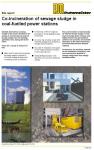
ETTER, B. (2009): Struvite recovery from urine at community scale in Nepal. Project intermediate report submitted to EPFL (Swiss Federal Institute of Technology Lausanne). Kathmandu: UN Habitat URL [Accessed: 27.05.2019]Sensible alternatives are being sought to the present method of disposing of mechanically de-watered sewage sludge such as dumping, agricultural use, drying and incineration.
PUTZMEISTER (2001): Co-incineration of Sewage Sludge in Coal-Fuelled Power Stations. Aichtal: Putzmeister Holding GmbH URL [Accessed: 27.05.2019]Biodiesel production from sewage sludge poses huge challenges to overcome if commercial opportunities are to be realised. Some of these challenges are not unique to biodiesel production from waste sludge but to the biodiesel industry as a whole. They include challenges from (1) collecting the sludge, (2) optimum production of biodiesel, (3) maintaining product quality, (4) soap formation and product separation, (5) bioreactor design, (6) pharmaceutical chemicals in sludge, (7) regulatory concerns, and (8) economics of biodiesel production.
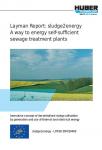
KARGBO, D.M. (2010): Biodiesel Production from Municipal Sewage Sludges. In: Energy Fuels 2010: Volume 24 , 2791–2794. URL [Accessed: 27.05.2019]The aim of this project is to show that decentralised and virtually energy self-sufficient disposal of sewage sludge is possible with the use of intelligent process technology and optimised plant components. Well-proven plant components have been combined to create an innovative overall concept. Read more in this report.
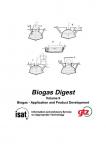
HUBER (2011): Layman Report: Sludge2Energy A Way to Energy Self-sufficient Sewage Treatment Plants. Berching: HUBER SE URL [Accessed: 27.05.2019]This information service on biogas technology has been developed and produced on the order of the GTZ project Information and Advisory Service on Appropriate Technology (ISAT). It contains information on the application of biogas and product development.
KOSSMANN, W. POENITZ, U. HABERMEHL, S. HOERZ, T. KRAEMER, P. KLINGLER, B. KELLNER, C. WITTUR, T. VON KLOPOTEK, F. KRIEG, A. EULER, H. (1999): Biogas Digest Volume II. Biogas - Application and Product Development. Eschborn: GTZ URL [Accessed: 27.05.2019]This report gives an overview on the use and disposal of biosolids/sewage sludge in the US between 1998 and 2010.
U.S. EPA (1999): Biosolids Generation, Use, and Disposal in the United States. Washington: United States Environmental Protection Agency URL [Accessed: 26.05.2019]This factsheet of Sustainable Sanitation Alliance describes the impact of greenhouse gases on climate change and focuses on the advantages of renewable energies. Therefore many different technologies like production of biogas or short-rotation-plantations are mentioned.
SUSANA (2009): Links between Sanitation, Climate Change and Renewable Energies. Eschborn. (= SuSanA fact sheet 09/2009 ). Sustainable Sanitation Alliance (SuSanA) URL [Accessed: 26.05.2019]A WASHTech literature review of existing frameworks for technology assessment reveals that there is a gap for a WASH technology assessment tool and a WASH technology uptake tool. The authors of the review, which supports the development of WASHTech’s Technology Assessment Framework, (TAF), conclude that a computer tool based on an algorithm is not appropriate because it is too rigid. Choosing a manageable number of appropriate indicators is key for assessing new technologies.
OLSCHEWSKI, A. DANERT, K. FUREY, S. KLINGEL, F. (2011): Review of Frameworks for Technology Assessment. WASHTech Deliverable 3.1. St. Gallenand The Hague : Swiss Centre for Development Cooperation in Technology and Management (SKAT) and International Water and Sanitation Centre (IRC) URL [Accessed: 26.05.2019]A short booklet explaining the notion of ecological sanitation, closing the water and the nutrient/energy loops and also giving practice examples.
ALSEN, K.W. ; JENSSEN, P. (2004): Ecological Sanitation: for Mankind and Nature. Aas: Norwegian University of Life Sciences URL [Accessed: 26.05.2019]This is a chapter on a rainwater-harvesting manual from the Public Health Engineering Department in India. It gives an extensive overview on different groundwater recharge technologies and approaches.
PHEDM (n.y): Chapter 9: Artificial Groundwater Recharge. In: PHEDM (n.y): Rain Water Harvesting ManuaI. Meghalaya State Centre, India: . URL [Accessed: 26.05.2019]