
Library
This is a very detailed lecture note about vacuum sewer systems. It contains descriptions, technical graphs and calculations about a vacuum sewer system.
PDH ENGINEER (2007): Vacuum Sewers: Design and Installation Guidelines. Alexandria, Virginia: Water Environment Federation URL [Accessed: 29.05.2019]
The Schoalhaven City Council describes the system of pressurised sewering and its experiences.
SCHOALHAVEN WATER (n.y): Pressure Sewer System.. Shoalhaven: Shoalhaven City Council URL [Accessed: 29.05.2019]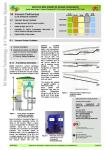
This technical data sheet contains a general description as well as detailed information on different types of vacuum technologies.
GTZ (2005): Vacuum Technology (Low Pressure Systems). (= Technical Data Sheets for Ecosan Components, 04-B1 ). Eschborn: German Agency for Technical Cooperation (GTZ) GmbH URL [Accessed: 29.05.2019]
This factsheet gives an overview about pressure sewer systems. It is illustrated with graphics and photos.
WERF (2010): Pressure Sewer System. Alexandria, Virginia: Water Environment Research Federation URL [Accessed: 29.05.2019]
This paper is an overview about the Swedish company ITT Water & Wastewater about its pressurised sewage system.
ITT (n.y): Flygt Pressurized Sewage Systems - For homeowners, residential associations and professionals. Sundbyberg: ITT Water & Wastewater URL [Accessed: 29.05.2019]
This paper investigates the state-sponsored low cost housing provided to previously disadvantaged communities in the City of Cape Town, South Africa. The design of state-subsidised houses and the construction of unplanned housing in the backyard added enormous pressure on the existing municipal infrastructure and the environment. Municipal water, sewerage systems and solid waste disposal cannot cope with the increased population density combined with the poor sanitation behaviour of the inhabitants of these settlements. The low-cost housing program in South Africa requires improved management and prudent policies to cope with the densification of state-funded low-cost housing settlements.
GOVENDER, T. BARNES, J.M. PIEPER, C.H. (2011): The Impact of Densification by Means of Informal Shacks in the Backyards of Low-Cost Houses on the Environment and Service Delivery in Cape Town, South Africa. Auckland: Libertas Academica URL [Accessed: 29.05.2019]
In the coastal area of Holden Beach (North Carolina), an AIRVAC vacuum wastewater collection system offers installation and operation advantages compared with gravity systems.
GARRET, C.S. (2008): Wastewater Alternative for Coastal Conditions. ceNEWS URL [Accessed: 29.05.2019]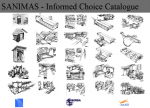
This informed choice catalogue for community based wastewater treatment technologies helps to identify suitable sanitation options and facilitates the assessment of different sanitation system components with regard to stakeholder preferences. A powerful tool for technical bottom-up planning giving overall information about technical options at a "glance".
SANIMAS (2005): Informed Choice Catalogue. pdf presentation. BORDA and USAID URL [Accessed: 29.05.2019]
These pages describe advantages, applications, the functional principle and technical components of vacuum sewer systems.
ROEDIGER (2007): RoeVac Vacuum Sewer System. Hanau: Roediger Vacuum GmbH URL [Accessed: 29.05.2019]
This document was orginially presented for MSc Course on "Renewable Energy and the Environment” at the University of Reading. It present basic therotical principals for the technical design of biogas burners.
FULFORD, D. (1996): Biogas Stove Design. A short course. Kingdom Bioenergy Ltd.; University of Reading URL [Accessed: 28.05.2019]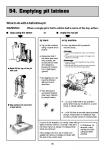
This technical brief describes several possibilities of emptying pit latrines and helps to find the most suitable method.
PICKFORD, J. SHAW, R. (1997): Emptying Pit Latrines. (= Technical Briefs, No. 54 ). Loughborough: Water and Environmental health at London and Loughborough (WELL) URL [Accessed: 28.05.2019]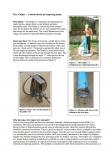
This short document describes the functioning of the gulper technology to empty pit latrines or septic tanks.
IaW (2007): The Gulper – a manual latrine/drain pit pump. Phnom Penh/Casteren: Ideas at Work (IaW) URL [Accessed: 28.05.2019]
This book published by Eawag/Sandec compiles existing and recently generated knowledge on anaerobic digestion of urban biowaste at small and medium scale with special consideration given to the conditions prevailing in developing countries. Written for actors working in the waste and renewable energy sector, the book is divided into two parts: Part 1 focuses on practical information related to the anaerobic digestion supply chain (substrate-, process-, and product chain), and Part 2 presents selected case studies from around the world.
VOEGELI, Y. LOHRI, C.R. GALLARDO, A. DIENER, S. ZURBRUEGG, C. EAWAG (2014): Anaerobic Digestion of Biowaste in Developing Countries. Practical Information and Case Studies. Duebendorf: Swiss Federal Institute of Aquatic Science and Technology (Eawag) URL [Accessed: 28.05.2019]
This article reviews low-cost sewerage options, their potential and their limitations. It also provides guidance on how to choose the most appropriate option, and gives examples of their successful application.
MARA, D. (1996): Low-cost Sewerage. Leeds: University of Leeds URL [Accessed: 28.05.2019]
This technical note describes the main technical elements involved in designing a sewer system.
USAID (1982): Designing Sewer Systems. Washington D.C. (USA): United States Agency for International Development (USAID). Water for the World -Technical Note No. SAN.2.D.4 URL [Accessed: 28.05.2019]
Over the coming 90 years, combined sewer systems will be phased out in the Municipality of Aalborg. Instead, the Municipality will introduce separate systems for stormwater and sewage.
LADEN, B. (2010): No more overloaded sewer systems. Copenhagen: Information Center for Climate Change Adaptation, Danish Ministry of Climate and Energy, Danish Energy Agency URL [Accessed: 28.05.2019]
A study on management and institutional aspects regarding the challenges and possible improvements in managing faecal sludge.
STRAUSS, M. MONTANGERO, A. (2002): FS Management – Review of Practices, Problems and Initiatives. London and Duebendorf: DFID Project R8056, Capacity Building for Effective Decentralised Wastewater Management, Swiss Federal Institute of Aquatic Science (EAWAG), Department of Water and Sanitation in Developing Countries (SANDEC) URL [Accessed: 28.05.2019]
The purpose of this document is to disseminate the simplified sewer technology more widely in the developing world, so that it can be used in peri-urban sanitation programmes and projects to improve health of poor communities. The document contains chapters on theory, planning and also practical advice.
MARA, D. SLEIGH, A. (2001): PC Based Simplified Sewer Design. Leeds: University of Leeds URL [Accessed: 28.05.2019]
This document is the final report of the MAPET project in Dar es Salaam, Tanzania. Project objectives were to contribute to the improvement of environmental sanitation in unplanned areas by facilitating an effective and hygienic pit emptying services, and to improve the informal traditional pit emptying method by making it more efficient and hygienic.
MULLER, M.S. RIJNSBURGER J. (1992): MAPET. A neighbourhood based pit emptying service with locally manufactured hand pump equipment in Dar es Salaam, Tanzania. Gouda: WASTE advisers on urban environment and development URL [Accessed: 28.05.2019]