This 5-page factsheet summarizes methods and uses of Compost.
KOFF, J.P. de LEE B.D. MICKELBART, M.V. (2007): Household Composting: Methods and Uses for Compost. (= Purdue Extension HENV-103-W ). Purdue: Purdue University URL [Accessed: 01.06.2019]Perspectives are different frameworks from which to explore the knowledge around sustainable sanitation and water management. Perspectives are like filters: they compile and structure the information that relate to a given focus theme, region or context. This allows you to quickly navigate to the content of your particular interest while promoting the holistic understanding of sustainable sanitation and water management.

This 5-page factsheet summarizes methods and uses of Compost.
KOFF, J.P. de LEE B.D. MICKELBART, M.V. (2007): Household Composting: Methods and Uses for Compost. (= Purdue Extension HENV-103-W ). Purdue: Purdue University URL [Accessed: 01.06.2019]
The paper discusses the findings of a study of 20 compost plants, ranging in size from household composting to large centralised composting facilities, in Bangalore, Chennai, Pune and Mumbai.
ZURBRUGG, C. DRESCHER, S. PATEL, A.H. SHARATCHANDRA S.C. (2002): Decentralised Composting in India – Lessons Learnt. (= Paper presented at 28th WEDC Conference in Kolkata 18-22 November, 2002 ). Leicestershire: Water Engineering and Development Centre, Loughborough University URL [Accessed: 01.06.2019]
This document gives a simple overview over toilet compost, its preparation and fields of application.
MORGAN, P. (2010): Methods of Using "Toilet Compost" in Agriculture. Stockholm : Ecological Sanitation Research (EcoSanRes), Stockholm Environment Institute (SEI) URL [Accessed: 01.06.2019]
The four-page brochure explains the basic of composting and how yard waste and food waste can be composted at home.
CORNELL UNIVERSITY (n.y): Home Composting Brochure. URL [Accessed: 01.06.2019]
This brochure describes the compost barrels, promoted in Bangladesh and explains how to use them. 4
WASTE CONCERN (n.y): Compost Barrel. Dhaka (Bangladesh): WASTE CONCERN URL [Accessed: 01.06.2019]
This publication intends to help spread awareness and knowledge about the technology of subsurface flow constructed wetlands in developing countries. Constructed wetlands (CWs) can be used as part of decentralised wastewater treatment systems, due to their “robust”, “low-tech” nature with none or few moving parts (pumps) and relatively low operational requirements. CWs can be used for the treatment of domestic and municipal wastewater or greywater, and play an important role in many ecological sanitation (ecosan) concepts.
HOFFMANN, H. PLATZER, C. WINKER, M. MUENCH, E. von GIZ (2011): Technology Review of Constructed Wetlands. Subsurface Flow Constructed Wetlands for Greywater and Domestic Wastewater Treatment. Eschborn: Deutsche Gesellschaft fuer Internationale Zusammenarbeit (GIZ) GmbH URL [Accessed: 01.06.2019]
This Sanitation Sourcebook distils some of the core concepts of sanitation in a user-friendly format so that the book can serve as a practical reference to sanitation professionals and investment decision-makers, particularly the local governments. The annexe contains a practical collection of factsheets on selected sanitation system options.
WSP (2007): Philippines Sanitation Source Book and Decision Aid. pdf presentation. Washington: Water and Sanitation Program (WSP). URL [Accessed: 01.06.2019]
This work seeks to expand upon the body of knowledge pertinent to enhance the treatment efficacy of Imhoff tanks within Honduras. It also includes a definition for what an Imhoff tank is and explanation of how the system works.
McLEAN, R.C. (2008): Honduras Wastewater Treatment: Chemically Enhanced Primary Treatment and Sustainable Secondary Treatment Technologies for Use with Imhoff Tanks. Pomona: California State Polytechnic University URL [Accessed: 01.06.2019]This site is based on the book “Home Composting Made Easy,” which has sold more than one million copies in the US.
Factsheet on the operation and maintenance of vermi-composts.
DICKERSON, G. (2004): Vermicomposting. Guide H-164. New Mexico: New Mexico State University (NMSU), Cooperative Extension Service, College of Agriculture and, Home Economics URL [Accessed: 01.06.2019]
This 12-page factsheet reflects the existing management systems practiced in various areas of Nepal in managing solid waste and contains initiatives of Municipalities; national and local NGOs/CBOs; public and private entities. The paper helps to transfer the lessons and existing practices regarding solid waste management and encourages urban, peri-urban and emerging towns for similar initiatives in urban sanitation.
WATERAID NEPAL ; ENPHO (2008): Solid Waste Management in Nepal. Facsheet. Kathmandu: WaterAid Nepal Environment and Public Health Organization (ENPHO) URL [Accessed: 01.06.2019]In areas that experience a seasonally high groundwater table or that are prone to flooding, constructing affordable on-site sanitation facilities can be very problematic. It is a challenge that affects many countries worldwide. This technical brief provides practical guidance on some sanitation options in such conditions.
PARRY-JONES, S. (1999): On-Site Sanitation in Areas with a High Groundwater Table. Leicestershire: , Engineering and Development Centre (WEDC) Loughborough University URL [Accessed: 31.05.2019]
Selected examples of graphical user instruction for dehydration toilets.
GTZ (2006): Dehydration Toilets. User Instructions for Dehydration Toilets . (= Technical Data Sheets for Ecosan Components, 02-C2 ). Eschborn: German Agency for Technical Cooperation (GTZ) GmbH URL [Accessed: 31.05.2019]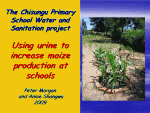
This presentation exemplifies on how to increase maize production through the application of urine fertiliser.
MORGAN, P. SHANGWA, A. (2009): Using Urine to Increase Maize Production in Schools. The Chisungu Primary School Water and Sanitation project. Stockholm : Ecological Sanitation Research (EcoSanRes), Stockholm Environment Institute (SEI) URL [Accessed: 31.05.2019]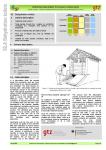
Short general description on dehydration toilets.
GTZ (2006): Dehydration Toilets. General Description . (= Technical Data Sheets for Ecosan Components, 02-A ). Eschborn: German Agency for Technical Cooperation (GTZ) GmbH URL [Accessed: 31.05.2019]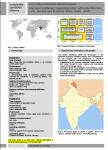
In Leh, a small town in Jammu and Kashmir, people try to replace traditional sanitation systems by waterborne toilet systems. This project tries to revitalise the traditional ecological sanitation practice that is threatened to fall into oblivion. Different improvements of the traditional Ladhaki toilets are suggested. Due to an extremely dry climate, it is possible to process human excreta indoors without prior diversion of urine, by using a combination of soil composting and dehydration.
DAWA, S. KREUTZER, G. PANESAR, A. (2009): Improved traditional composting toilets with urine diversion, Leh, Jammu and Kashmir State, India - draft. (= SuSanA - Case Studies ). Eschborn: Sustainable Sanitation Alliance (SuSanA) URL [Accessed: 31.05.2019]
This publication discusses WAND’s experience in promoting ecological sanitation in flooded zones where pour-flush toilets are no longer effective and where people defecate in the open. In this project, promoting a decentralized sanitation system that is cheap, robust, appropriate, and scalable is possible.
SAYRE, E.V. SAYRE, J.C. (2011): Sanitation Solutions for Flooded Zones. The WAND Foundation Experience. London: Water, Agroforestry, Nutrition and Development Foundation (WAND) Inc URL [Accessed: 31.05.2019]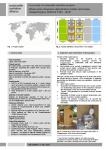
This case studies reports form the implementation of ecosan toilets in the peri-urban area of Ouagadougou financed by the European Union. The aim of the project was to demonstrate ecosan on an urban level with a centralised collection and treatment facilities and commercialisation of hygienised urine and faeces.
FALL, A. (2009): Urban Urine Diversion Dehydration Toilets and Reuse Ouagadougou Burkina Faso - Draft. (= SuSanA - Case Studies ). Eschborn: Sustainable Sanitation Alliance (SuSanA) URL [Accessed: 31.05.2019]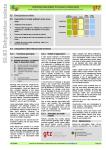
Short general and technical description on dehydration toilets without urine diversion.
GTZ (2006): Dehydration Toilets. Dehydration toilets. Dehydration Toilets without Urine-diversion. (= Technical Data Sheets for Ecosan Components, 02-B3 ). Eschborn: German Agency for Technical Cooperation (GTZ) GmbH URL [Accessed: 31.05.2019]