Activated Sludge and Aerobic Biofilm Reactors is the fifth volume in the series Biological Wastewater Treatment. The first part of the book is devoted to the activated sludge process, covering the removal of organic matter, nitrogen and phosphorus. A detailed analysis of the biological reactor (aeration tank) and the final sedimentation tanks is provided. The second part of the book covers aerobic biofilm reactors, especially trickling filters, rotating biological contractors and submerged aerated biofilters. For all the systems, the book presents in a clear and informative way the main concepts, working principles, expected removal efficiencies, design criteria, design examples, construction aspects and operational guidelines.
SPERLING, M. von (2007): Activated Sludge and Aerobic Biofilm Reactors. (= Biological Wastewater Treatment Series , 5 ). London: International Water Association (IWA) Publishing URL [Accessed: 03.06.2019]Library
This paper discusses the Membrane Bioreactor (MBR) process and its suitability for Australian water reuse applications. With the current focus on water reuse projects and the role they play in the water cycle, the search for cost competitive advanced wastewater treatment technologies has never before been so important.
CHAPMAN, S. LESLIE, G. LAW, I. (n.y): Membrane Bioreactors (MBR) for Municipal Wastewater Treatment – An Australian Perspective. Sidney: The University of New South Wales (UNSW) URL [Accessed: 03.06.2019]This paper sets out a framework for the delivery of non-sewered sanitation services that last, are accessible to all and are at scale. The framework is based on IRC International Water and Sanitation’s (IRC) experience and lessons learnt from its engagement in non-sewered sanitation service at scale.
VERHAGEN, J. CARRASCO, M. (2013): Full-Chain Sanitation Services That Last. Non-Sewered Sanitation Services. The Hague: International Water and Sanitation Center (IRC) URL [Accessed: 03.06.2019]While Switzerland's wastewater treatment plants are of a high technical standard, the elimination of nutrients remains costly and energy-intensive. Eawag has now further developed a biological process, which simplifies the removal of nitrogen from sludge digester liquid, reducing costs by 50% for this treatment step.
EAWAG (2010): Reducing Wastewater Treatment Costs and Energy Consumption. Duebendorf: Swiss Federal Institute of Aquatic Science and Technology (EAWAG) URL [Accessed: 03.06.2019]This article focuses on a few of the most exciting, very recent developments in the nitrogen cycle, summarises the changes and points out some questions to guide future research. The main processes of interest are anaerobic ammonium oxidation (Anammox), aerobic nitrification by archaea, nitrogen fixation by unicellular marine cyanobacteria, and the issue of the balance and coupling between internal input and removal pathways.
WARD, B.B. ; CAPONE, D.G. ; ZEHR, J.P. (2011): What’s New in the Nitrogen Cycle?. In: Oceanography: Volume 20 , 101-109. URL [Accessed: 03.06.2019]This paper shows the effectiveness and limitations of source control sanitation concepts with pre-treatment by pre-composting tanks (Rottebehaelter) to recover the particulate fraction of nutrients from household wastewater.
GAJUREL, D.R. ; LI, Z. ; OTTERPOHL, R. (2010): Investigation of the Effectiveness of Source Control Sanitation Concepts Including Pre-Treatment with Rottebehaelter. In: Water Science and Technology : Volume 48 , 111–118. URL [Accessed: 02.06.2019]The following technologies were installed in the education centre “San Christoferus”: Constructed wetland for greywater treatment; compost filter for blackwater treatment; and double-vault urine diversion dehydration toilets. The aim of the project was to reduce water consumption and limit the wastewater flowing to the public sewer system, of which the largest part is discharged without treatment.
HOFFMANN, H. RUEN, S. SCHOEPE, A. (2009): Blackwater and greywater reuse system, Chorrillos, Lima, Peru. (= SuSanA - Case Studies ). Eschborn: Sustainable Sanitation Alliance (SuSanA) URL [Accessed: 02.06.2019]This paper explains the problem of conventional sanitation systems and provides solutions. How can nutrients be reused, how can wastewater be treated ecologically and how should water be managed.
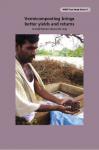
OTTERPOHL, R. (2000): Design of Highly Efficient Source Control Sanitation and Practical Experiences. Wageningen: EURO-Summer School DESAR URL [Accessed: 02.06.2019]This is the case of a small farmer who chose to be different from the typical resource-poor farmers struggling to make a living in the degraded drylands. His deep ‘love for life’ has not only earned him a decent living, but more importantly, it has inspired many other farmers to emulate him.
AME FOUNDATION (2007): Vermi-Composting brings better yields and returns – A farmer shows the way. (= AMEF Case Study Series 6 ). Bangalore: AME Foundation URL [Accessed: 01.06.2019]This third publication in the series aims to capture the current trends in waste management with the assistance of 20 case studies from around the world.
UN-HABITAT (2010): Solid Waste Management in the World’s Cities. Pre-publication presentation. Nairobi: United Nations Human Settlements Programme (UN-HABITAT) URL [Accessed: 01.06.2019]This publication presents the findings of a research on “Promoting Composting as a Business for the Urban Poor” in the form of guidelines based on case studies from India, Bangladesh, Sri Lanka, Pakistan and Ethiopia.
ALI, M. (2004): Sustainable Composting Case Studies and Guidelines for Developing Countries. Leicestershire: Water Engineering and Development Centre, Loughborough University URL [Accessed: 01.06.2019]This article presents the findings of a survey of 76 home compost bin users in Kathmandu, which was done about one year after the compost bins were sold at a subsidized rate to residents by Kathmandu Metropolitan City by the municipality.
TULADHAR, B. (2004): User Survey Indicates the Success of “Saaga” Home Compost Bins. In: ENPHO Magazine 2004: URL [Accessed: 01.06.2019]This 8-page guide-book consists of information on need of composting and how to start composting at household level.
LAOIS COUNTY COUNCIL (n.y): Turn Spoil into Soil – A guide to Household Composting. URL [Accessed: 01.06.2019]This leaflet provides a summary on why and how to compost faeces.
VALLEY VIEW UNIVERSITY (2008): Small scale composting of human faeces - in a Nutshell. Hohenheim: University of Hohenheim (Germany), Berger Biotechnik, Valley View University Ghana URL [Accessed: 01.06.2019]This article describes the success story of two “garbiologists” from Waste Concern, Bangladesh who designed project and concept on making cash from trash through carbon trading mechanism.
FCO (2009): Trash to Cash – Slum Dwellers make Money from cutting Greenhouse Gases. (= Climate Success ). Foreign and Commonwealth Office (FCO) URL [Accessed: 01.06.2019]This paper describes the project of constructing a thermophilic composting site in Haiti after the earthquake in 2010. The composting facilities have treated over 500,000 gallons of human waste in the past three years, converting it to pathogen free compost, over 10,000 gallons of which has been sold for use in agriculture and reforestation projects. The experience of thermophilic composting in Haiti is unique in scale and duration and can have global implications for waste treatment in both emergency and development contexts.
KRAMER, S. PRENETA, N. KILBRIDE, A. (2013): Delivering Water, Sanitation and Hygiene Services in an Uncertain Environment: Thermophilic Composting of Human Wastes in Uncertain Urban Environments. A Case Study from Haiti. (= WECD International Conference , 36 ). Oakland: Sustainable Organic Integrated Livelihoods (SOIL) URL [Accessed: 01.06.2019]This 5-page factsheet summarizes methods and uses of Compost.
KOFF, J.P. de LEE B.D. MICKELBART, M.V. (2007): Household Composting: Methods and Uses for Compost. (= Purdue Extension HENV-103-W ). Purdue: Purdue University URL [Accessed: 01.06.2019]The paper discusses the findings of a study of 20 compost plants, ranging in size from household composting to large centralised composting facilities, in Bangalore, Chennai, Pune and Mumbai.
ZURBRUGG, C. DRESCHER, S. PATEL, A.H. SHARATCHANDRA S.C. (2002): Decentralised Composting in India – Lessons Learnt. (= Paper presented at 28th WEDC Conference in Kolkata 18-22 November, 2002 ). Leicestershire: Water Engineering and Development Centre, Loughborough University URL [Accessed: 01.06.2019]This document gives a simple overview over toilet compost, its preparation and fields of application.
MORGAN, P. (2010): Methods of Using "Toilet Compost" in Agriculture. Stockholm : Ecological Sanitation Research (EcoSanRes), Stockholm Environment Institute (SEI) URL [Accessed: 01.06.2019]