This document provides brief descriptions of 17 wetland treatment systems from that are providing significant water quality benefits while demonstrating additional benefits such as wildlife habitat. The projects described include systems involving both constructed and natural wetlands, habitat creation and restoration, and the improvement of municipal effluent, urban stormwater and river water quality. Each project description was developed by individuals directly involved with or very familiar with the project in a format that could also be used as a stand-alone brochure or handout for project visitors.
U.S. EPA (1993): Constructed Wetlands for Wastewater Treatment and Wildlife Habitat. Washington DC: Environmental Protection Agency (EPA) URL [Accessed: 10.06.2019]Library
The collection, transport, treatment, and disposal of solid wastes, particularly wastes generated in medium and large urban centres, have become a relatively difficult problem to solve for those responsible for their management. The problem is even more acute in economically developing countries, where financial, human, and other critical resources generally are scarce. This publication has been prepared primarily for two audiences: 1) decision-makers and policy makers, and 2) professionals involved in the management of solid wastes. The information in the publication would also be useful to students in environmental engineering. The material is presented such that most chapters need not be read in any particular sequence. However, if a formal class is based on the book, the chapters should be covered in sequential order.
UNEP (2005): Solid Waste Management. Nairobi: United Nations Environment Programme (UNEP) URL [Accessed: 10.06.2019]The incinerator industry often promotes incinerators as having “zero emissions” or as being “safe for community health”. The truth, however, is that all incinerators contaminate people and the environment with toxic and cancer-causing emissions.
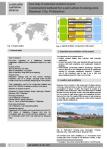
GAIA (2008): Incinerators Trash Community Health. Quezon City: Global Alliance for Incinerator Alternatives (GAIA) URL [Accessed: 10.06.2019]Case study on constructed wetlands for a peri-urban housing area. Septic tanks are used to pre-treat the sewage. The pre-treated wastewater is transported through a small-bore sewer system.
LIPKOW, U. MUENCH, E. von (2010): Constructed Wetland for a Peri-urban Housing Area Bayawan City, Philippines. (= SuSanA – Case Studies ). Eschborn: Sustainable Sanitation Alliance (SuSanA) URL [Accessed: 10.06.2019]In July 2012, a team from RTI International deployed to the Philippines to evaluate four FSM programs with the goal of reporting on best practices and lessons learned. The four cases—Dumaguete City, San Fernando City, Maynilad Water for the west zone of metro Manila, and Manila Water from the east zone of metro Manila—were chosen to highlight their different approaches to implementing FSM.
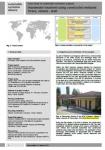
ROBBINS, D. STRANDE, L. DOCZI, J. (2012): Opportunities in Fecal Sludge Management for Cities in Developing Countries: Experiences from the Philippines. North Carolina: RTI International URL [Accessed: 10.06.2019]Within the BMZ (German Federal Ministry for Economic Cooperation and Development) financed project on “Advice on the Decentralisation of the Water and Sewerage Sector in Albania” the GIZ and MPWT (Albanian Ministry of Public Works and Transport) initiated the pilot constructed wetland to raise awareness for low cost, appropriate and decentralised sanitation technologies in line with EU standards. It is aimed to be used as a model treatment plant by the main actors of the sector for training, demonstration, research and replication in peri-urban and rural areas of Albania.
GJINALI, E. NIKLAS, J. (2009): Wastewater treatment using constructed wetlands Tirana, Albania - draft. (= SuSanA - Case Studies ). Eschborn: Sustainable Sanitation Alliance (SuSanA) URL [Accessed: 10.06.2019]This technical note points out the importance of including the needs of vulnerable groups into public health programmes in general. It features a checklist for practically responding to gender and other socio-cultural issues and a case study from Pakistan (2005) where Oxfam adapted communal sanitation facilities for communities where women previously lived in seclusion.
OXFAM (n.y): Vulnerability and Socio-Cultural Considerations for PHE in Emergencies. Oxfam Technical Brief. Oxford: OXFAM URL [Accessed: 09.06.2019]The sanitation decision tool is based on the Eawag Sanitation Compendium and aims to give support in choosing the right sanitation chain components, from a spectrum of options. It shall help the user to find a tailored solution suitable for the specific context that the sanitation system will be placed in. The tool exists as a print and digital version.
A portable toilet appropriate for disaster response is presented in this report. The urine is diverted and the feces undergo a lactofermentation process. Biochar is added also to the feces to eliminate odor and facilitate the reuse of the excreta as a soil additive. The design, costs, logistics and expected challenges are discussed.
KINSTEDT, K. (2012): Design of a Portable Ecological Sanitation Toilet for Disaster Relief. Hamburg: Institute of Wastewater Management and Water Protection at the Technical University of Hamburg URL [Accessed: 09.06.2019]The project aimed at providing safe water supply and sanitation to the population resettled – after floods – in the less flood-prone Guara-Guara region in the Sofala Province, Mozambique. Since the area is characterised by high groundwater tables, so called “ventilated double vault urine diversion dehydration toilets” (UDDTs) were implemented to not contaminate the groundwater, and thus not threaten public health (unlike pit latrines).
FOGDE, M. MACARIO, L. PORSANI, J. (2011): UDDTs in Flood-response Project. Guara-Guara, Sofala Province, Mozambique. Case Study of Sustainable Sanitation Projects. Eschborn: Sustainable Sanitation Alliance SuSanA URL [Accessed: 09.06.2019]This book supports in making informed decisions regarding wetland design.
KADLEC, R. H. WALLACE, S. D. (2009): Treatment Wetlands. 2nd Edition. Boca Raton: CRC Press, Taylor & Francis Group URL [Accessed: 09.06.2019]This manual discusses the capabilities of constructed wetlands, a functional design approach, and the management requirements to achieve the designed purpose. The manual also attempts to put the proper perspective on the appropriate use, design and performance of constructed wetlands. Furthermore, the document contains two case studies.
U.S. EPA (1999): Manual – Constructed Wetlands Treatment of Municipal Wastewater. Washington D.C.: United States: Environmental Protection Agency (EPA) URL [Accessed: 09.06.2019]This case study presents a post-rehabilitation project in Bangladesh after cyclone Sidr in 2007, which included provision of 100 twin vault UDDTs in rural villages. The three main challenges were finding an adequate place on the compound for the UDDTs, the use of UDDTs e.g. daily practices and maintenance, and the reuse of dried excreta.
DELEPIERE, A. (2011): Household UDDTs after cyclone disaster, Padma and Rohitra villages, Barishal Division, Bangladesh Case study of sustainable sanitation projects. Sustainable Sanitation Alliance (SuSanA) URL [Accessed: 09.06.2019]Statistics of availability and type of latrine facility.
CHANDRAMOULI, C. (2012): Availability and Type of Latrine Facility: 2001-2011. New Dehli: Census of India, Government of India URL [Accessed: 09.06.2019]