This paper presents comparative analysis among community-based development (CBD) and/or community-driven development (CDD) projects, and between CBD and/or CDD and non-CBD and non-CDD projects in water supply and sanitation (WSS).
HILL, D. (2009): Supporting Community-Driven Development in Developing Member Countries. Community-Based Development in Water and Sanitation Projects. Asian Development Bank (ADB) URL [Accessed: 21.06.2019]Library
This booklet on Smart Finance Solutions, gives examples of how various existing financial mechanisms and products are being used to finance water and sanitation projects and small local businesses
SINGELING, M. CLAASEN, F CASELLA, D. DAALEN, T. FONSECA, C. (2009): Smart Finance Solutions. Examples of Innovative Financial Mechanisms for Water and Sanitation. Netherlands Water Partnership (NWP) and International Water and Sanitation Centre (IRC) URL [Accessed: 21.06.2019]This report examines innovative financing mechanisms that can help attract new financial resources into water and sanitation services. A particular focus is placed on mobilising market-based repayable financing (such as loans, bonds and equity) as a way of bridging the financial gap to meet the Millennium Development Goals and other crucial sector objectives.
OECD (2010): Innovative Financing Mechanisms for the Water Sector. Organisation for Economic Co-operation and Development (OECD) URL [Accessed: 21.06.2019]This case shows how the members of Malawi Homeless People's Federation make monthly savings of at least 0,14 USD towards a pool fund called Mchenga fund. It finances their development needs according to the priorities of the members.
KHATAZA, R. (2008): A $ 0,14 toilet in a month: Financing Urban Eco-Sanitation through Group Savings in Malawi. Malawi: Centre for Community Organisation and Development (CCODE) URL [Accessed: 21.06.2019]WaterCredit is an initiative of Water.org that puts microfinance tools to use in the water and sanitation (WASH) sector. It is the only comprehensive, multi-country program of its kind that connects the microfinance and WASH communities to scale up access to credit and capital for individual- and household-based water and sanitation needs.
The purpose of this manual is to create a new synergy by bringing together project management practices and socio-economic and gender issues within the conceptual framework of SEAGA. The manual is principally written for practitioners at the operational level in government, NGOs, Civil Society Organisations and the private sector. It presents a set of case studies for the planning of a project.
BISHOP, C. SEAGA (2001): Project Cycle Management, Technical Guide. Rome (Italy): Food and Agriculture Organization of the United Nations (FAO), Socio-Economic and Gender Analysis (SEAGA) Programme URL [Accessed: 21.06.2019]This document provides information on saving mechanisms such as community-based saving and credit groups in Cambodia, savings and credit systems in Laos and the history of saving and credit programs in Vietnam
ESCAP UN (n.y): Urban Community-based-Savings-and-Credit Systems in Cambodia, Lao People's Democratic Republic and Vietnam. Economic and Social Commission for Asia and Pacific (ESCAP) URL [Accessed: 21.06.2019]This document describes the basic model of saving groups, its origin and variation in saving methodology. It also explains how these groups complement microfinance and provides lessons for the replication of the model.
ALLEN, H. PANETTA, D. (2010): Saving Groups: What are they? The SEEP Network Savings-Led Financial Services Working Group. The Small Enterprise Education and Promotion Network (SEEP) URL [Accessed: 21.06.2019]This brief examines two promising project activities in the micro-finance sector under the Creating Sanitation Market Initiative (CSMI), a multi-stakeholder initiative led by the Water and Sanitation Program (WSP) of the World Bank in Peru: 1) in Cusco, activities with the Caja Municipal de Ahorro y Crédito del Cusco (CMAC Cusco) a Municipal Savings and Loan Fund owned by the municipal government of Cusco; and 2) in Cajamarca, activities to establish Village Banks that administer loans for household sanitation improvements. The brief was prepared with support from the USAID-funded Hygiene Improvement Project, a CSMI partner.
USAID HIP ; WSP (2010): Peru Case Studies in Sanitation Microfinance. (= Research Brief ). Washington DC: Water and Sanitation Program (WSP) URL [Accessed: 21.06.2019]This research seeks to identify the best performing approaches and the relevant factors and issues to consider in designing a sanitation financing strategy. The report offers guidance to sector professionals developing on-site sanitation projects and programs, which play a leading role in providing access to sanitation. The study compares alternative financing approaches based on a set of common indicators, including in terms of the effectiveness in the use of public funds and targeting.
TREMOLET, S. KOLSKY, P. PEREZ, E. WSP ; THE WORLD BANK (2010): Financing On-Site Sanitation for the Poor. A Six Country Comparative Review and Analysis. (= Technical Paper ). Washington DC: and Sanitation Program (WSP) and The World Bank URL [Accessed: 21.06.2019]The logical framework is presented as a conceptual and analytical tool for undertaking sector analysis, project planning, and project management. This guide emphasises the basic concepts and underlying processes inherent in applying the logical framework. This guide uses a simplified example from the transport sector to illustrate these concepts and processes.
SALDANHA, C. WHITTLE, J. (1998): Using the Logical Framework for Sector Analysis and Project Design: A User’s Guide. Manila: Asian Development Bank URL [Accessed: 21.06.2019]This report compares the capital expenditure and the operational and maintenance expenditure for sanitation facilities in rural and peri-urban areas in Burkina Faso. It presents the magnitude of the relative cost of different types of sanitation infrastructures such as the VIP toilet, the Ecosan urine diverting toilet, the pour-flush toilet and the traditional pit latrine.
KLUTSE, A. BOURAIMA, Z. AMEGNRAN, C. (2010): Sanitation Costs Analysis in Burkina Faso. (= IRC Symposium Pumps, Pipes and Promises ). Ouagadougou : URL [Accessed: 21.06.2019]This report discusses the demand for household water connections in urban Morocco, and the effect of such connections on household welfare.
DEVOTO, F. DUFLO, E. DUPAS, P. PARIENTE, W. PONS, V IRES (2011): Happiness on Tap: Piped Water Adoption in Urban Morocco. (= Discussion Paper , 13 ). Louvain-la-Neuve: Institute des Recherches Économiques et Sociales de l'Université Catholique de Louvain (IRES) URL [Accessed: 21.06.2019]These guidelines present the Logical Framework Approach, with the analysis of the situation and how to prepare the related matrix.
AUSAID (2005): AusGuidelines 3.3 The Logical Framework Approach. Sydney: Commonwealth of Australia URL [Accessed: 21.06.2019]This primer offers a non-technical introduction to financing for water and sanitation in developing countries.
WINPENNY, J. (2011): Financing for Water and Sanitation. A Primer for Practitioners and Students in Developing Countries. EU Initiative Finance Working Group URL [Accessed: 21.06.2019]This paper puts forward possible measures for strengthening the urban water sector along with the enhancement of the capacity of the community, emphasizing the importance of water charges billing and collection involving user groups or NGOs.
WACP-UNHABITAT-WATER FOR ASIAN CITIES PROGRAMME, INDIA- UN-HABITAT (1999): Community Managed Systems for Operation, Billing and Collection of Water Charges. (= Policy Paper 1 ). Nairobi: UN-HABITAT URL [Accessed: 19.06.2019]This paper describes the CHAST approach and contains coloured pictures (e.g. of the cards used for the card game).
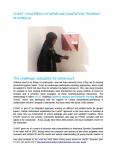
IRC (2006): CHAST in Somalia - Case Study. Delft: IRC URL [Accessed: 19.06.2019]This website contains a collection of training material intended to assist practitioners in helping low-income communities to overcome poverty, emphasizing methods and principles, not theory. One of the modules deals with the community project resources, including project proposals.
Experiences with PHAST in western Ghana.
NUNOO, D., MUMUNI, O and NUKUNU, N. (2009): Participatory Hygiene and Sanitation Transformation (PHAST): A methodology for sustainable hygiene and sanitation behaviour change with experience from the Bawku West District of Ghana. Accra (Ghana): West Africa Regional Sanitation and Hygiene Symposium. URL [Accessed: 19.06.2019]