BRIKKÉ, F. and ROJAS, J.
(2001):
Key Factors for Sustainable Cost Recovery.
Library
The impact of riverbank filtration (RBF) on the treatment of water from the River Yamuna at Mathura, which has disagreeable visual properties, has been investigated. The dissolved organic carbon (DOC) and colour of the river water were 4.0–6.8 mg/L and 40–65 colour units (CU), respectively. Pre-chlorination is in practice to improve raw water quality. Chlorine doses as high as 60 mg/L ahead of the water treatment units reduced colour by about 78%. Removal of DOC and UV-absorbance was less than 18%. In comparison to direct pumping of the river water, collection of water through RBF resulted in the reduction of DOC, colour, UV-absorbance and fecal coliforms by around 50%. However, riverbank filtrate did not conform to the drinking water quality standards. Therefore, riverbank-filtered water along with the Yamuna water were ozonated for different durations. To reduce DOC to the desired level, the dose of ozone required for the riverbank filtrate was found to be considerably less than the ozone required for the river water. RBF as compared to direct pumping of Yamuna water appears to be effective in improving the quality of the raw water.
SINGH, P. ; KUMAR, P. ; MEHROTRA, I. ; GRISCHEK, T. (2010): Impact of Riverbank Filtration on Treatment of Polluted River Water. In: Journal of Environmental Management: Volume 91 , 1055-1062.
This trainers guide provides guidelines for participatory learning and action, which can be applied for any training or workshop.
GUIJT, I. PRETTY, J. SCOONES, I. THOMPSON, J. (1995): A Trainers Guide for Participatory Learning and Action. London: International Institute for Environment and Development
Describes learning activities which enhance adult learning and contains information on how to do effective learning that can facilitate attention, motivation, memory, and comprehension.
SALMAN, R. (2006): How Adults Learn Facilitating Training. In: Bahrain Medical Bulletin: Volume 28 , 2.
TUCKMAN, B.W.
(1965):
Developmental sequence in small groups.
In: Psychological Bulletin:
Volume 63
Issue 3, 384-99.
http://openpdf.com/ebook/chlorination-pdf.html
This weblink contains different and useful reading materials on water chlorination, shock chlorination, tablet chlorination etc.
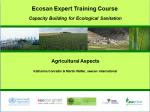
This powerpoint on agricultural aspects of ecosan also contains some information on the nutrient cycle, and provides reasons why we must adopt a more sustainable approach to managing nutrient resources.
CONRADIN, K. WAFLER, M. (2009): Agricultural Aspects of Ecosan. Presentation based on Presentation M4-7 Agricultural Aspects of the ecosan curriculum. Powerpoint Presentation.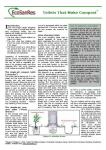
This information sheet summarises the Peter Morgan publication under the same name on two pages. It describes three types of simple and affordable composting toilets: Two types of shallow pit toilets (arborloo) and the urine diverting toilet.
EcoSanRes (2008): Toilets That Make Compost. Factsheet. (pdf presentation). (= EcoSanRes Factsheet 13 ). Stockholm: Stockholm Environment Institute
This publication offers the most important information on doing business in Vietnam, with an extensive chapter on starting of a business.
WORLD BANK (2014): Doing Business 2014. Economy Profile: Vietnam. In: A World Bank Group Flagship Report:
This document was prepared for the NaWaKit and gives a brief overview of main steps and activities involved in the NaWaTech safety and O&M planning approach.
NICOLICS, S. ; LANGERGRABER, G. (2015): Brief summary of NaWaTech safety and O&M planning approach. Working document. In: NaWaTech project: