
Library
This article describes how the popular fixed-dome type family size biogas plant has been successfully modified to allow use of fresh undiluted cattle dung as substrate. A large number of family-size biogas plants installed in the countryside in India use cattle dung diluted with an equal quantity of water as substrate. The biogas plant described below requires very little or no water for mixing with the cattle dung, and generates about 50% more biogas.
SHYAM, M. (2001): A biogas plant for the digestion of fresh undiluted cattle dung. In: Boiling Point: Volume 47 , 33-35.
This book is the first in a series on Urban Solid Waste Recovery, and represents an attempt to document the experiences of recycling activities in cities around the world. It covers the whole waste chain from municipal or agricultural generation of organic waste to different treatment methods, such as composting, co-composting, anaerobic digestion with production of biogas, and briquetting.
LARDINOIS, I. KLUNDERT v.d., A. (1993): Organic Waste. Options for small-scale resource recovery. (= Urban Solid Waste Series 1 ). Gouda: WASTE ConsultantsProvides UNHCR staff updates on its operations and the developing situation. Such as October 24, 2015 UNHCR staff reported from Amman, Jordan, the displacement is expected to rise even further as people find themselves trapped within the war-torn nation’s border. Also on October 25, 2016, when UNHCR staff reported families feeding Mosul assault find safety in Iraq, where fighting is intensifying to re-take the once thriving city of 2.5 million which was captured in June 2014.
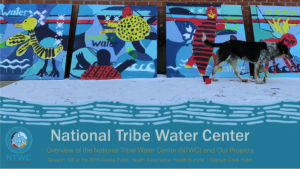
The National Tribe Water Center serves as a resource to maximize the health and wellbeing of American Indian and Alaska Native people through water and sanitation. It was established within the Alaska Native Tribal Health Consortium to fill gaps in the traditional water service delivery model; complement and enhance existing services in Alaska and nationwide.
National Tribe Water Center. PDF
Video lecture (with audio) on the natural systems for wastewater treatment, held by Prof. Petter Jenssen from the University of Life Sciences, Norway.
JENSSEN, P. D. Lecture: WWT in cold Climate - natural Systems. PDF
Exercise to the water supply system Grunnvåg Waterworks included in the STEP University Module 4.
JENSSEN, P.D. (2012): Grunnvåg Waterworks - Current Reservoir. PDF
This document describes onsite wastewater soil absorption systems (WSAS), which have the potential to achieve high treatment efficiencies over a long life service at low cost. Information is given on the function and performance of WSAS, the current state of knowledge, and identifying major gaps in predicting system performance.
SIEGRIST, R.L. TYLER, E.J. JENSSEN, P.D. (2000): Design and Performance of Onsite Wastewater Soil Absorption Systems. (= National Research Needs Conference, May 2000 ). St. Louis, MO:
En esta presentación en formato *.pdf se realiza una descripción de saneamiento sostenible y se presentan casos de estudio, haciendo mención a algunos ubicados en México.
CONAGUA ; ine ; SARAR ; gtz (2007): Seminario en Saneamiento Sustentable. México: Consejo Nacional del Agua, Instituto Nacional de Ecología, Deutsche GesellschaftfürTechnischeZusammenarbeit, Sarar Transformación SLanguage: Spanish
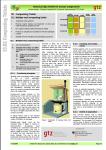
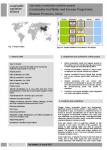
Case study on a community led sanitation project that introduced UDDT, Biogas & Double Urn Toilets and use of urine in Shaanxi Province, China.
KUMAR, P. SuSanA (2008): Community-Led Water and Ecosan Programme. (= SuSanA case study ). Shaanxi Province, China: Sustainable Sanitation Alliance (SuSanA)
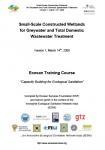
This training material quantifies and characterises grey- and total domestic wastewater production and exemplifies designing of small-scale horizontal and vertical flow constructed wetland system.
WAFLER, M. (2008): Small-scale Constructed Wetlands for Greywater and Total Domestic Wastewater Treatment. Vienna: seecon international gmbh