
Library

This paper analyses the differences between the users’ willingness to pay for maintenance and operation in rural markets and village DWS schemes of Nepal based on information collected through a questionnaire survey of 205 households and institutional survey of 12 DWS water user committees.
BHANDARI, B. GRANT, M. CURRY, S. WEDC (2006): Sustainable Development of Water Resources, Water Supply and Environmental Sanitation. A Willingness to Pay for Maintenance and Operation of Rural DWS Schemes. (= WEDC Conference , 32 ). Colombo: Water, Engineering and Development Centre (WEDC) URL
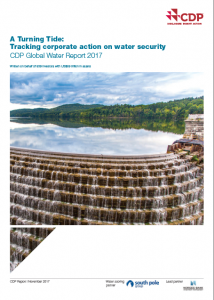
This report is aimed at companies and investors seeking to understand how they can play their part in delivering a water-secure world. It presents analysis of the 2017 CDP water response data from a sample of 742 of the world’s largest publicly-listed companies. It sets out what a water-secure world looks like, the private sector actions that will contribute to its achievement, and how companies are overcoming the barriers to water security – most importantly, the failure to properly value our fresh water resources in today’s economy.
(2017): CDP: Global Water Report 2017. Carbon Disclosure Project (CDP) URL PDF
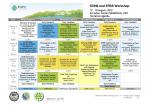
After the preparation of the City Sanitation Plan (CSP) of Kochi, India, GIZ has initiated this intervention among others. The recommendation of the CSP was to make an inventory of waste water discharge from the households, its effect on water bodies, create a baseline data comprising mapping of nonpoint sources of pollution, water quality assessment, etc., and to implement intermediate measure such as household sanitation systems.
GIZ (2012): Pilot Initiatives at Rameshwaram-Kalvathy Canal at Kochi. Eschborn: Gesellschaft fuer Internationale Zusammenarbeit (GIZ)
By taking the example of phosphorus, this essays shows that besides encompassing elaborate treatments to produce high quality water discharges to recipient bodies, the various substances brought into the water by human activities might also be extraordinarily valuable.
KIEFHABER, P. (2010): Sustainable Water and Waste-Water Management: Energy- and Material-Flow-Management - Quo vadis?. The Example 'Phosphorus-Recycling'. Kaiserslauten: Dr. Kiefhaber + zebe ingenieur consult gmbh
Este capítulo se refiere al enfoque de “cero emisiones” respecto al manejo eficiente de las aguas residuales, plantea nuevas tecnologías de saneamiento que aporten al reuso y reciclaje de aguas residuales.
OTTERPOHL, R. (2000): Diseño de un sistema de sanidad altamente eficiente con control de fuente, y experiencias en la práctica.Language: Spanish
This presentation by CRS contains a well-structured overview of the arborloo. The slides contain historical information as well as information on technological, economic and agricultural aspects.
SIMPSON, M. Holistic Innovations in Agriculture Programming (2009): Arborloos Improved Hygiene Intervention increases Agricultural Production. (pdf presentation). Washington, D.C.: Catholic Relief Service (CRS): East Africa Regional Office