
Library
This article provides technical and practical information for well treatments by hydrogen peroxide.
MCMAHON, J.P. (n.y): Instructions for treating your Well with Hydrogen Peroxide to Kill Bacteria and/or to Reduce or Remove Hydrogen Sulfide Odors . In: Cleanairpurewater.com:
This paper tries to answer the following question: “How sustainable are the composting barrels in the slums of Dhaka, Bangladesh if the external support is withdrawn?”
YOUSUF, T.B. ALI, M. (2006): Sustainable Composting: Some Realities – Experiences from Bangladesh. (= CWG-WASH Workshop, 1-5 February Kolkata ).
This report discusses key activities implemented and achievements made to demonstrate vermi-composting for managing market waste.
KATHMANDU METROPOLITAN CITY ; PESTICIDE MONITOR NEPAL ; CLEAN ENERGY NEPAL (2005): Pilot Project – Medium Scale Vermi Composting of Vegetable Market Waste in Kathmandu Metropolitan City. (= Final Report ).
This document presents results of a systematic feasibility analysis for various reuse options of treated wastewater assessed in the context of the Innovative Sanitation Solutions in Arid Regions (ISSRAR) project. The ISSRAR project promotes the safe reuse of treated wastewater to turn waste streams into physical and financial resource streams thereby contributing towards a circular sanitation value chain and the development of integrated business models for resource recovery and safe reuse (RR&R) solutions.
BUSSMANN, A. ; HERMANN-FRIEDE, J. (2020): Treated Wastewater Business Models.
The official website of the Sustainable Sanitation Alliance SuSanA. SuSanA is a loose network of a number of organizations active in the field of sanitation, founded in 2007. The goals and objectives of SuSanA are to contribute to the achievement of the MDGs, to raise awareness on what sustainable sanitation solutions are and to promote them on a larger scale. The website contains a number of factsheets by the different SuSanA working groups on various subjects related to sustainable sanitation. There is section where everyone can upload important documents.
This paper examines recent acclaim for professional embedded photojournalists who visually document the experience of US soldiers in Afghanistan using the popular mobile photo application Hipstamatic.
ALPER, M. (2013): War on Instagram: Framing Conflict Photojournalism with mobile Photography Apps. In: SAGE Journals: Volume 16 , 1233-1248 . URL
Rather old design manual for onsite wastewater treatment options. However, valuable information on established systems such as septic tanks, sand filters, aerobic treatment units (suspended growth and fixed film), disinfection, nutrient removal as well as wastewater segregation and recycling are given. Additional information is given on disposal methods and appurtenances.
U.S.EPA (1980): Onsite Wastewater Treatment Systems Manual. (= EPA 625/1-80 , 12 ). United States Environmental Protection Agency, Office of Water Office of Research and DevelopmentThis video shows an animation on how biosand filters work.
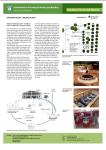
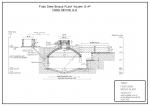
This poster presents a sanitary block in Ghana. The wastewater and nutrient concept for the sanitary block includes the separation of the different flow streams, such as pure urine, urine-water mixture, blackwater and greywater, in order to optimise the system design and to collect the urine and urine-water mixture as a fertiliser. Blackwater is treated in a fixed-dome biogas settler.
GLUECKLICH, D. FRIES, N. (n.y): Sanitary Block - Biogas Plant. Fundamentals of Ecological Planning and Building. Weimar: Bauhaus-Universitaet Weimar
This document gives an overview on the characteristics of different sludges as well as monitoring results and recommendations for design of solid-liquid separation. It is based on a field report.
HEINSS, U. LARMIE, S.A. STRAUSS, M. (1999): SOS - Management of Sludges from On-Site Sanitation. Characteristics of Faecal Sludges and their Solids-Liquid Separation. Duebendorf and Accra: Swiss Federal Institute of Aquatic Science (EAWAG)
This report contains the results of the workshop on preparing the City Sanitation Plans (CSP) with the CSP consultants of the respective cities. The objectives of the workshop were discussing the status of the baseline data collection in the respective cities, identifying data gaps, identifying the issues in the preparation of the CSP and discussing and streamlining the CSP outputs.
GTZ (2010): Report on Mid-Term Workshop on the preparation of the City Sanitation Plans. 5th July 2010. Eschborn: Deutsche Gesellschaft fuer Technische Zusammenarbeit (GTZ)