
Library
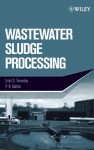
This book discusses unit operations used for processing sludge and the available methods for final disposition of the processed product. Topics discussed include sludge quantities and characteristics, thickening and dewatering, aerobicand anaerobic digestion, alkaline stabilization, composting, thermal drying and incineration, energy consumption, and the beneficial use of biosolids.
TUROVSKIY, I.S. MATHAI, P.K. (2006): Wastewater Sludge Processing. New Jersey: John Wiley & Sons
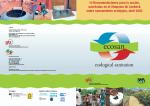
En el Simposio de Luebeck los participantes se plantean de manera general el enfoque Ecosan y se establecen 10 recomendaciones para poner en práctica el Saneamiento Sostenible a gran escala.
GTZ (2003): 10 Recomendaciones para la Acción, Acordadas en el Simposio de Luebeck sobre Saneamiento Ecológico. Eschborn: Proyecto Deutshce Geseelschaft für Technische Zusammenarbeit (GTZ) –ecosanLanguage: Spanish
This document present a detailed description of the case study implemented at the College of Engineering of Pune and MJP, including history of the project, design information, materials and project components, costs and economics, and details about operation and maintenance, practical information and lessons learnt.
BRESCIANI, R. (2015): Wastewater Reuse in an Urban College Hostel Pune, Maharashtra, India. In: Case Study of the NaWaTech Project:
Manual of the MUST-B block-based planning toolkit, applied in the Cancelón catchment of Santiago to assess the potential of decentralised low-impact development measures to reduce combined sewer overflow volumes.
WATERUN CONSORTIUM (2026): Deliverable D3.4. Manual of the planning tool to model the reduction of pollution runoff, CSO and pollution discharge to water bodies. In: WATERUN Project, EU Horizon Europe Grant Agreement No. 101060922. Lead Beneficiary: UFZ. Document not yet publicly available:
This study investigates helminth eggs removal and inactivation efficiency in a treatment process combining faecal sludge (FS) dewatering and subsequent co-composting with organic solid waste as a function of windrow turning frequency.
KONE, D. ; COFIE, O. ; ZURBRUEGG, C. ; GALLIZZI, K. ; MOSER, D. ; DRESCHER, S. ; STRAUSS, M. (2007): Helminth Eggs Inactivation Efficiency by Faecal Sludge Dewatering and Co-Composting in Tropical Climates. In: Water Research: Volume 41 , 4397-4402.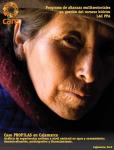
Se explica las ventajas en la aplicación del programa PROPILAS, el cual ha permitido la apertura de escenarios para la implementación de políticas públicas, participación comunitaria y la gestión del agua en un marco integral.
CARE (2007): Caso PROPILAS en Cajamarca. Análisis de Experiencias Exitosas a Nivel Nacional en Agua y Saneamiento: Descentralización, Participación y Financiamiento 2. Perú: CARELanguage: Spanish