
DCR
(2011):
Virginia Stormwater Management Handbook - Chapter 3.
Richmond, VA:
Virginia Department of Conservation & Recreation (DCR)
URL
Library
As part of the process to systematise and enhance the quality of monitoring and evaluation processes, this simple monitoring and evaluation guide has been developed. This guide includes practical guidance on how to do monitoring and evaluation: including developing simple monitoring and evaluation tools giving practical examples, a set of formats to facilitate the evaluation process and basic monitoring and evaluation terminology to ensure coherence and consistency.
IFRC (2007): Monitoring and Evaluation in a nutshell. INTERNATIONAL FEDERATION OF RED CROSS AND RED CRESCENT SOCIETIES (IFRC). [Accessed: 13.05.2010]
DIWAN, V. SHRIVASTAVA, P. VYAS, V.
(2008):
Horizontal Subsurface Flow Constructed Wetland in a Tropical Climate a Performance from Ujjain, India.
(= Proceedings 11th International Conference on Wetland Systems Technology in Water Pollution Control, November 1-7 2008, Indore-Ujjain, India, 711-716
).
Indore:
International Water Association (IWA) Publishing
This document describes the causes and effects of the global water scarcity and the instrumental role the agriculture plays to counteract this global concern.
COMMITTEE ON AGRICULTURE (2007): Agriculture and Water Scarcity: a Programmatic Approach to Water Use Efficiency and Agricultural Productivity. Rom: Food and Agriculture Organization of the United Nations (FAO)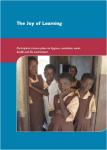
This paper is a guide for teachers and others who want to design participatory learning activities on hygiene and sanitation as part of, or in addition to, their school curriculum or in work with other children aged 2 to 14. It contains a series of information sheets for planning, implementing and evaluating participatory learning activities on a specific subject. Examples include personal hygiene, the safe transport and handling of water, protecting local water sources, and locally prevailing disease transmission routes.
KHANAL, S. MENDOZA, R. PHIRI, C. ROP, R. SNEL, M. VAN WIJK, C. (2005): The Joy of Learning: Participatory lesson plans on hygiene, sanitation, water, health and the environment. (= Technical Paper Series No. 45 ). Delft: IRC International Water and Sanitation Centre
GOSSELIN & BRUNELLE
(2016):
Tête, cœur et courage : un regard simplifié sur le leadership.
In: Gestion:
Volume 40
Issue 4
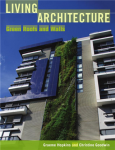
Extensively illustrated with photographs and drawings, Living Architecture highlights the most exciting green roof and living wall projects in Australia and New Zealand within an international context.
HOPKINS, G. GOODWIN, C. (2011): Living Architecture. Green Roofs and Walls. Collingwood: CSIRO Publishing
This is the third in a series of guidelines prepared by REPOA in order to help researchers prepare improved proposals for research.
REPOA (2007): Guidelines for Preparing Concept Notes and Proposals for Research on Pro-Poor Growth and Poverty in Tanzania. Special Paper 07.23. Dar Es Salaam: REPOA – RESEARCH ON POVERTY ALLEVIATION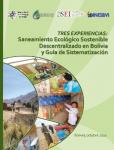
Se presenta la experiencia de Saneamiento Ecológico en diferentes municipios de Bolivia, se describen cada uno de los casos de estudio: escenarios, actores, resultados entre otros y posteriormente se presenta la sistematización que se debería realizar para otros proyectos relacionados con el tema.
SEI ; DINESBVI ; NSSD ; MMAyA (2010): Tres experiencias: Saneamiento Ecológico Sostenible Descentralizado en Bolivia y guía de Sistematización. Bolivia: Instituto Ambiental de Estocolmo – SEILanguage: Spanish
Relaciona a los problemas de salud con el saneamiento ambiental y define al saneamiento ecológico como la posibilidad de manejarlos.
YSUNZA, A. (2003): Saneamiento Ambiental y Salud Salvador. Centro de Capacitacion Integral Para Promotores Comunitarios, Instituto Nacional de Ciencias Médicas y NutriciónLanguage: Spanish

Case study on a community and school UDDT project with urine reuse in Misamis Oriental, Philippines.
SAYRE, E. VON MUENCH, E. SuSanA (2009): Rural Community and School UDD Toilets in Misamis Oriental. (pdf presentation). (= SuSanA case study ). Libertad, Initao & Manticao, Philippines: Sustainable Sanitation Exchange
This paper shows different examples from different countries (Italy, India and Tanzania) of green architectural solutions (green wall, green roof, roof wetland) in which water (rain and treated greywater) are reused as a resource, in order to reduce the use of drinking water for activities not needed a quality of water.
MASI, F. ; RIZZO A. (2015): Green architecture and water reuse: examples from different countries. In: Sustainable Sanitation Practice : Volume 23 , 4-10.
Besides basic theory, this proceeding of the international symposium of Ecosan in Bonn (Germany) includes several presentations, case studies and sustainable techniques in the sanitation section.
WERNER, C. SCHLICK, J. WITTE, G. HILDEBRANDT, A. (2000): Ecosan closing the loop in wastewater management and sanitation. Eschborn: The Deutsche Gesellschaft für Internationale Zusammenarbeit (GIZ) GmbH
The book has been divided in two parts. Part A provides a comprehensive summary concerning the various aspects of constructing, operating and maintaining pond systems. It also considers aspects such as management and safety. Part B is intended for persons making the preliminary designs on which cost estimates and, hence, choices can be made. In particular, the appendix and annex provide a working example and a simple methodology to help the designer in preparing adequately detailed designs.
WHO (1987): Wastewater stabilization ponds: Principles of planning and practice.. (= WHO EMRO Technical Publication , 10 ). Alexandria: World Health Organization Regional Office for the Eastern Mediterranean