Library
This paper is part of the Special Issue Arctic Monitoring and Assessment Program. The Arctic Monitoring and Assessment Programme (AMAP) is tasked with monitoring the levels of contaminants present in the Arctic environment and people as well as assessing their effects on a continuous basis, and reporting these results regularly. Most of the presented data have been collected over the last 20 years and are from all eight Arctic countries. Levels of contaminants appear to be declining in some of the monitored Arctic populations, but it is not consistent across the Arctic. Most Arctic populations continue to experience elevated levels of these contaminants compared to other populations monitored globally.
GIBSON, J., ADLARD, B., OLAFSDOTTIR, K., MANNING SANDANGER, T. and OYVIND ODLAND, J. (2016): Levels and trends of contaminants in humans of the Arctic. In: International Journal of Circumpolar Health: Volume 75 , 10. URL [Accessed: 07.06.2018] PDFThis assessment report presents the results of the 2016 AMAP Assessment of Chemicals of Emerging Arctic Concern which was conducted between 2014 and 2016 by an international group of experts. The report updates the AMAP POPs assessments delivered in 1998, 2002 and 2009, specifically with respect to information on chemicals newly identified in the Arctic environment.
The 2015 Human Health Assessment Report follows three previous AMAP assessments on human health (AMAP 1998, 2003, 2009) and represents the current knowledge base after 25 years of focused study. This report includes new knowledge, updates and fills information gaps identified in past reports, and focuses attention on the most recent integrated scientific knowledge related to environmental contaminants and human health. It does not update information concerning the levels and effects of radioactivity and UV-radiation; these topics were addressed in the first comprehensive AMAP Assessment Report (AMAP 1998). The AMAP 2015 collects and discuss all the data from the relevant cohorts and surveys carried out in Inuits groups of Alaska, Canada and Greenland. It describes the projects, the results as the levels of contaminants found in the areas, the health that these contaminants can cause, future risks, and risk communication.
The Circumpolar Health Observatory (CircHOB) is an international collaborative health information system, involved in systematic, standardized, and consistent data collection and analysis. In addition to aggregating online and print resources, CircHOB is population-based, and produces data for all northern regions in all circumpolar countries. CircHOB’s purpose is to monitor trends and patterns in health status, health determinants, and health care, provides qualitative and quantitative evidence for planning and evaluation of health programs and services. It is on-going and sustainable with periodic updates.
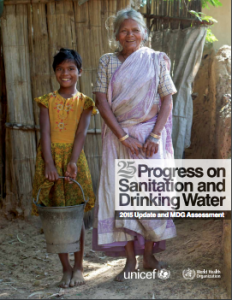
This document provides updates on the SDGs as well as assessment of the MDGs
WHO <UNICEF (2015): Progress on Sanitation and Drinking Water. 2015 Update and MDG Assessment. Geneva : URL [Accessed: 07.06.2018]This first review on the occurrence and environmental profile of PPCPs in the Arctic identified the presence of 110 related substances in the Arctic environment based on the reports from scientific publications, national and regional assessments and surveys, as well as academic research studies (i.e., PhD theses).
PPCP residues were reported in virtually all environmental compartments from coastal seawater to high trophic level biota. For Arctic environments, domestic and municipal wastes as well as sewage are identified as primary release sources. However, the absence of modern waste water treatment plants (WWTPs), even in larger settlements in the Arctic, is resulting in relatively high release rates for selected PPCPs into the receiving Arctic (mainly) aquatic environment.
This paper discusses the health impacts of climate changes on arctic residents. Stating that it is crucial to understand, collect and organize information indicative of the changes taking place and their potential impacts, the article proposes a series of community indicators to support the development of monitoring and decision-making ability within northern regions and communities.
BERNER J., FURGAL, CH. (2005): Human Health. In: Arctic Climate Impact Assessment: URL [Accessed: 07.06.2018]This website provides detailed insights into the integrity management approach and contains all integrity risks and tools as well as relevant guidance and publications related to the IM Toolbox.
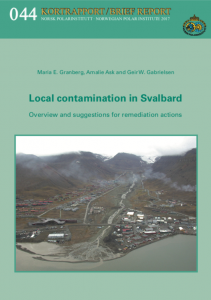
http://www.waterintegritynetwork.net/imtoolbox/ [Accessed: 07.06.2018]This report is based on available reports, published case studies and peer reviewed research articles from Arctic and Antarctic sites. Descriptions of contaminated sites in Svalbard are based on available reports, the Norwegian Environment Agency’s database on contaminated ground sites in Norway, peer reviewed research articles and personal communication with the pollution advisers at the Governor of Svalbard.
This report should be considered as a starting point for further investigations into local pollution issues in Svalbard. The report also provides initial guidance on how to approach remediation of polluted sites in Svalbard.
The goals of this report are to provide an update to the first AHDR (2004) in terms of an assessment of the state of Arctic human development; to highlight the major trends and changes unfolding related to the various issues and thematic areas of human development in the Arctic over the past decade; and, based on this as- sessment, to identify policy relevant conclusions and key gaps in knowledge, new and emerging Arctic success stories, and important AHDR-II follow-up activities.
This review presents data on morbidity rates among people, domestic animals and wildlife in the Russian Arctic, focusing on the potential climate related emergence of such diseases as tick-borne encephalitis, tularemia, brucellosis, leptospirosis, rabies, and anthrax.
REVICH, B., TOKAREVICH, N., PARKINSON, A. J. (2012): Climate change and zoonotic infections in the Russian Arctic. In: International Journal of Circumpolar Health: Volume 71 URL [Accessed: 07.06.2018] PDFUN-Water Global Analysis and Assessment of Sanitation and Drinking-Water. Glaas 2017 reprot
WHO (2017): Financing Universal Water, Sanitation and Hygiene under the Sustainable Development Goals. URL [Accessed: 07.06.2018]The quality of water, whether it is used for drinking, irrigation or recreational purposes, is significant for health in both developing and developed countries worldwide. Water quality can have a major impact on health, both through outbreaks of waterborne disease and by contributing to the background rates of disease. Accordingly, countries develop water quality standards to protect public health. Recognising this, the World Health Organization (WHO) has developed a series of normative “guidelines” that present an authoritative assessment of the health risks associated with exposure to health hazards through water and of the effectiveness of approaches to their control.
The general assembly adopts the following outcome document of the United Nations summit for the adoption of the post-2015 development agenda
UN (2015): Resolution adopted by the General Assembly on 25 September 2015 . URL [Accessed: 07.06.2018]This links provides information on one of the major diseases caused by low quality hygiene.
http://www.who.int/gho/neglected_diseases/trachoma/en/ [Accessed: 06.06.2018]This online guide provides comprehensive facts and figures of plastic pollution, the impact on our oceans and marine life, and much more.
https://sloactive.com/plastic-pollution/ [Accessed: 06.06.2018]This online guide provides comprehensive facts and figures of plastic pollution, the impact on our oceans and marine life, and much more.