This paper is a review of clinical data in Kivalina, Alaska. The authors obtained washeteria closure dates from 2003 to July 2009 and defined 7 day closure as prolonged. They received de-identified data on all Kivalina clinic visits from 2003 to 2009 and selected visits with ICD-9 diagnosis codes for respiratory, skin, or gastrointestinal infection; subsequent same patient/same illness-category visits within 14 days were excluded. The authors compared annual visit rates, for all ages combined, before (20032004) and after (20052009) the ‘‘2004’’ storm.
THOMAS, T.K. et al. (2013): Washeteria closures, infectious disease and community health in rural Alaska. A review of clinical data in Kivalina, Alaska. In: International Journal of Circumpolar Health: Volume 72 URL [Accessed: 02.08.2018] PDFLibrary
Online article about US researchers that uncover trends in infectious diseases through analyzing wastewater samples.
KRISCH, J. A. (2014): What our Sewage can teach us. The New York Times URL [Accessed: 02.08.2018]This article seeks to present the latest evidence on the provision of adequate sanitation, to analyse why more progress has not been made, and to suggest strategies to improve the impact of sanitation, highlighting the role of the health sector. It also aims to show that sanitation work to improve health, once considered the exclusive domain of engineers, now requires the involvement of social scientists, behaviour change experts, health professionals, and, vitally, individual people.
DUNCAN, M. et al. (2010): Sanitation and Health. In: PLoS Medicine: Volume 7 URL [Accessed: 02.08.2018] PDFIn 2017 this Europe-wide study, which includes around 60 cities in total, revealed a picture of distinct geographical and temporal patterns of drug use across European cities. Twenty one cities have participated in at least five of the annual wastewater monitoring campaigns since 2011, which allows for seven-year time trend analysis of drug consumption based on wastewater testing. Following the success of this initial study, comparable studies were undertaken over the following four years, covering up to 19 European countries in 2017.
Johnson introduces the "Special Issue" increasing the evidence-base for informed, effective and collaborative research strategies in the North.
JOHNSON, R.M. (2012): Addressing challenges in participatory research partnerships in the North. opening a conversation. In: International Journal of Circumpolar Health: Volume 71 URL [Accessed: 02.08.2018] PDFThis online article summarizes the study of NEWTON, R. J. et al., 2015: Sewage Reflects the Microbiomes of Human Populations, In: mBio, Vol. 6 (2).
PENNISIS, E. (2015): Pollution, Human Health tracked with Sewage Microbes. Science Online URL [Accessed: 02.08.2018]In this review, the authors highlight relevant data and describe an initiative through the Arctic Council’s Sustainable Development Working Group to characterize the extent of WASH services in Arctic nations, the related health indicators and climate-related vulnerabilities to WASH services. With this as a baseline, efforts to build collaborations across the Arctic will be undertaken to promote innovations that can extend the benefits of water and sanitation services to all residents.
HENNESSY, T.W. and BRESSLER, J.M. (2016): Improving health in the Arctic region through safe and affordable access to household running water and sewer services. an Arctic Council initiative. International Journal of Circumpolar Health URL [Accessed: 02.08.2018] PDFPresentation held by Wayne Parker, Civil and Environmental Engineering, University of Waterloo, Ontario.
Se describen contextos especficos en México, las tecnologias relacionadas a la energía, agua, vegetación y vivienda y casos de implementación en comunidades rurales.
CERVANTES. E., SEGURA, I. VAZQUEZ, S., GARCIA, L. y FALCÓN, A. (2017): Tecnologías apropiadas para el acceso sostenible al agua en el medio rural marginado. Morelos (México): Instituto Mexicano de Tecnología del Agua (IMTA) URL [Accessed: 01.08.2018] PDFGWPP`s mission is to be a knowledge resource and hub on water pathogens which will guide the goals for sanitation and achieving safe water around the world using the power of new information technology and tools. The glossary contains relevant terms: see here http://www.waterpathogens.org/glossary
The Circumpolar Health Research Network (CHRN) was formed in 2012 with the coming together of two international circumpolar health organizations — the International Network for Circumpolar Health Research (INCHR) and the International Association of Circumpolar Health Publishers (IACHP).
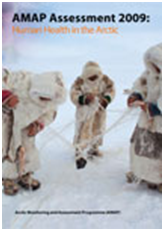
This assessment report details the results of the 2009 AMAP assessment of Human Health in the Arctic. It builds upon the previous AMAP human health assessments that were presented in 19981 and 2022.
The Arctic Monitoring and Assessment Programme (AMAP) is a group working under the Arctic Council.
The research underpinning this work took place in the context of two rural water and sanitation projects carried out in the Eastern Region of Ghana. The focus of study was on the way engineers can make water and sanitation projects more sustainable. In particular, emphasis was placed on the broad range of non-technical factors engineers need to incorporate into the design of water and sanitation systems and the processes they need to follow in order to achieve this, looking specifically at the implications of community participation for design process, project management and health and safety management.
The perception of social sanitation norms (PSSNs) around unacceptability of open defecation has been a key aspect of recent sanitation interventions. However, underlying mechanisms through which "reconstructed" PSSNs affect sanitation outcomes have been a black box. This explorative cross-sectional study examines direct and indirect links between PSSNs and sanitation safety using data from structured interviews and observations in 368 households in rural South Ethiopia.
NOVOTNY, J. et al. (2017): The Role of Perceived Social Norms in Rural Sanitation: An Explorative Study from Infrastructure-Restricted Settings of South Ethiopia. In: International Journal of Environmental Research and Public Health: Volume 14 URL [Accessed: 25.07.2018] PDF