
Library
This paper describes a case study of a house in Kathmandu where rainwater is used for all purposes including drinking, greywater is recycled for non drinkable purposes and human excreta is utilized as a fertilizer by adopting ecological sanitation technique.
SHRESTHA, R.R. (2010): Eco Home for Sustainable Water Management- A Case Study in Kathmandu. Kathmandu: United Nation Development Program (UNDP) URL [Accessed: 12.03.2019] PDF
This handbook serves as a practical guideline featuring best practice for RWH in small island Caribbean environments. It covers the most important topics on RTRWH using helpful illustrations and pictures.
CEHI (2009): Caribbean Rainwater Harvesting Handbook. Castries: Caribbean Environmental Health Institute (CEHI) URL [Accessed: 12.03.2019] PDF
This booklet explains how to collect, store and purify rainwater for direct use at household level. It is a practical guide to creating a rainwater harvesting infrastructure from design to implementation that is illustrated with pictures, tables and examples.
HATUM, T. WORM, J. (2006): Rainwater Harvesting for Domestic Use. Wageningen: Agrosima and CTA URL [Accessed: 12.03.2019] PDF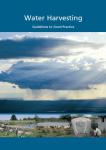
Water harvesting has been practiced successfully for millennia in parts of the world – and some recent interventions have also had significant local impact. Yet water harvesting’s potential remains largely unknown, unacknowledged and unappreciated. These guidelines cover a wide span of technologies from large-scale floodwater spreading to practices that collect and store water from household compounds.
MEKDASCHI STUDER, R. LINIGER, H. (2013): Water Harvesting. Guidelines to Good Practice. Bern/Amsterdam/Wageningen/Rome: Centre for Development and Environment (CDE), Rainwater Harvesting Implementation Network (RAIN), MetaMeta, The International Fund for Agricultural Development (IFAD) URL [Accessed: 12.03.2019] PDF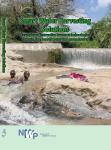
This booklet on smart water harvesting describes a number of creative solutions in situations where there seems to be no water. It shows practical efforts to "create water", especially in drought prone areas. It does not limit itself to the act of harvesting, but includes capturing water during periods of rain, so that it is available for periods of drought. The book is an effective source of inspiration for local communities, civil engineers, NGOs, research institutes, donors and governments.
NWP (2007): Smart Water Harvesting Solutions . Examples of innovative low-cost technologies for rain, fog, runoff water and groundwater. (= Smart water solutions ). Amsterdam: KIT Publishers URL [Accessed: 12.03.2019] PDFThis website provides a brief overview on the most important topics of rainwater harvesting.


Well rehabilitation is defined as restoring a well to its most efficient condition by various treatments or reconstruction methods (groundwater and wells). This continuing education unit discusses the causes of deteriorating well performance and methods, both traditional and more recently introduced methods.
ISWD (n.y): Well Rehabilitation. Lakeland, FL: International School of Well Drilling (ISWD) URL [Accessed: 11.03.2019] PDF
The Code of Practice sets out nine principles that relate directly to the practicalities of borehole construction. They should be adhered to in order to provide cost-effective boreholes.
DANERT, K. ARMSTRONG, T. ADEKILE, D. DUFFAU, B. OUEDRAOGO, I. KWEI, C. (2010): Code of Practice for Cost Effective Boreholes. St. Gallen: Rural Water Supply Network (RWSN) URL [Accessed: 11.03.2019] PDF

Many people living in coastal regions rely on shallow groundwater for their water supply. Seawater flooding after a severe storm or tsunami can damage wells and contaminate the groundwater. This technical note provides advice for rehabilitating wells in such circumstances.
VILHOLTH (2011): Cleaning Wells after Seawater Flooding. Technical Notes on WASH in Emergencies #15. Leicestershire: Water, Engineering and Development Centre (WEDC) URL [Accessed: 11.03.2019] PDF
This study reviews the situation in the drilling sector in Tanzania, assesses options, and identifies support areas.
BAUMANN, E. BALL, P. BEYENE, A. (2005): Rationalization of Drilling Operations in Tanzania. Review of the Borehole Drilling Sector in Tanzania. St. Gallen: Rural Water Supply Network (RWSN) URL [Accessed: 11.03.2019] PDF
This field note has been written for managers of water supply programmes and projects. It provides a step-by-step guide on the siting of drilled water wells. As a first step, the essential requirements for a simple groundwater model are set out, including some basic explanations to help the reader establish a sound understanding of hydrogeology.
CARTER, R. CHILTON, J. DANERT, K. OLSCHEWSKI, A. (2010): Siting of Drilled Water Wells. A Guide for Project Managers. St. Gallen: Rural Water Supply Network (RWSN) URL [Accessed: 11.03.2019] PDF
The Minnesota Department of Health (MDH) is advising well owners that private water wells contaminated with floodwater can pose a health risk. This brochure proposes what measures should be taken to protect wells from flooding.
MDH (2011): Flood Precautions For Private Water Wells. St. Paul, MN: Minnesota Department of Health (MDH) URL [Accessed: 11.03.2019] PDF
RWSN, with support of the Water and Sanitation Programme of the World Bank (WSP-AF) is supporting the formation of a Nigerian Drillers Association. This report provides an overview of the Nigerian drilling environment and sets out the first stage of the process of establishing the association.
ADEKILE, D. (2007): The Drilling Environment and Establishing a Drillers Association in Nigeria. Summary Report. St. Gallen: Rural Water Supply Network (RWSN) URL [Accessed: 11.03.2019] PDF

Well disinfection is used to inactivate or control bacteria populations in a well and the distribution system. This brochure describes the simple chlorination method.
AAFC (n.y): Water Well Disinfection – Using the Simple Chlorination Method. Water Stewardship Information Series. Ottawa: Agriculture and Agri-Food Canada (AAFC). URL [Accessed: 11.03.2019] PDF
Many people living in coastal regions rely on shallow groundwater for their water supply. Seawater flooding after a severe storm or tsunami can damage wells and contaminate the groundwater. This technical note provides advice for rehabilitating wells in such circumstances. It should be used in conjunction with Technical Note 1 which provides general information about rehabilitating wells after a disaster.
VILHOLTH, K. (2013): Cleaning Wells after Seawater Flooding. Technical Notes on WASH in Emergencies #15. Geneva: World Health Organization (WHO) URL [Accessed: 11.03.2019] PDF
This fact sheet contains a step-by-step procedure for performing a simple disinfection of private wells and water (plumbing) systems using chlorine bleach (sodium hypochlorite).
MDH (2012): Well and Water System Disinfection for Private Wells. St. Paul, MN: Minnesota Department of Health (MDH) URL [Accessed: 11.03.2019] PDF