The earthquake that struck Haiti in January 2010 and the cholera epidemic that followed from October 2010, resulted in one of the largest humanitarian relief efforts in history. Many of the internally displaced persons camps were located in urban neighbourhoods with high groundwater, making onsite sanitation extremely difficult. In response to these unique conditions a small local organization, SOIL, partnered with Oxfam Great Britain to pilot urine diversion EcoSan toilets in camps throughout Port-au-Prince. This briefing paper covers this pilot project from March 2010 through March 2012. During that 2-year period, SOIL’s toilets served over 20,000 people and treated more than 400,000 gallons of human waste, converting it to rich compost.
KILBRIDE, A. KRAMER, S. PRENETA, N. (2013): Delivering Water, Sanitation and Hygiene Services in an Uncertain Environment: Piloting Ecological Sanitation (EcoSan) in the Emergency Context of Port-au-Prince, Haiti, after the 2010 Earthquake. (= WECD International Conference , 36 ). Oakland: Sustainable Organic Integrated Livelihoods (SOIL) URL [Accessed: 01.06.2019]Library
This 4-page factsheet provides information on making composting by worms at household level.
KOFF, J.P. de LEE, B. MICKELBART, M.V. (2008): Household Composting with Worms. (= Home and Environment, HENV-104-W ). Purdue University URL [Accessed: 01.06.2019]This is the case of a small farmer who chose to be different from the typical resource-poor farmers struggling to make a living in the degraded drylands. His deep ‘love for life’ has not only earned him a decent living, but more importantly, it has inspired many other farmers to emulate him.
AME FOUNDATION (2007): Vermi-Composting brings better yields and returns – A farmer shows the way. (= AMEF Case Study Series 6 ). Bangalore: AME Foundation URL [Accessed: 01.06.2019]This third publication in the series aims to capture the current trends in waste management with the assistance of 20 case studies from around the world.
UN-HABITAT (2010): Solid Waste Management in the World’s Cities. Pre-publication presentation. Nairobi: United Nations Human Settlements Programme (UN-HABITAT) URL [Accessed: 01.06.2019]Paper discussing the hygienic aspects on the reuse of source-separated human urine.
SCHOENNING, C. (2001): Hygienic aspects on the reuse of source-separated human urine. (= NJF Seminar no. 327 ). Solna: Swedish Institute for Infectious Disease Control (SMI) URL [Accessed: 31.05.2019]This manual looks at the broader issues of sanitation, handling of waste, and then examines the sanitation issue and provides some technical detail on construction and design.
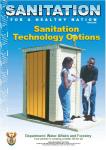
UNDP (2005): Sanitation for You and Me – A Post-Tsunami Technical Overview. New Dehli: United Nations Development Program (UNDP) URL [Accessed: 31.05.2019]In this document, you will find more information on the various technical options that meet the requirements for basic sanitation. These need to be considered within all the sustainability requirements, e.g. affordability, operation and maintenance. The options are divided into two categories: Dry non-water reliant on-site systems and wet systems (that do require water for operation).
WAaF (2002): Sanitation Technology Options. Pretoria: Department of Water Affairs and Forestry (WAaF) URL [Accessed: 31.05.2019]The publication explains the purposes of urine diversion, its benefits and challenges, possibilities of urine treatment and reuse in agriculture. It provides an overview on design and operational aspects for equipment needed, such as waterless urinals and urine diversion toilets. An appendix with a worldwide listing of suppliers for waterless urinals and urine diversion toilet pedestals and squatting pans is also available.
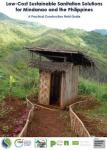
MUENCH, E., v. WINKER, M. GTZ (2009): Urine diversion components. Overview of Urine Diversion Components such as Waterless Urinals, Urine Diversion Toilets, Urine Storage and Reuse Systems. (= Technology Review ). Eschborn: German Agency for Technical Cooperation (GTZ) GmbH URL [Accessed: 31.05.2019]After a brief introductory chapter on the Philippine sanitation situation and basic principles of sustainable sanitation, the manual focuses on the introduction of different low-cost sanitation solutions comprising the arborloo toilet, the 1-chamber and 2-chamber UDDT, hanging UDDTs, and the ecopee urinal. Each technology is briefly described by giving general information on how it works, operation and maintenance requirements, reuse or safe disposal options, and in which setting this technology might be appropriate. In addition, a picture-based guide on how to construct each technology is provided as well as the necessary technical drawings and rough cost estimates based on current prices. Since a sanitation system does not end with the toilet itself, the last chapter also provides information on the overall management of the system including collection, transport, treatment, and final reuse of urine, feces and composting products in agriculture.
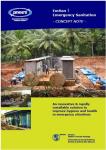
GENSCH, R. MISO, A. ITCHON, G. SAYRE, E. (2010): Low-Cost Sustainable Sanitation Solutions for Mindanao and the Philippines. A Practical Construction Field Guide. Cagayan de Oro City: Xavier University URL [Accessed: 31.05.2019]This source presents the DEWATS emergency sanitation service package, including options for different types of prefabricated materials, developed by BORDA.
BORDA (2009): EmSan - Emergency Sanitation. An innovative & rapidly installable solution to improve hygiene and health in emergency situations. (= Concept Note ). Bremen: Bremen Overseas Research and Development Association URL [Accessed: 31.05.2019]This study analyses the feasibility and potential production of biogas in countries with a cold climate, with emphasis on Romania, Kyrgyzstan, Georgia, Kazakhstan and Armenia. The results are compared with China, Nepal and Bolivia. The study also carefully reviews existing literature before suggesting the same technology for the colder target communities. It also contains recommendations on whether to use the plants on household or community level afterwards.
BALASUBRAMANIYAM, U. ZISENGWE, L.S. MERIGGI, N. BUYSMAN, E. (2008): Biogas Production in Climates with long cold Winters. Wageningen: Wageningen University URL [Accessed: 31.05.2019]This illustrative presentation on ecological sanitation in Malawi, focuses on the concept of ecological sanitation, types of eco-toilets and basic methods of recycling nutrient from human excreta.
MORGAN, P. (2010): Ecological Sanitation in Malawi. Stockholm : Ecological Sanitation Research (EcoSanRes), Stockholm Environment Institute (SEI) URL [Accessed: 31.05.2019]This study assesses ecosan toilets and their implementation in different areas of Nepal from an n social, technical and financial point of view. It gives recommendations in the view of scaling-up ecosan in Nepal.
WATERAID (2008): Assessment of Urine Diverting Ecosan Toilets in Nepal. Kathmandu: WaterAid Nepal URL [Accessed: 31.05.2019]This factsheet contains practical information on the simple pit latrine.
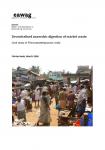
ROBENS INSTITUTE (1996): Fact Sheets on Environmental Sanitation: Simple Pit Latrines. (= Fact Sheets on Environmental Sanitation ). Guildford / Geneva: University of Surrey, World Health Organization (WHO). Factsheet 3.4. URL [Accessed: 31.05.2019]Decentralized anaerobic digestion is a promising technology to handle the large organic fraction of the municipal solid waste with the additional benefit of producing biogas as well as fertilizer. In this study a market level biogas plant in Thiruvananthapuram, South India and constructed by a NGO called BIOTECH is monitored and evaluated.
HEEB, F. (2009): Decentralised anaerobic digestion of market waste. Case study in Thiruvananthapuram, India. Duebendorf: Swiss Federal Institute of Aquatic Science and Technology (EAWAG) URL [Accessed: 31.05.2019]Short general and technical description on single-vault UDDTs.
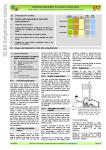
GTZ (2006): Dehydration Toilets. Single-vault Dehydration Toilets with Urine-diversion . (= Technical Data Sheets for Ecosan Components, 02-B2 ). Eschborn: German Agency for Technical Cooperation (GTZ) GmbH URL [Accessed: 31.05.2019]The website of BORDA explains what DEWATs are, describes why DEWATS are necessary, shows good practices for hospitals, agroindustries and communities and lists benefits of decentralized wastewater treatment.
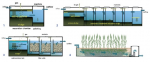
BORDA (2014): DEWATS / Decentralized Wastewater Treatment. Bremen: Bremen Overseas Research and Development Association (BORDA) URL [Accessed: 31.05.2019]Case study from urine crop trials in Arba Minch, Ethiopia, showing the possibility for improving soil fertility and increasing crop yield.
KASSA, K. ; MEINZINGER, F. ; ZEWDIE, W. (2010): Urine diversion dry toilet (UDDT) for Agafari´s household Arba Minch, Ethiopia. In: ECOSANCLUB: URL [Accessed: 31.05.2019]A 2-page factsheet summarizing the EcoSanRes ‘Guidelines on the Use of Urine and Faeces in Crop Production’ publication with short information on urine as a fertilizer, application rates etc.
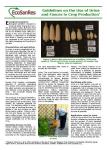
ECOSANRES (2008): Guidelines on the Use of Urine and Faeces in Crop Production. Factsheet. (pdf presentation). (= EcoSanRes Factsheet , 6 ). Stockholm: Stockholm Environment Institute URL [Accessed: 31.05.2019]This presentation offers the chance to learn about how to make different kinds of pedestals.
MORGAN, P. SHANGWA, A. (2009): How to Make Simple Pedestals. The Chisungu Primary School Water and Sanitation project. Stockholm : Ecological Sanitation Research (EcoSanRes), Stockholm Environment Institute (SEI) URL [Accessed: 31.05.2019]