
This case study gives information about a belt press system (description, O&M, costs, etc.) and summarises the selection criteria.
FSA (2002): Case Study 8 – Belt Press. In: FSA Environmental: Volume 8 URL [Accessed: 10.06.2019]Perspectives are different frameworks from which to explore the knowledge around sustainable sanitation and water management. Perspectives are like filters: they compile and structure the information that relate to a given focus theme, region or context. This allows you to quickly navigate to the content of your particular interest while promoting the holistic understanding of sustainable sanitation and water management.

This case study gives information about a belt press system (description, O&M, costs, etc.) and summarises the selection criteria.
FSA (2002): Case Study 8 – Belt Press. In: FSA Environmental: Volume 8 URL [Accessed: 10.06.2019]
This document provides brief descriptions of 17 wetland treatment systems from that are providing significant water quality benefits while demonstrating additional benefits such as wildlife habitat. The projects described include systems involving both constructed and natural wetlands, habitat creation and restoration, and the improvement of municipal effluent, urban stormwater and river water quality. Each project description was developed by individuals directly involved with or very familiar with the project in a format that could also be used as a stand-alone brochure or handout for project visitors.
U.S. EPA (1993): Constructed Wetlands for Wastewater Treatment and Wildlife Habitat. Washington DC: Environmental Protection Agency (EPA) URL [Accessed: 10.06.2019]

The collection, transport, treatment, and disposal of solid wastes, particularly wastes generated in medium and large urban centres, have become a relatively difficult problem to solve for those responsible for their management. The problem is even more acute in economically developing countries, where financial, human, and other critical resources generally are scarce. This publication has been prepared primarily for two audiences: 1) decision-makers and policy makers, and 2) professionals involved in the management of solid wastes. The information in the publication would also be useful to students in environmental engineering. The material is presented such that most chapters need not be read in any particular sequence. However, if a formal class is based on the book, the chapters should be covered in sequential order.
UNEP (2005): Solid Waste Management. Nairobi: United Nations Environment Programme (UNEP) URL [Accessed: 10.06.2019]
The incinerator industry often promotes incinerators as having “zero emissions” or as being “safe for community health”. The truth, however, is that all incinerators contaminate people and the environment with toxic and cancer-causing emissions.
GAIA (2008): Incinerators Trash Community Health. Quezon City: Global Alliance for Incinerator Alternatives (GAIA) URL [Accessed: 10.06.2019]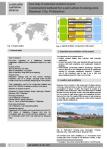
Case study on constructed wetlands for a peri-urban housing area. Septic tanks are used to pre-treat the sewage. The pre-treated wastewater is transported through a small-bore sewer system.
LIPKOW, U. MUENCH, E. von (2010): Constructed Wetland for a Peri-urban Housing Area Bayawan City, Philippines. (= SuSanA – Case Studies ). Eschborn: Sustainable Sanitation Alliance (SuSanA) URL [Accessed: 10.06.2019]
In July 2012, a team from RTI International deployed to the Philippines to evaluate four FSM programs with the goal of reporting on best practices and lessons learned. The four cases—Dumaguete City, San Fernando City, Maynilad Water for the west zone of metro Manila, and Manila Water from the east zone of metro Manila—were chosen to highlight their different approaches to implementing FSM.
ROBBINS, D. STRANDE, L. DOCZI, J. (2012): Opportunities in Fecal Sludge Management for Cities in Developing Countries: Experiences from the Philippines. North Carolina: RTI International URL [Accessed: 10.06.2019]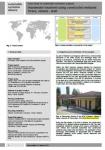
Within the BMZ (German Federal Ministry for Economic Cooperation and Development) financed project on “Advice on the Decentralisation of the Water and Sewerage Sector in Albania” the GIZ and MPWT (Albanian Ministry of Public Works and Transport) initiated the pilot constructed wetland to raise awareness for low cost, appropriate and decentralised sanitation technologies in line with EU standards. It is aimed to be used as a model treatment plant by the main actors of the sector for training, demonstration, research and replication in peri-urban and rural areas of Albania.
GJINALI, E. NIKLAS, J. (2009): Wastewater treatment using constructed wetlands Tirana, Albania - draft. (= SuSanA - Case Studies ). Eschborn: Sustainable Sanitation Alliance (SuSanA) URL [Accessed: 10.06.2019]
The underlying philosophy of phytoremediation research at UFZ (Centre for Environmental Research) is to exploit and to optimise the processes in the rhizosphere. Low-cost, simple systems will be developed to control the environmental problems of different countries in several continents irrespective of their industrial capabilities and conditions – without losing sight of the key principle of cleaning up polluted environmental media in a natural, ecologically balanced way.
KUSCHK, P. WIESSNER, A. MUELLER, R. KAESTNER, M. (2005): Constructed Wetlands – Treating Wastewater with Cenoses of Plants and Microorganisms. Leipzig-Halle: UFZ Centre for Environmental Research URL [Accessed: 10.06.2019]
Hybrid constructed wetland systems have recently been used to treat wastewaters where high demand for removal of ammonia is required. However, these systems have not been used too often for small onsite treatment systems. This study describes an experimental system for mechanically pre-treated wastewater.
VYMAZAL, J. ; KROEPFELOVÀ, L. (2011): A three-stage experimental constructed wetland for treatment of domestic sewage: First 2 years of operation. In: Ecological Engineering : Volume 37 , 90-98. URL [Accessed: 10.06.2019]
This technical document describes scrubbing systems for the removal of ammonia from waste gases.
RVT (2010): Ammonia Recovery/ Ammonia Removal from Liquids and Gases. Steinwiesen: RVT Process Equipment GmBH URL [Accessed: 10.06.2019]
This essay describes the horizontal sub-surface flow and the two basic designs of hybrid constructed wetlands for wastewater treatment.
VYMAZAL, J. (2005): Horizontal Sub-Surface Flow and Hybrid Constructed Wetlands Systems for Wastewater Treatment. Durham: Duke University Wetland Center URL [Accessed: 10.06.2019]
Over the past three decades, anthropogenic emissions of chemical compounds into the atmosphere have caused many environmental and health problems. Some chemicals, such as chlorofluorocarbons (CFCs), are produced deliberately and end up in the atmosphere by accident from equipment or goods. Others, such as sulphur dioxide (SO2) and carbon monoxide (CO), are unavoidable by-products of burning fossil fuels. Urban air pollution, acid rain, contamination by toxic chemicals (some of them persistent and transported over long distances), depletion of the stratospheric ozone layer and changes in the global climatic system are all important environmental threats to ecosystems and human wellbeing.
UNEP (2002): State of the Environment and Policy Retrospective: 1972–2002. Chapter 2-7: Atmosphere. London: Earthscan Publications Ltd URL [Accessed: 10.06.2019]
Read more about environmental problems caused by incineration plants in the United Kingdom.
GREENPEACE (n.y): Pollution and Health Impacts of Waste Incinerators. London: Greenpeace U.K. URL [Accessed: 10.06.2019]
Use of ion exchange processes as in the BioCon-process, make it possible to recover the phosphate as phosphoric acid, which is produced from apatite ore, thus preserving the limited apatite resources and the resources, mainly sulphur, needed for producing phosphoric acid from apatite.
LEVLIN, E. (n.y): Recovery of Phosphate from Sewage Sludge and Separation of Metals by Ion Exchange. Stockholm: Royal Institute of Technology URL [Accessed: 10.06.2019]
Read more about chamber filter presses and their applications, benefits and options in this paper.
PARKSON (2008): Filter Presses. Manual, Semi-Automatic, Automatic. Fort Lauderdale: Parkson Corporation URL [Accessed: 10.06.2019]
The paper presents directions for a new system technology for municipal wastewater treatment, in order to consider both phosphorus removal and recovery.
HULTMAN, B. LOEWEN, M. (n.y): Combined Phosphorus Removal and Recovery. Stockholm: Royal Institute of Technology URL [Accessed: 10.06.2019]
Water resources are limited in the oasis town of Béni Abbès. Efficient resource planning is complicated due the deficit of reliable data on demand, supply, and use of water. To improve the data collection, GIZ introduced an IWRM project at the oasis in order to get a sufficiently account for all demands on the available water resources. The main objective of the sanitation activities of this IWRM project is to support the elaboration of an overall strategy for the future management of all wastewater, ensuring the collection and treatment of the generated wastewater within the oasis and to maximise its reuse potential. This SuSanA case study presents only the greywater part of the wastewater concept. The greywater treatment and reuse systems used in the project were designed to collect, treat and reuse greywater coming from kitchen sinks and wash hand basins.
BRACKEN, P. (2012): Greywater Treatment in an Oasis Town, Béni Abbès, Béchar, Algeria. Case Study of Sustainable Sanitation Projects. Béni Abbès, Béchar, Algeria : Sustainable Sanitation Alliance (SuSanA) URL [Accessed: 10.06.2019]
This document reviews current practices of faecal sludge management and treatment.
MONTANGERO, A. STRAUSS, M. (2004): Faecal Sludge Treatment. Duebendorf: Swiss Federal Institute of Aquatic Science (EAWAG), Department of Water and Sanitation in Developing Countries (SANDEC) URL [Accessed: 10.06.2019]