The rapid development of cities and consequent population explosion in urban areas has led to depletion of surface water resources. For fulfillment of daily water requirement, indiscriminate pumping of ground water is being resorted to, leading to lowering of ground water table. At the same time the rain water is not being conserved which ultimately goes waste. To avoid this imbalance, conservation of rain water in the form of rain water harvesting is the only solution. Rain water harvesting can be effectively implemented in our office and residential complexes for conservation of rain water. The subject has assumed lot of significance in the present scenario. This has been included in Indian Railway Works Manual 2000 vide correction slip no. 10 dated 17.02.05 also. This publication is an attempt to compile all the relevant Information regarding various methods commonly in use. These methods can be used by field engineers for designing and implementing Rain Water Harvesting systems.
IRICEN (2006): Rain Water Harvesting. Pune: Indian Railways Institute of Civil Engineering (IRICEN) URL [Accessed: 16.03.2015]Library
A practical guideline featuring best practices for rainwater harvesting in small Island Caribbean environments
CEHI (2009): Rainwater - Catch it While You Can. A Handbook on Rainwater Harvesting in the Carribean. Nairobi: United Nations Environment Programme (UNEP) URL [Accessed: 16.03.2015]Rainwater harvesting is a technology used to collect, convey and store rain for later use from relatively clean surfaces such as a roof, land surface or rock catchment. The water is generally stored in a rainwater tank or directed to recharge groundwater. Rainwater infiltration is another aspect of rainwater harvesting playing an important role in stormwater management and in the replenishment of the groundwater levels. Rainwater harvesting has been pr acticed for over 4,000 years throughout the world, acticed for over 4,000 years throughout the world, traditionally in arid and semi-arid areas, and has provided drinking water, domestic water and water for livestock and small irrigation. Today, rainwater harvesting has gained much on significance as a modern, water-saving and simple technology.
KHOURY-NOLDE, N. (n.y): Rainwater Harvesting. Germany: Zero-M & Fachvereinigung Betriebs- und Regenwassernutzung e.V. URL [Accessed: 16.03.2015]Extreme climate events such as aridity, drought, flood, cyclone and stormy rainfall are expected to leave an impact on human society. They are also expected to generate widespread response to adapt and mitigate the sufferings associated with these extremes. Societal and cultural responses to prolonged drought include population dislocation, cultural separation, habitation abandonment, and societal collapse. A typical response to local aridity is the human migration to safer and productive areas. However, climate and culture can interact in numerous ways. We hypothesize that people may resort to modify dwelling environments by adapting new strategies to optimize the utility of available water by harvesting rain rather than migrating to newer areas. We review recent palaeoclimatological evidence for climate change during the Holocene, and match those data with archaeological and historical records to test our ‘climate change–rainwater harvest’ hypothesis. We find correlation between heightened historical human efforts for construction of rainwater harvesting structures across regions in response to abrupt climate fluctuations, like aridity and drought. Historical societal adaptations to climate fluctuations may provide insights on potential responses of modern societies to future climate change that has a bearing on water resources, food production and management of natural systems.
PANDEY, D.N. GUPTY, A.K. ANDERSON, D.M (2003): Rainwater Harvesting as an Adaptation to Climate Change. (= Current Science , 1 / 85 ). Bengaluru: Current Science URL [Accessed: 16.03.2015]Rainwater harvesting has been used throughout history as a water conservation measure, particularly in regions where other water resources are scarce or difficult to access. In recent years, researchers and policy makers have shown renewed interest in water use strategies due to rising water demand, increased interest in conservation (both water and energy), and an increased regulatory emphasis on reducing storm water runoff volumes and associated pollutant loads. In the last decade, as interest in the practice has grown, numerous state, municipal, and regional agencies have adopted or amended codes and guidelines to encourage responsible and effective rainwater harvesting practices. In addition, researchers from universities and non-government organizations, as well as industry consultants, have published papers and articles addressing a broad range of topics related to the installation, maintenance, costs, and performance of harvest and use systems. A literature review of existing research and policy documents related to rainwater harvesting has been conducted, with particular focus on characterizing the current state of the practice in the areas of: (1) water conservation, (2) storm water volume and pollutant load reduction, (3) code and administration considerations and (4) cost factors. The purpose of this report is to summarize the existing knowledge base in these four areas, assess factors affecting economic benefits of rainwater harvesting, and identify topics requiring additional research. This report is not intended to serve as a design document. Readers looking for design guidance should consult a more technically-focused publication, such as the Texas Manual on Rainwater Harvesting (TWDB, 2005).
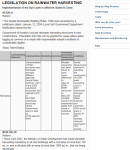
EPA (2013): Rainwater Harvesting - Conservation, Credit, Codes, and Cost Literature Review and Case Studies. Washington: United States Environmental Protection Agency (EPA) URL [Accessed: 16.03.2015]Implementation of the By-Laws in different States & Cities.
CSE (n.y): Legislation on Rainwater Harvesting. New Delhi: Centre for Science and Environment (CSE) URL [Accessed: 16.03.2015]This weblink contains a short animated video introducing closed loop concepts: Sanimation. This is how the makers advertise Sanimation: The truth about the last taboo of our age. The reason for why you should give a shit.
The training manual is developed to assist capacity builders in developing training and educational programmes on water integrity and how it can be promoted and worked with in more practical ways. The overall goal is to develop institutional capacities and prepare for change through increased knowledge and action on integrity, accountability and anti-corruption in any country or region. The primary objectives of the training are to provide: 1. Conceptual grounding in the area of integrity, accountability and anti-corruption in water, its drivers and impacts on water as well as on poverty reduction and sustainable development; 2. An overview of tools and methodologies to promote water integrity, transparency and accountability and their applicability in various contexts; 3. Examples of good practices relating to the promotion of integrity, transparency, accountability and anti-corruption in water.
UNDP SIWI WIN Cap-Net WATERnet (n.y): Training Manual on Water Integrity. [Accessed: 21.01.2015]Building an organisation’s reputation for trustworthiness can take a long time and requires considerable effort and investment. But what happens when a crisis or scandal hits an organisation and its reputation for trustworthiness comes under sustained threat? Recent examples include BP, News International, Castlebeck Care Homes, several banks (HBoS, Royal Bank of Scotland, UBS, Goldman Sachs) and Foxconn. The process of trust repair and the recovery of reputation can be arduous, but it is achievable.
DIETZ, G. GILLESPIE, N. (2012): The Recovery of Trust: Case studies of organisational failures and trust repair. (= Occasional Paper , 5 ). London: Institute of Business EthicsSME Corporation Malaysia and CPA Australia have been granted the copyright to reproduce the Guide and to modify the content to suit the Malaysian context. The Guide will be a useful reference for entrepreneurs on fi nancial management which is a key success factor to any SME business, particularly for new entrepreneurs with little fi nancial background.
SME Corporation Malaysia (2011): Financial Guide for SMEs. Kuala Lumpur: SME Corporation MalaysiaAlthough they are usually low profile, small and medium sized enterprises (SMEs) play a significant role in this country. SMEs, however, have not realised their full potential as drivers of the economy. There are many factors that negatively affect the business environment for SMEs, and one of the biggest factors is corruption. Indeed, a recent study by the World Economic Forum shows that the most problematic factor for doing business in the Philippines is corruption.
DEL ROSARIO, R.V. STARR, C.V. (2011): Anti-Corruption Manual for SMEs. Hills Program on GovernanceThis Anti-Corruption Training Manual aims to help users achieve a better understanding of corruption and how to avoid it. It can be used by individuals, and also by companies as part of their corporate training. (1) Section 1 provides an overview of what constitutes corruption, who may be liable for corruption, and how it may be avoided. (2) Section 2 provides 47 detailed examples of corruption throughout the project cycle. (3) Section 3 provides some simple anti-corruption rules which individuals should follow (and which companies could impose on their employees) to try to ensure that no corruption offence is committed. (4) Section 4 provides practical advice as to what individuals and companies should do when faced with a potentially corrupt situation.
GIACC TI (2008): Anti-Corruption Training Manual. (Infraestructure, Construction and Engineering Sectors). [Accessed: 21.01.2015]This study maps corruption risks in the water sector (including irrigation and hydropower) and presents methods and tools to measure corruption in the sector. It also presents good practices in improving oversight and promoting better water resource management.
UNDP (2011): Fighting Corruption in the Water Sector. Methods, Tools and Good Practices. New York: UNDPAccording to The Evaluation Report on Armenia published by GRECO, the Council of Europe Group of States against Corruption on March 2006 corruption remains a major problem in Armenia despite the adoption of a number of anti-corruption measures. It says particularly that Armenia’s judiciary, customs service, tax inspectorate, licensing and privatizations are affected by corruption. The report describes two different dimensions of corruption in Armenia: high level corruption through abuse of political or public authority; and administrative corruption typically practiced by middle and lower-level public officials in their dealings with members of the public. This publication considers the manifestations of administrative corruption in the sphere of small and medium entrepreneurship.
FSMB (2006): Combating Corruption - SME Sector Perception and Solutions. Yerevan: FSMBAs organised business we believe that ethical business practice is good business practice. Not only does it build solid businesses, but also a stable business environment. We believe that the majority of business owners understand that corruption is detrimental to the stability of the business environment and, in that way, it impacts on all of us. World Bank studies have found that Small and Medium Enterprises (SMEs) are more vulnerable to corruption. Yet SME owners and managers have fewer resources to help them understand corruption and how corruption laws could affect them. Business Unity South Africa (BUSA) has therefore, with the support of the German Agency for Technical Cooperation (GTZ), developed this guide to assist SMEs in making sense of corruption and to understand how they can contribute in promoting ethical business practices in South Africa.
Ethics Institute of South Africa (2009): An anti-corruption guide for South African SMEs. BUSAThis manual provides guidance in the design of wastewater systems in developing country settings. It promotes a context-specific approach to technology selection by guiding the user to select the most suitable technologies for their area. It provides tools and field guides for source characterization and site evaluation, as well as technology identification and selection. This manual is primarily addressed to private and public sector service providers, regulators and engineers/development specialists in charge of implementing wastewater systems.
ROBBINS, D.M. LIGON, G.C. (2014): How to Design Wastewater Systems for Local Conditions in Developing Countries. London: International Water Association (IWA) URL [Accessed: 20.01.2015]