Sensible alternatives are being sought to the present method of disposing of mechanically de-watered sewage sludge such as dumping, agricultural use, drying and incineration.
PUTZMEISTER (2001): Co-incineration of Sewage Sludge in Coal-Fuelled Power Stations. Aichtal: Putzmeister Holding GmbH URL [Accessed: 27.05.2019]Library
Biodiesel production from sewage sludge poses huge challenges to overcome if commercial opportunities are to be realised. Some of these challenges are not unique to biodiesel production from waste sludge but to the biodiesel industry as a whole. They include challenges from (1) collecting the sludge, (2) optimum production of biodiesel, (3) maintaining product quality, (4) soap formation and product separation, (5) bioreactor design, (6) pharmaceutical chemicals in sludge, (7) regulatory concerns, and (8) economics of biodiesel production.
KARGBO, D.M. (2010): Biodiesel Production from Municipal Sewage Sludges. المُدخلات: Energy Fuels 2010: Volume 24 , 2791–2794. URL [Accessed: 27.05.2019]This information service on biogas technology has been developed and produced on the order of the GTZ project Information and Advisory Service on Appropriate Technology (ISAT). It contains information on the application of biogas and product development.
KOSSMANN, W. POENITZ, U. HABERMEHL, S. HOERZ, T. KRAEMER, P. KLINGLER, B. KELLNER, C. WITTUR, T. VON KLOPOTEK, F. KRIEG, A. EULER, H. (1999): Biogas Digest Volume II. Biogas - Application and Product Development. Eschborn: GTZ URL [Accessed: 27.05.2019]The aim of this project is to show that decentralised and virtually energy self-sufficient disposal of sewage sludge is possible with the use of intelligent process technology and optimised plant components. Well-proven plant components have been combined to create an innovative overall concept. Read more in this report.
HUBER (2011): Layman Report: Sludge2Energy A Way to Energy Self-sufficient Sewage Treatment Plants. Berching: HUBER SE URL [Accessed: 27.05.2019]In this report a good collection of Nordic innovative companies and their products are introduced. The report highlights some examples in the key technologies. It can be seen that in the Nordic countries there is a good industry base to cover the most promising recent innovative technologies.
GREENNET FINLAND (n.y): Sludge Treatment. Vantaa: Greennet Finland URL [Accessed: 27.05.2019]This report compiles international experience in greywater management on household and neighbourhood level in low and middle-income countries. The documented systems, which vary significantly in terms of complexity, performance and costs, range from simple systems for single-house applications (e.g. local infiltration or garden irrigation) to rather complex treatment trains for neighbourhoods (e.g. series of vertical and horizontal-flow planted soil filters).
MOREL, A. DIENER, S. (2006): Greywater Management in Low and Middle-Income Countries, Review of Different Treatment Systems for Households or Neighbourhoods. (= SANDEC Report No. 14/06 ). Duebendorf: Swiss Federal Institute of Aquatic Science (EAWAG), Department of Water and Sanitation in Developing Countries (SANDEC) URL [Accessed: 27.05.2019]In this mini-review, the `state of the art' of several fermentation processes is discussed, starting with the most advanced process of ethanol production.
CLAASSEN, P.A.M. ; LIER, J.B. van ; LOPEZ CONTRERAS, A.M. ; NIEL, E.W.J. van ; SIJTSMA, L. ; STAMS, A.J.M. ; VRIES, S.S. de ; WEUSTHUIS, R.A. (1999): Utilisation of Biomass for the Supply of Energy Carriers. المُدخلات: Appl. Microbiol. Biotechnol: Volume 52 , 741-755. URL [Accessed: 27.05.2019]These terms of references define the legal regulations in Switzerland concerning the water protection and air pollution control for the use of nutrients and fertilisers in agriculture.
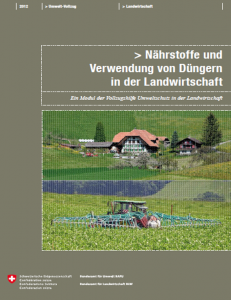
BAFU ; BLW (2012): Nährstoffe und Verwendung von Düngern in der Landwirtschaft. Ein Modul der Vollzugshilfe Umweltschutz in der Landwirtschaft. Bern: Bundesamt für Umwelt (BAFU) / Bundesamt für Landwirtschaft (BLW) URL [Accessed: 27.05.2019]In the Flintenbreite in Luebeck, Germany, blackwater is collected in vacuum toilets. Together with organic wastes from the kitchen it is converted to biogas. Greywater is treated in a reed-bed filter. The project demonstrated the consistent utilisation of ecological building materials, the use of self-sustaining, integrated energy and wastewater concepts, and the implementation of innovative energy saving technologies, with a minimisation of interference in nature, and a responsible, integrative and active cohabitation of the inhabitants.
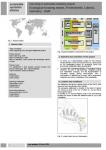
OTTER-WASSER (2009): Ecological housing estate, Flintenbreite, Luebeck, Germany - draft. (= SuSanA - Case Studies ). Eschborn: Sustainable Sanitation Alliance (SuSanA) URL [Accessed: 27.05.2019]Complete report on the pilot scale struvite reactor developed and operated in the Kathmandu Valley.
ETTER, B. (2009): Optimization of low-cost struvite recovery. (= Master thesis ). Swiss Federal Institute of Technology Lausanne (EPFL) URL [Accessed: 27.05.2019]Decentralized anaerobic digestion is a promising technology to handle the large organic fraction of the municipal solid waste (e.g. kitchen waste) with the additional benefit of producing biogas as well as fertilizer. This paper evaluates the suitability of the ARTI Compact biogas system as a decentralised low-tech treatment option for the organic fraction of household waste in Dar es Salaam, Tanzania.
LOHRI (2009): Research on Anaerobic Digestion of Organic Solid Waste at Household Level in Dar es Salaam, Tanzania. (= Bachelor Thesis ). Zurich University of Applied Sciences (ZHAW) URL [Accessed: 27.05.2019]This is homepage of the EAWAG project on fertiliser production form urine (NOVA 6) presents results form pot test and field experiments of the application in agriculture and steps forward for scaling up.
Different strategies and methods to achieve the target of recovering phosphorus from sludge are discussed based on reports from the Swedish environment protection agency (SEPA) and with special emphasis on extraction of phosphate from wastewater, sludge and ash at central plants. Some possible improvements are briefly discussed, such as the use of certain comparatively clean sludge fractions and use of two-stage technology for the recovery.
HULTMAN, B. LEVLIN, E. PLAZA, E. STARK, K. (n.y): Phosphorus Recovery from Sludge in Sweden - Possibilities to meet proposed Goals in an efficient, sustainable and economical Way. URL [Accessed: 27.05.2019]Presentation on experiences with the use of urine (and faeces) in agriculture including research results, conducted taste tests and calculations on the fertiliser value.
DAGERSKOG, L. SuSanA (2009): Urine and Faeces as Fertilizers in the CREPA Network. pdf presentation. (= SuSanA presentation WG , 5 ). Ouagadougou: Sustainable Sanitation Alliance URL [Accessed: 27.05.2019]This document provides an overview and introduction on biogas sanitation (anaerobic digestion) for blackwater or for brown water, or excreta treatment for reuse in developing countries. The main technologies discussed are biogas settlers (BSs), biogas septic tanks, anaerobic baffled reactor (ABRs), anaerobic filter (AFs) and upflow anaerobic sludge blanket reactors (UASBs).
MANG, H.-P. LI, Z. (2010): Technology Review of Biogas Sanitation. (= Technology Review ). Eschborn: Deutsche Gesellschaft für Internationale Zusammenarbeit (GIZ) GmbH URL [Accessed: 26.05.2019]This Technical Brief reviews some of the options for wastewater treatment in low- and middle-income communities. It should be used as a guide to the main options available.
WELL (n.y): Wastewater Treatment Options. (= WELL Technical Briefs , 64 ). Loughborough: Water and Environmental health at London and Loughborough (WELL) URL [Accessed: 26.05.2019]This practical guideline on the use of urine in agricultural productions gives some background information on basic plant requirements and how they can be met with urine as a liquid fertiliser.
RICHERT, A. GENSCH, R. JOENSSON, H. STENSTROEM, T.A. DAGERSKOG, L. (2010): Practical Guidance on the Use of Urine in Crop Production. (= EcoSanRes Publication Series, Report No. 2010-1 ). Stockholm: Stockholm Environment Institute (SEI) URL [Accessed: 26.05.2019]The Netherlands Development Organisation (SNV) library hosts an extensive choice of domestic biogas reports from around the world domestic biogas.
This information service on biogas technology has been developed and produced on the order of the GTZ project Information and Advisory Service on Appropriate Technology (ISAT). Volume III discusses the micro- and macro-economic viability of biogas sanitation systems.
ISAT ; GTZ (1999): Biogas - Costs and Benefits and Biogas – Programme Implementation. (= Biogas Digest , 3 ). Information and Advisory Services on Appropriate Technology (ISAT) and German Agency for Technical Cooperation GmbH (GmbH) URL [Accessed: 26.05.2019]This report is a basic assessment of the feasibility and potential for using animal wastes in anaerobic methane digesters to create electricity in Minnesota. It covers an estimation of the electricity potential, the farm-size thresholds that warrant further investigation for a potential digester system, a quantification of the impact of incentives as well as a financial analysis.
MDC (2003): Minnesota's Potential for Electricity Production Using Manure Biogas Resources. Final Report. Minnesota: Minnesota Department of Commerce (MDC) and State Energy Office (SEO). [Accessed: 23.04.2010] PDF