More than two billion urban dwellers in developing countries use on-site sanitation facilities such as pit latrines, septic tanks and aqua privies for excreta and wastewater disposal. Since on-site sanitation installations will serve the growing urban populations in developing countries for decades to come, increasing faecal sludge quantities will have to be managed. Proper faecal sludge management (FSM) is the important link missing in integrated urban sanitation upgrading efforts.
KONE, D. STRAUSS, M. SAYWELL, D. (2007): Towards an Improved Faecal Sludge Management (FSM). Duebendorf: EAWAG/SANDEC URL [Accessed: 15.12.2010]Library
This document briefly discusses the uses of qualitative and quantitative scenarios, and then reviews the status of global water scenarios and points out some of their major shortcomings.
ALCAMO, J. GALLOPIN, G. (2009): Building a 2nd Generation of World Water Scenarios. (= World Water Assessment Programme side publications series: insights ). Paris: UNESCO URL [Accessed: 14.12.2010]This article gives some ideas on how to organise a role play well, and provides the reader with many good tips and tricks.
FINKEL, S. (n.y): From Knowing to Doing: How to Implement!. URL [Accessed: 14.12.2010]This article copied from the above link leads to a short overview which explains how a role play can be applied and how a role play works.
BAUMGARTNER, J. (2001): Team Role Play. URL [Accessed: 14.12.2010]This paper was produced during an EMPOWERS symposium. The first part of the paper contains a description about how to best conduct scenario building workshop. The second part deals with a case study in Jordan where scenario building was applied. The steps and scenarios for this example of scenario building are well elaborated and give a good impression how scenario building can be used.
MORIARTY, P. SHRAIDEH, F. HADDAD, F. ALZOUBI, R. ABBADI, M. BATCHELOR, C.H. DE GROOIJER, G. (2005): Scenario building in local-level water resource management – experience from the EMPOWERS project with reference to a case study in Jordan. Proceedings of the EMPOWERS Regional Symposium: End-Users Ownership and Involvement in IWRM, 13-17. November 2005. Cairo: [Accessed: 14.12.2010] PDFThis site presents many useful tools that can be used in trainings, such as role plays, brainstorming techniques, evaluation methods etc.
This article describes the purpose of roleplays, as well as how to lead them in ten very illustrative steps.
WOODROW, P. (n.y): How to lead Roleplays. Minneapolis: Training for change URL [Accessed: 14.12.2010]This presentation includes a detailed examination of the current water management situation in the Chakir Basin. Following this examination the main issues are used to develop possible scenarios.
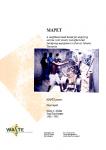
DUKHOVNY, V.A. (2006): Scenario building for future water management in the Chakir Basin. (= Proceedings of Integrated River Basin Management in Contrasting Climate Zones, 14th to 15th December 2006 ). Hohenheim: Rivertwin. [Accessed: 14.12.2010] PDFA chapter of this presentation shows experiences with the latrine emptying technology ‘gulper’.
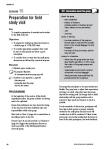
WATERAID (2010): Pit Emptying Business in Temeke-Dsm. Tanzania Country Programme. London: WaterAid URL [Accessed: 13.12.2010]Gives detailed session plans for trainers to execute fieldtrips.
TEARFUND (n.y): Facilitation work books- Session 17. URL [Accessed: 10.12.2010]In rural areas, the Ventilated Improved Pit Latrine (VIP) is often considered as the basic standard for sanitation. Large numbers of VIPs have even been constructed in urban areas where other sanitation options were not economically feasible. Pit filling times vary widely depending on factors such as numbers of users, soil type and pit lining methodology. Pits are also generally used for solid waste disposal, and this hastens the filling time.
STILL, D.A. (2002): After the Pit Latrine is Full. What Then? Effective Options for Pit Latrine Management. Pretoria: Water Research Commission URL [Accessed: 09.12.2010]This website contains all important information about the manual desludging hand pump.
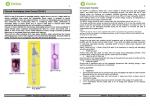
This paper introduces manual desludging hand pump. The design, its use and maintenance is illustrated with many images.
OXFAM (n.y): Manual Desludging Hand Pump (MDHP). Various places: Oxfam International URL [Accessed: 09.12.2010]Another website which contains suggestions how to do create a training completion certificate. It holds some useful advice which can simplify the process of creating a certificate.
This website gives advice for creating a training certificate. There are some things which have to be considered and can make a certificate looking more professional.
Knowledge and adoption kit for organising events.