This presentation shows the main results of a study on financial and economic analysis of ecological sanitation (ecosan) in Sub-Saharan Africa. It focuses on a comparison of ecosan with conventional sanitation systems suitable for urban settlements. The aim of the study was to compare ecosan with conventional sanitation systems in terms of financial and economic costs and benefits, in order to assist decision-makers and sponsors of development programs to make informed decisions about relative merits of different types of sanitation. Based on two case study analysis, none of the currently implemented systems are seen to provide an obvious model for scaling up without considerable. external support.
KNAPP, A. (2009): Financial and Economic Analysis of Ecological Sanitation in Sub-Saharan Africa. PPT Presentation. (= World Water Week Stockholm, 2009 ). URL [Accessed: 10.01.2011]Library
The objective of this research was to analyse in how far the small bore sewertechnology could be applied and to design sewerage system in Kecamatan Jatinangor, Sumedang, using small bore sewer concept.
HARINDI, F.T. KAMIL, I.M. (n.y): Application of Small Bore Sewer System in Kecamatan Jatinangor, Kabupaten Sumedang. Bandung: Faculty of Civil and Environment Engineering ITB URL [Accessed: 10.01.2011]The availability of local water resources in Jamaica is threatened by environmental pollution caused by domestic, agricultural and industrial interference. The Scientific Research Council (SRC) of Jamaica has over the ten years focused on providing appropriate technological and economic alternatives to the agricultural, municipal and industrial sectors, in order to avoid, reduce and treat wastewater. This paper will present experiences of the SRC in providing cost effective solutions to waste producers in Jamaica enabling delivery of “green” products and services to satisfy local and international environmental standards.
BROWN, J. (2003): Wastewater Treatment: The Experiences Of The Scientific Research Council In Jamaica. Kingston: Scientific Research Council (SRC) URL [Accessed: 06.01.2011]This presentation illustrates the case of Lille (France), where biogas produced from green waste biomass is used to run the urban bus fleet.
MESTREL, M. (2008): The use of biomethane as a fuel by the urban bus fleet in Lille (France). PPT Presentation.. Biogas ja Bioenergia 2008. [Accessed: 06.01.2011] PDFThis work aimed at evaluating two systems – vertical gardens and mulch beds – that were implemented as an alternative to current greywater disposal practices in low-income households in Ouagadougou, Burkina Faso. Literature on greywater reuse and disposal systems and risks connected with greywater irrigation were studied as well as relevant site-specific parameters. Experiments were carried out on two new vertical gardens in addition to soil analyses, interviews and observations in households where vertical gardens and mulch beds had been in use for several months.
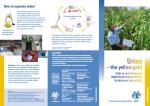
EKLUND, O.C. TEGELBERG, L. (2010): Small-scale Systems for Greywater Reuse and Disposal. Uppsala: Department of Energy and Technology, Swedish University of Agricultural sciences URL [Accessed: 06.01.2011]This flyer contains information about the importance of urine reuse. The nutrients in urine are easily taken up by plants. The fertilised plant will grow faster, develop more leaves and produce higher yields. Applying urine to crops instead of chemical fertilisers saves money and energy and produces a similar yield. One person produces about 500 liter urine per year.
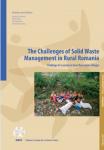
WECF (2010): How to Separate Urine. Utrecht/Munich/Annemasse: Women in Europe for a Common Future URL [Accessed: 06.01.2011]Solid waste management is a hot issue in Romania and one which needs to be addressed urgently. The lack of a proper waste management has become an obvious problem in the countryside: roadsides, hedges, village borders and fields are all covered with litter, plastic packaging and animal manure. Up till now, there has been little or no support from local, regional or national authorities for solving the waste problems in rural villages. Therefore citizens help themselves as best as they can. This survey provides information on the types of waste and on the management of waste by the citizens of 4 villages in 3 different Romanian counties.
WECF (2010): The Challenges of Solid Waste Management in Rural Romania. Utrecht/Munich/Annemasse: Women in Europe for a Common Future URL [Accessed: 06.01.2011]The WSP manual is based on the WHO instrument to assess the risks for small scale water supply systems and contains information concerning water safety plans, background information, educational information and suggestions for teachers. With this manual teachers and pupils can develop water safety plans for small scale water supply systems together.
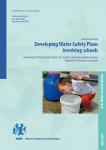
MOELLER, D. SAMWEL, M. (2008): Developing Water Safety Plans involving schools. Introducing “Water Safety Plans” for small-scale water supply systems. Manual for teacher and pupils. Utrecht/Munich/Annemasse: Women in Europe for a Common Future URL [Accessed: 06.01.2011]Short brief on the construction of ventilated improved pit latrines
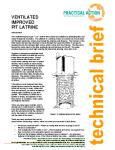
PRACTICAL ACTION (n.y): Ventilated Improved Pit Latrines . (= Technical Briefs ). Bourton on Dunsmore: Practical Action, Schumacher Centre for Technology & Development URL [Accessed: 05.01.2011]Flowing Forward develops guiding principles, processes, and methodologies for incorporating climate change adaptation for water sector projects with a particular emphasis on impacts on ecosystems.
QUESNE, T., Le MATTHEWS, J.H. HEYDEN, C. von der WICKEL, A.J. WILBY, R. HARTMANN, J. PEGRAM, G. KISTIN, E. BLATE, G. KIMURA DE FREITAS, G. LEVINE, E. GUTHRIE, C. MCSWEENEY, C. SINDORF, N. (2010): Flowing Forward. Freshwater ecosystem adaptation to climate change in water resources management and biodiversity conservation. World Wildlife Fund for Nature (WWF) URL [Accessed: 05.01.2011]This study, evaluates the effectiveness of human manure as a source of nutrients using cabbage as a test crop at Ntselamanzi location, Alice, South Africa as part of a project intended to generate knowledge and good practice in ecological sanitation.
MNKENI, P.N.S. AUSTIN, L.M. (2009): Fertiliser value of human manure from pilot urine-diversion toilets. Fort Hare and Pretoria: Department of Agronomy, Faculty of Science and Agriculture, University of Fort Hare and CSIR Built Environment Unit URL [Accessed: 05.01.2011]This presentation is an example (case study) of planning of an ecological sanitation program in low income countries.
KLUTSE, A. (2009): Planning and Implementation of Sustainable Sanitation in Peri/Semi- Urban Settings a Need for Development of Existing Tools?. Ouagadougou: Centre Regional Pour l'Eau Potable et l'Assainissement a faible couts (CREPA) URL [Accessed: 05.01.2011]This document describes the anaerobic treatment of domestic wastewater in subtropical regions.
SEGHEZZO, L. (2004): Anaerobic treatment of domestic wastewater in subtropical regions. Wageningen: Wageningen University URL [Accessed: 05.01.2011]This paper reviews the overall implications of UASB (Upflow Anaerobic Sludge Blanket) technology in India. Institutional and technical aspects with special reference to the Yamuna Action Plan (YAP) are presented. It also presents the potential of UASB technology in other developing countries with its future within India as well based on the evaluation of life cycle cost.
KHALIL, N. SINHA, R. RAGHAV, A.K. MITTAL, A.K. (2008): UASB Technology For Sewage Treatment In India: Experience, Economic Evaluation And Its Potential In Other Developing Countries. (= Proceedings in: 12th Water Technology Conference, Alexandria, Egypt. ). URL [Accessed: 05.01.2011]cewas is a Swiss-based international centre of competence in the field of sustainable sanitation and water resource management. It combines advanced education with a start-up centre, a think tank, and a business platform.
These technology notes have been prepared following many general enquiries for technical information having been received by WaterAid over the years. Their purpose is to give an outline of the technologies used by WaterAid on long-term development projects in Africa and Asia, and to show alternatives, which might be appropriate in different circumstances. It may be possible to determine from the notes the technology, which would be appropriate in a particular location.
WATERAID (2008): Technology Notes. London: WaterAid URL [Accessed: 04.01.2011] PDF