This study evaluates the performance of the filter under various set-ups, to investigate long-term removal efficiencies to improve the filter design and to implement the filter in arsenic affected villages.
NGAI, T. WALEWIJK, S. (2003): The Arsenic Biosand Filter project: Design of an Appropriate Household Drinking Water Filter For Rural Nepal - Final Report. Cambridge: Massachusetts Institute of Technology URL [Accessed: 18.01.2011]Library
This paper describes experiments with domestic sewage, using a 120 litre expanded granular sludge bed (EGSB) reactor and a 205 litre fluidised bed (FB) reactor.
LAST, van der ; A.R.M. ; LETTINGS, G. (1992): Anaerobic treatment of Domestic Sewage under Moderate Climatic (Dutch) conditions using Upflow Reactors at increased Superficial Velocities. المُدخلات: Water Science and Technology (WSTED): Volume 25 , 167-178. URL [Accessed: 18.01.2011]This web link connects to a video on arsenic treatment by coagulation/filtration processes.
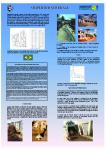
This poster gives an overview about the construction of a simplified sewer system in Brazil.
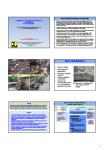
SANICON (n.y): Simplified Sewerage. The Hague and Loughbourgh: IRC International Water and Sanitation Centre and Water, Engineering and Development Centre URL [Accessed: 13.01.2011]This presentation talks about community based sanitation project in Indonesia and shows the main sanitation tools (e.g. simplified sewers or shared septic tanks).
LEGOWO, H.B. (2010): Community Based Sanitation (SANIMAS) in Indonesia. Jakarta: Sub-directorate of Wastewater Development, Directorate of Environmental Sanitation Development URL [Accessed: 13.01.2011]This website contains a short description of simplified sewerage and several links publications.
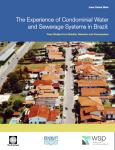
This study presents the experience of applying the condominial approach to expand water and sewerage networks in three contrasting Brazilian cities. It is based on the findings of a Study Tour to Brazil organised in December 2003 for utility managers and public officials from the Peruvian water sector, who were in the process of applying large-scale condominial systems in Lima for the first time. The goal of the visit was to permit the Peruvian delegation to see mature and functioning condominial systems on the ground, and to interact with local policymakers, utility managers, residents and specialists, to obtain a better idea of the challenges and potential advantages and disadvantages of implementing this system.
MELO, J.C. (2005): The Experience of Condominial Water and Sewerage Systems in Brazil. Case Studies from Brasilia, Salvador and Parauapebas. World Bank, Bank-Netherlands Water Partnership (BNWP), Water and Sanitation Program (WSP) URL [Accessed: 13.01.2011]In this paper, it is shown that a biomaterial produced from dried water hyacinths roots, a plant that is found in abundant supply in many parts of the world, can provide a simple, effective and yet cheap method for removing arsenic from contaminated water.
RMALLI, S. W. ; HARRINGTON, C. F. ; AYUB, M. ; HARIS, P. I. (2005): A Biomaterial Based Approach for Arsenic Removal from Water. المُدخلات: Journal of Environmental Monitoring : Volume 7 , 279-282. URL [Accessed: 12.01.2011]This is a report about an ecosan expert course carried out by seecon international gmbh, WHO and UNICEF in 2009. It was published by WHO to make others aware of the outcomes of the training course, and contains detailed information on the course contents, its methodology, and outcomes.
WHO (2009): Ecosan Expert Training Course for the Introduction of Ecological Sanitation in Bhutan. (= Training Course Report ). Geneva: World Health Organisation URL [Accessed: 12.01.2011]This article summarises the technologies currently being investigated to remove arsenic from drinking waters, with a special focus on developing and third-world countries where the problem is exacerbated by flooding and depressed economic conditions.
VU, K.B. KAMINSKI, M.D. NUNEZ, L. (2009): Review of Arsenic Removal Technologies for Contaminated Groundwater. Argonne: University of Chicago - Argonne National Laboratory URL [Accessed: 12.01.2011]The main objective of this research was to assess the feasibility of applying low cost anaerobic technology for the treatment of relatively high strength sewage of Jordan usin two-stage and one-stage UASB (Upflow Anaerobic Sludge Blanket) reactors operated at ambient temperatures.
HALALSHEH M.M. (2002): Anaerobic Pre-Treatment of Strong Sewage: A proper solution for Jordan. (= PhD Thesis ). Wageningen: Wageningen University URL [Accessed: 11.01.2011]A questionnaire survey was circulated via internet-based sanitation forums to assess the prevailing expert opinion on the appropriateness of low-cost sewerage for African cities. The questionnaire explored opinions about low-cost, solids-free sewerage (settled sewerage), low-cost, solids-transporting sewerage (simplified ed sewerage, condominial sewerage), and conventional solids-transporting sewerage.
NORMAN, G. CHENOWETH, J. (2009): Appropriateness of Low-cost Sewerage for African Cities: A questionnaire survey of expert opinion. Surrey: University of Surrey URL [Accessed: 11.01.2011]This website contains information about solids-free sewer systems (also known as small bore sewer systems)
This study focuses on the comparison of ecosan with conventional sanitation systems suitable for urban settlements in Sub-Saharan Africa. The aim of the study was to compare ecosan with conventional sanitation systems in terms of financial and economic costs and benefits, in order to assist decision-makers and sponsors of development programs to make informed decisions about relative merits of different types of sanitation. Based on two case study analysis, none of the currently implemented systems are seen to provide an obvious model for scaling up without considerable external support.
WSP (2009): Study for Financial and Economic Analysis of Ecological Sanitation in Sub-Saharan Africa. Washington: Water and Sanitation Program (WSP) URL [Accessed: 10.01.2011]