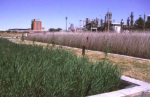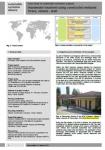
Within the BMZ (German Federal Ministry for Economic Cooperation and Development) financed project on “Advice on the Decentralisation of the Water and Sewerage Sector in Albania” the GIZ and MPWT (Albanian Ministry of Public Works and Transport) initiated the pilot constructed wetland to raise awareness for low cost, appropriate and decentralised sanitation technologies in line with EU standards. It is aimed to be used as a model treatment plant by the main actors of the sector for training, demonstration, research and replication in peri-urban and rural areas of Albania.
GJINALI, E. NIKLAS, J. (2009): Wastewater treatment using constructed wetlands Tirana, Albania - draft. (= SuSanA - Case Studies ). Eschborn: Sustainable Sanitation Alliance (SuSanA) URL [Accessed: 10.06.2019]Library
The underlying philosophy of phytoremediation research at UFZ (Centre for Environmental Research) is to exploit and to optimise the processes in the rhizosphere. Low-cost, simple systems will be developed to control the environmental problems of different countries in several continents irrespective of their industrial capabilities and conditions – without losing sight of the key principle of cleaning up polluted environmental media in a natural, ecologically balanced way.
KUSCHK, P. WIESSNER, A. MUELLER, R. KAESTNER, M. (2005): Constructed Wetlands – Treating Wastewater with Cenoses of Plants and Microorganisms. Leipzig-Halle: UFZ Centre for Environmental Research URL [Accessed: 10.06.2019]Hybrid constructed wetland systems have recently been used to treat wastewaters where high demand for removal of ammonia is required. However, these systems have not been used too often for small onsite treatment systems. This study describes an experimental system for mechanically pre-treated wastewater.
VYMAZAL, J. ; KROEPFELOVÀ, L. (2011): A three-stage experimental constructed wetland for treatment of domestic sewage: First 2 years of operation. In: Ecological Engineering : Volume 37 , 90-98. URL [Accessed: 10.06.2019]This technical document describes scrubbing systems for the removal of ammonia from waste gases.
RVT (2010): Ammonia Recovery/ Ammonia Removal from Liquids and Gases. Steinwiesen: RVT Process Equipment GmBH URL [Accessed: 10.06.2019]This essay describes the horizontal sub-surface flow and the two basic designs of hybrid constructed wetlands for wastewater treatment.
VYMAZAL, J. (2005): Horizontal Sub-Surface Flow and Hybrid Constructed Wetlands Systems for Wastewater Treatment. Durham: Duke University Wetland Center URL [Accessed: 10.06.2019]Over the past three decades, anthropogenic emissions of chemical compounds into the atmosphere have caused many environmental and health problems. Some chemicals, such as chlorofluorocarbons (CFCs), are produced deliberately and end up in the atmosphere by accident from equipment or goods. Others, such as sulphur dioxide (SO2) and carbon monoxide (CO), are unavoidable by-products of burning fossil fuels. Urban air pollution, acid rain, contamination by toxic chemicals (some of them persistent and transported over long distances), depletion of the stratospheric ozone layer and changes in the global climatic system are all important environmental threats to ecosystems and human wellbeing.
UNEP (2002): State of the Environment and Policy Retrospective: 1972–2002. Chapter 2-7: Atmosphere. London: Earthscan Publications Ltd URL [Accessed: 10.06.2019]Read more about environmental problems caused by incineration plants in the United Kingdom.
GREENPEACE (n.y): Pollution and Health Impacts of Waste Incinerators. London: Greenpeace U.K. URL [Accessed: 10.06.2019]A portable toilet appropriate for disaster response is presented in this report. The urine is diverted and the feces undergo a lactofermentation process. Biochar is added also to the feces to eliminate odor and facilitate the reuse of the excreta as a soil additive. The design, costs, logistics and expected challenges are discussed.
KINSTEDT, K. (2012): Design of a Portable Ecological Sanitation Toilet for Disaster Relief. Hamburg: Institute of Wastewater Management and Water Protection at the Technical University of Hamburg URL [Accessed: 09.06.2019]The project aimed at providing safe water supply and sanitation to the population resettled – after floods – in the less flood-prone Guara-Guara region in the Sofala Province, Mozambique. Since the area is characterised by high groundwater tables, so called “ventilated double vault urine diversion dehydration toilets” (UDDTs) were implemented to not contaminate the groundwater, and thus not threaten public health (unlike pit latrines).
FOGDE, M. MACARIO, L. PORSANI, J. (2011): UDDTs in Flood-response Project. Guara-Guara, Sofala Province, Mozambique. Case Study of Sustainable Sanitation Projects. Eschborn: Sustainable Sanitation Alliance SuSanA URL [Accessed: 09.06.2019]This book supports in making informed decisions regarding wetland design.
KADLEC, R. H. WALLACE, S. D. (2009): Treatment Wetlands. 2nd Edition. Boca Raton: CRC Press, Taylor & Francis Group URL [Accessed: 09.06.2019]This manual discusses the capabilities of constructed wetlands, a functional design approach, and the management requirements to achieve the designed purpose. The manual also attempts to put the proper perspective on the appropriate use, design and performance of constructed wetlands. Furthermore, the document contains two case studies.
U.S. EPA (1999): Manual – Constructed Wetlands Treatment of Municipal Wastewater. Washington D.C.: United States: Environmental Protection Agency (EPA) URL [Accessed: 09.06.2019]This case study presents a post-rehabilitation project in Bangladesh after cyclone Sidr in 2007, which included provision of 100 twin vault UDDTs in rural villages. The three main challenges were finding an adequate place on the compound for the UDDTs, the use of UDDTs e.g. daily practices and maintenance, and the reuse of dried excreta.
DELEPIERE, A. (2011): Household UDDTs after cyclone disaster, Padma and Rohitra villages, Barishal Division, Bangladesh Case study of sustainable sanitation projects. Sustainable Sanitation Alliance (SuSanA) URL [Accessed: 09.06.2019]Statistics of availability and type of latrine facility.
CHANDRAMOULI, C. (2012): Availability and Type of Latrine Facility: 2001-2011. New Dehli: Census of India, Government of India URL [Accessed: 09.06.2019]How important is sanitation during a humanitarian crisis? Why is it important to explore ecological and sustainable sanitation? Groupe URD looks at the case of Eastern Chad, an example of a major long-term crisis. From an acute emergency in 2003, the crisis has gone through a number of phases. The appropriateness of aid mechanisms is currently being questioned, with a particular focus on sanitation. Sustainable sanitation can help to improve the quality of life of refugees and IDPs as well as local populations. From this perspective, what lessons from Eastern Chad could be useful in other contexts?
U.R.D. (2012): Humanitarian Crises and Sustainable Sanitation: Lessons from Eastern Chad. Plaisians: Groupe URD (Urgence Réhabilitation Développement) URL [Accessed: 09.06.2019]Presentation of different types of constructed wetlands for various types of wastewater.
VYMAZAL, J. SENGUPTA, M. ; DALWANI, R. (2008): Constructed Wetlands for Wastewater Treatment: A Review. (= Proceedings of Taal 2007: The 12th World Lake Conference ). Czech Republic: ENKI, o.p.s. and Institute of Systems Biology and Ecology, Czech Academy of Sciences URL [Accessed: 09.06.2019]In many countries, knowledge about the potential for harm from health-care wastes has now become more prominent to governments, medical practitioners and civil society. The indiscriminate and erratic handling and disposal of waste within health-care facilities is now widely recognized as a source of avoidable infection, and is synonymous with public perception of poor standards of health care. Water pollution and inadequate wastewater treatment pose important risks to health.
WHO (2013): Safe Management of Wastes from Health-care Activities. (= Second Edition ). Geneva: World Health Organization (WHO) URL [Accessed: 09.06.2019]The objective of this SuSanA working group is to combine the knowledge from experts in the fields of sanitation with the knowledge from experts in the field of emergency response and reconstruction. The site includes documents, workshop inputs and presentations with best practice examples of sustainable sanitation options in emergency and reconstruction situations.