Study on the use of greywater for agricultural irrigation in the South African context with special focus on comparing the irrigation of plants with nutrient solution, greywater and tap water.
SALUKAZANA, L. JACKSON, S. RODDA, N. SMITH, M. GOUNDEN, T. MACLEOD, N. BUCKLEY, C. (n.y): Re-use of Greywater for Agricultural Irrigation. Kwazulu-Natal: University of Kwazulu-Natal URL [Accessed: 08.05.2019]Library
This literature review provides a first overview of the possibilities, potentials and limits of duckweed aquaculture and its combined use in wastewater treatment and animal feed production in low and middle-income countries. It is somewhat limited as critical literature on duckweed field use is scarce and difficult to obtain (e.g. unpublished internal documents).
IQBAL, S. (1999): Duckweed Aquaculture. Potentials, Possibilities and Limitations for Combined Wastewater Treatment and Animal Feed Production in Developing Countries. Duebendorf: Swiss Federal Institute of Aquatic Science and Technology (Eawag) URL [Accessed: 08.05.2019]Whereas spate irrigation is the ultimate adaptation to climate variability, this document prepared for IFAD is an overview of likely impact of climate change and practical possibilities for livelihood improvement.
STEENBERGEN, F. van VERHEIJEN, O. AARST, S. van HAILE, M.H. (n.y): Spate Irrigation, Livelihood Improvement and Adaptation to Climate Variability and Change. URL [Accessed: 08.05.2019]This paper reviews minimum design recommendations and a case study of remediation efforts on an existing commercial field.
ROGERS, D.H. LAMM, F.R. CLARK, G.A. (2004): Subsurface Drip Irrigation (SDI) System Remediation - A Case Study. St. Joseph: American Society of Agricultural and Biological Engineers URL [Accessed: 08.05.2019]Keeping soil salinity low in the root zone is crucial to growers of salt-sensitive crops. This study investigated patterns of soil salinity under surface and subsurface drip irrigation. High soil salinity occurred midway between drip laterals for both irrigation methods and above the drip tape for subsurface drip irrigation. Rainfall leached the salts from the zones of high salinity for both irrigation methods.
HANSON, B.R. ; BENDIXEN, W.E. (1995): Drip Irrigation Controls Soil Salinity Under Row Crops. In: California Agriculture: URL [Accessed: 08.05.2019]This paper offers an assessment of the social impact of treadle pump technology for manual irrigation in eastern India, the Nepal Terai, and Bangladesh, South Asia’s so-called “poverty square.” This region where 500 million of the world's poorest people live is underlain by one of the world’s best groundwater resources. Treadle pump technology can be a powerful tool for poverty reduction in this region. It “self-selects” the poor and it puts to productive use the region’s vast surplus family labor. It is claimed that the treadle pump could raise the annual net household income by US$100, on the average.
SHAH, T. ALAM, M. DINESH KUMAR, M. NAGAR, R.K. SINGH, M. (2000): Pedaling out of Poverty: Social Impact of a Manual Irrigation Technology in South Asia. (= Research Report , 45 ). Battaramulla: International Water Management Institute (IWMI) URL [Accessed: 07.05.2019]This study compares two types of commercially available irrigation control technologies, one based on estimates of evapotranspiration and the other based on feedback from soil moisture sensors.
GRABOW, G.L. VASANTH, A. BOWMAN, D. HUFFMAN, R.L. MILLER, G.L. (2008): Evaluation Of Evapotranspiration-Based and Soil-Moisture based Irrigation Control in Turf. Ahupua'a: World Environmental and Water Resources Congress 2008 URL [Accessed: 07.05.2019]This paper explains how to use water more efficiently in commercial, industrial and institutional facilities.
DEPARTMENT OF ENVIRONMENT AND NATURAL RESOURCES (2009): Water Efficiency Manual. North Carolina: Department of Environment and Natural Resources. URL [Accessed: 07.05.2019]Water for irrigation: different irrigation techniques and tips for using water for irrigation
This book is written for practitioners, researchers and graduate students in environmental and public health, sanitary and agricultural engineering, and wastewater irrigation management in developing countries. In particular, it should be useful for all those working to assess and mitigate health risks from the use of wastewater and faecal sludge in agriculture, under conditions where wastewater treatment is absent or inadequate to safeguard public health. In this respect, the book builds on and complements the international Guidelines for the Safe Use of Wastewater, Excreta and Greywater published in 2006 by the World Health Organization in collaboration with the Food and Agriculture Organization of the United Nations and the United Nations Environment Programme.
DRECHSEL, P. ; SCOTT, C.A. ; RASCHID-SALLY, L. ; REDWOOD, M. ; BAHRI, A. (2010): Wastewater Irrigation and Health. Assessing and Mitigating Risk in Low-Income Countries. London: Earthscan URL [Accessed: 07.05.2019]This manual features comprehensive parts lists and instructions for assembling low-cost drip irrigation systems.
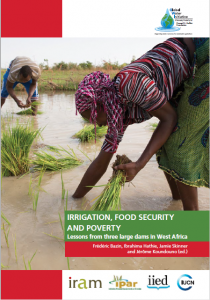
IDE (n.y): Technical Manual for Ideal Micro Irrigation Systems. Golden: International Development Enterprises URL [Accessed: 07.05.2019]This report summarises the results of four years of research on three existing dam and rice field sites: Sélingué in Mali, Bagré in Burkina Faso and Anambé in Senegal. The aim of these micro and macro-economic studies was to analyse the financial and economic viability of water infrastructure projects and opportunities for improving the living conditions of smallholder farmers after the construction of dams.
BAZIN, F. et al. (2017): Irrigation, Food Security and Poverty – Lessons from three large Dams in West Africa. Global Water Initiative (GWI) URL [Accessed: 07.05.2019] PDFA field study was conducted on sunflower by using different irrigation techniques, such as basin, furrow and raingun sprinkler systems at Post-Graduate Agricultural Research Station (PARS), University of Agriculture, Faisalabad during 1998-2002. The comparison of irrigation efficiencies, nitrate leaching and the yield of sunflower was noted.
RANA, M.A. ARSHAD, M. MASUD, J. (2006): Effect of Basin, Furrow and Raingun Sprinkler Irrigation Systems on Irrigation Efficiencies, Nitrate-Nitrogen Leaching and Yield of Sunflower. Islamabad: Pakistan Journal of Water Resources URL [Accessed: 07.05.2019]This is a very detailed document about surface irrigation simulation, evaluation and design. The aim of the manuscript is to improve the water irrigation management, which is an important step to guarantee security and stability in food supplies. You will be able to find the PDF presentation downloading the ZIP archive and opening the Surface Irrigation Design file.
WALKER, W.R. (2003): SIRMOD III - Surface Irrigation Simulation Evaluation and Design. Guide and Technical Documentation. "PDF Presentation". Logan, Utah (USA): Utah State University (USU). URL [Accessed: 07.05.2019]This study presents a scheme for the development of a Geographic Information Systems (GIS) based decision support system (DSS) for real time water demand estimation in distributaries.
RAO, N.H. ; BROWNEE, S.M. ; SARMA, P.B.S. (2004): GIS-Based Decision Support System for Real Time Water Demand Estimation in Canal Irrigation Systems. In: Current Science: Volume 87 , 628-636. URL [Accessed: 07.05.2019]This field guide has been developed to accommodate the ever-increasing demand for more detailed and scientifically backed information on how to use urine in agricultural production. It is intended primarily for practitioners and experts in the water, sanitation, planning, and agriculture sectors, as well as local and national government officials from the various sectors, NGO and individuals interested and working in the field of agriculture and sustainable sanitation in the Philippines and the wider Southeast Asian region.
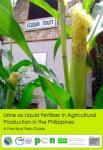
GENSCH, R. MISO, A. ITSCHON, G. (2011): Urine as Liquid Fertilizer in Agricultural Production in the Philippines. Cagayan de Oro: Sustainable Sanitation Center Xavier University (XU), the Philippine Sustainable Sanitation Knowledge Node, the Philippine Ecosan Network, and the Sustainable Sanitation Alliance (SuSanA) URL [Accessed: 07.05.2019]