
Library
Smart Sanitation Solutions presents examples of low-cost household and community-based sanitation solutions that have proven effective and affordable. A wide range of innovative technologies for toilets, collection, transportation, treatment and use of sanitation products that have already helped thousands of poor families to improve their lives is illustrated.
NWP (2006): Smart Sanitation Solutions. Examples of innovative, low-cost technologies for toilets, collection, transportation, treatment and use of sanitation products. (= Smart water solutions ). Amsterdam: Netherlands Water Partnership (NWP) URL [Accessed: 09.05.2019]The webpage of the Swiss government provides large information on concepts, reports and research programmes on large-scale hydropower development.
This factsheet provides information on the link between sanitation and agriculture as well as related implications on health, economy and environment. It shows examples of treating and using treated excreta and wastewater in a productive way and describes the potential for urban agriculture and resource recovery in rural areas. Institutional and legal aspects, business opportunities and how to manage associated health risks are also discussed
GENSCH, R. DAGERSKOG, L. WINKLER, M. VEENHUIZEN, R. van DRECHSEL, P. (2011): Productive Sanitation and the Link to Food Security. Sustainable Sanitation Alliance (SuSanA) URL [Accessed: 09.05.2019]This short case study focus on the technical aspects and overall performance improved water mills in Nepal. These improved water mills have brought an increase in grinding capacity as well as direct benefits to woman (involved in new economic activities).
SHRESTHA, L.K. ; SHRESTHA G.R. (2006): Opening Productive Avenues for Rural Women through Improved Water Mills in Nepal. In: Energia News : Volume 9 , 8-10. URL [Accessed: 09.05.2019]Short description on a container gardening system for dry areas based on walls with built-in growth boxes made of hollow concrete blocks and developed by a Swedish horticulturist in Botswana.
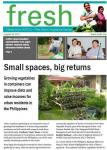
WINBLAD, U. SIMPSON-HERBERT, M. (2004): Box 5.4 Vertical gardens in Gaberone, Botswana. In: WINBLAD, U. ; SIMPSON-HERBERT, M. ; (2004): Ecological Sanitation - revised and enlarged edition. (pdf presentation). Sweden: 83. URL [Accessed: 08.05.2019]Growing vegetables in containers can improve diets and raise incomes for urban residents in the Philippines.
AVRDC (2011): Small Spaces, Big Returns. Shanhua, Tainan: AVRDC - The World Vegetable Center URL [Accessed: 08.05.2019]Paper on container gardening in Cagayan de Oro (Philippines) as a way of growing vegetables in urban areas.
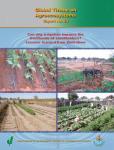
DEVEZA, K. HOLMER, R. (2002): Container Gardening – A Way of Growing Vegetables in the City. Paper presented at the Urban Vegetable Gardening Seminar. Cagayan de Oro City, Philippines: Sundayag Sa Amihanang Mindanao Trade Expo URL [Accessed: 08.05.2019]The survey focuses on the determinants of success and failure and identifies knowledge gaps that influenced either adoption or disadoption by beneficiaries. A cost-effectiveness analysis is also undertaken to compare drip kits with traditional bucket irrigation. Finally, the study draws some conclusions and lessons that can be extrapolated beyond Zimbabwe to ensure that interventions aimed at smallholder-irrigated gardens have more sustainable impacts.
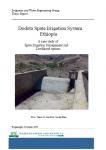
BELDER, P. ROHRBACH, D. TWOMLOW, S. SENZANJE, A. (2007): Can Drip Irrigation Improve the Livelihoods of Smallholders? Lessons Learned from Zimbabwe. Bulawayo: International Crops Research Institute for the Semi-Arid Tropics (ICRISAT) URL [Accessed: 08.05.2019]This case study focuses on the water management of the Dodota spate irrigation system, the first large scale spate irrigation system in Ethiopia. This system in the Oromia state has been recently designed and constructed to establish food-self sufficiency in an area chronically affected by food deficits and supported by food aid for over 25 years. The following main research question guided this study: How is water management taking place in the new Dodota spate irrigation system and what are the impacts and effects for irrigation, soil conservation practices, and production?
HAM, J.P. van den (2008): Dodota Spate Irrigation System Ethiopia. A case study of Spate Irrigation Management and Livelihood options . Wageningen: Wageningen University URL [Accessed: 08.05.2019]A document about drip irrigation system including components, design advices, management of the system and additional resources.
SHOCK, C. (2006): Drip Irrigation: An Introduction. Corvallis: Oregon State University URL [Accessed: 08.05.2019]This paper gives a complete description of a subsurface irrigation system.
REICH, D. GODIN, R. CHAVEZ, J.L. BRONER, I. (2009): Subsurface Drip Irrigation (SDI). Fort Collins: Colorado State University URL [Accessed: 08.05.2019]The objective of this thesis study is to analyse the existing sediment control system on spate irrigation scheme, to review and test innovative sediment control and management systems and to recommend as necessary alternative sediment control and management systems and structures.
EMBAYE, T.G. (2009): Analysis of Spate Irrigation Sedimentation and the Design of Settling Basins. Delft: UNESCO-IHE Institute for Water Education (UNESCO-IHE) URL [Accessed: 08.05.2019]Simple low-cost drip irrigation is practical and affordable for smallholder farmers. It has been successfully used in India and is becoming more popular in other southeast Asia and sub-Saharan Africa. It can reduce both water and labor use by as much as 20-50%. Yield of vegetables also can be increased by at least 10%. Our farm trials in Cambodia showed yield increases of 20-50% compared to traditional hand watering. Low pressure irrigation is also a key component of the African Market Garden concept jointly developed in west Africa with ICRISAT. This 10-chapter drip irrigation manual provides basic, step-by-step procedures for installing simple drip irrigation systems for different crops, climates, and soils.
PALADA, M. BHATTARAI, S. WU, D. ROBERTS, M. BHATTARAI, M. KIMSAN, R. MIDMORE, D. (2011): More Crop Per Drop. Using Simple Drip Irrigation Systems for Small-scale Vegetable Production. Shanhua, Tainan: AVRDC - The World Vegetable Center URL [Accessed: 08.05.2019]Volume III of the Guidelines for the Safe Use of Wastewater, Excreta and Greywater deals with wastewater and excreta use in aquaculture and describes the present state of knowledge regarding the impact of wastewater-fed aquaculture on the health of producers, product consumers and local communities. It assesses the associated health risks and provides an integrated preventive management framework.
WHO (2006): Guidelines for the safe use of wastewater excreta and greywater. Volume III. Wastewater and Excreta Use in Aquaculture. Geneva: World Health Organisation URL [Accessed: 08.05.2019]This is the report of a Study Group that considered food safety issues associated with farmed finfish and crustaceans. The principal conclusion was that an integrated approach — involving close collaboration between the aquaculture, agriculture, food safety, health and education sectors — is needed to identify and control hazards associated with products from aquaculture.
FAO ; NACA ; WHO (1999): Food Safety Issues Associated with Products from Aquaculture. (= WHO Technical Report Series , 883 ). Washington: World Health Organization (WHO) URL [Accessed: 08.05.2019]Water is precious in Eritrea, where farmers have to cope with droughts and crop failures. With support from the government and an IFAD-funded project, farmers and herders are expanding spate irrigation, an ancient form of water management. By harnessing floodwaters and collecting run-off, farmers can provide enough water for the crop season. Now some farmers can obtain yields that are six times what they used to be.