Presentation on experiences with the use of urine (and faeces) in agriculture including research results, conducted taste tests and calculations on the fertiliser value.
DAGERSKOG, L. SuSanA (2009): Urine and Faeces as Fertilizers in the CREPA Network. pdf presentation. (= SuSanA presentation WG , 5 ). Ouagadougou: Sustainable Sanitation Alliance URL [Accessed: 27.05.2019]Library
Different strategies and methods to achieve the target of recovering phosphorus from sludge are discussed based on reports from the Swedish environment protection agency (SEPA) and with special emphasis on extraction of phosphate from wastewater, sludge and ash at central plants. Some possible improvements are briefly discussed, such as the use of certain comparatively clean sludge fractions and use of two-stage technology for the recovery.
HULTMAN, B. LEVLIN, E. PLAZA, E. STARK, K. (n.y): Phosphorus Recovery from Sludge in Sweden - Possibilities to meet proposed Goals in an efficient, sustainable and economical Way. URL [Accessed: 27.05.2019]The aim of this paper, which is based on a literature review, is to discuss the various options to recover energy from sewage sludge and to assess qualitatively these options with respect to the development stage, potential of energy recovery, and expected future developments. In this evaluation the effect of the presence of toxic organic and inorganic components in the sludge is also assessed.
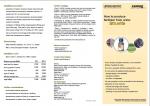
RULKENS, W. (2007): Sewage Sludge as a Biomass Resource. In: Energy & Fuels 2008: Volume 22 , 9–15. URL [Accessed: 27.05.2019]Brochure explaining the construction and functioning of the struvite reactor.
EAWAG (2009): How to produce fertilizer from urine: Struvite. Brochure in English/Nepali. Duebendorf: Swiss Federal Institute of Aquatic Science and Technology (EAWAG) URL [Accessed: 27.05.2019]The present study provides an overall perspective on technologies for the recovery of phosphorus from wastewater treatment plants and the opportunities they offer. It differs from previous work in that it not only provides technical process details, but also – and particularly – highlights the status of development, probable availability, and economic viability of the processes, providing the reader with an aid in decision making.
BAFU (2010): Rueckgewinnung von Phosphor aus der Abwasserreinigung. Bern: Department of the Environment, Transport, Energy and Communications, Switzerland (FOEN/BAFU) URL [Accessed: 27.05.2019]Sludge Treatment and Disposal is the sixth volume in the series Biological Wastewater Treatment. The book covers in a clear and informative way the sludge characteristics, production, treatment (thickening, dewatering, stabilisation, pathogens removal) and disposal (land application for agricultural purposes, sanitary landfills, landfarming and other methods). Environmental and public health issues are also fully described.
ANDREOLI, C.V. ; SPERLING, M. von ; FERNANDES, F. (2007): Sludge Treatment and Disposal. (= Biological Wastewater Treatment Series , 6 ). London: International Water Association (IWA) Publishing URL [Accessed: 27.05.2019]Microbial fuel cells (MFCs) have been used to produce electricity from different compounds, including acetate, lactate, and glucose. In this report, it is demonstrated that it is also possible to produce electricity in a MFC from domestic wastewater, while at the same time accomplishing biological wastewater treatment (removal of chemical oxygen demand; COD).
LIU, H. ; RAMNARAYANAN, R. ; LOGAN, B.E. (2004): Production of Electricity during Wastewater Treatment Using a Single Chamber Microbial Fuel Cell. In: Environ. Sci. Technol.: Volume 38 , 2281-2285. URL [Accessed: 27.05.2019]Basic Principles of Wastewater Treatment is the second volume in the series Biological Wastewater Treatment, and focusses on the unit operations and processes associated with biological wastewater treatment. The major topics covered are: microbiology and ecology of wastewater treatment, reaction kinetics and reactor hydraulics, conversion of organic and inorganic matter, sedimentation, aeration.
SPERLING, M. von (2007): Basic Principles of Wastewater Treatment. (= Biological Wastewater Treatment Series , 2 ). London: International Water Association (IWA) Publishing URL [Accessed: 26.05.2019]The aim of this publication is to build a bridge between the elaborate literature and information on the biogas production side and the existing technical and scientific know-how on the side of internal combustion engines. An engine fuelled by biogas shall become understandable as a core module in a system of energy supply, energy transformation and a demand of energy for a useful purpose. This publication attempts to provide a source of essential information for decision-making, planning, modification and operation of biogas engines within this system.
MITZLAFF, von, K. (1988): Engines for biogas. Eschborn: German Appropriate Technology Exchange (GATE), German Technical Cooperation (GTZ) GmbH URL [Accessed: 26.05.2019]This article analyses how water-management policies have developed over the centuries, how these policies have affected the city’s inhabitants, and the environment. The study uses the history of water management decisions and practices in Mexico City as an example. It also points out relevant future directions for water policy.
SOSA-RODRIGUEZ, F. (2010): Impacts of Water-management Decisions on the Survival of a City. From Ancient Tenochtitlan to Modern Mexico City. Waterloo: University of Waterloo URL [Accessed: 26.05.2019]The chapter "the usefulness of urine" is about different methods of collecting urine, storage, uses of urine in agriculture and gives various examples of using urine to enhance vegetable production in containers and on fields
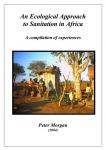
MORGAN, P. (2004): The Usefulness of Urine. Part III, chapter 14. In: Morgan, P. ; (2014): An Ecological Approach to Sanitation in Africa. A Compilation of Experiences. Harare: pp. 174-189. URL [Accessed: 26.05.2019]This report presents results from eight technical pilot studies on aquifer recharge (including SAT) between 2005 and 2008 on five continents. The main objective of these studies was to assess the overall performance of these sites in recharging aquifers mainly for irrigation and potable water supply purposes by following contaminant fate throughout each scheme.
MELIN, T. (2009): Reclaim Water. Water Reclamation Technologies for Safe Artificial Groundwater Recharge. Publishable Final Activity Report. Aachen: RWTH Aachen University URL [Accessed: 26.05.2019]The Millennium Development Goals (MDGs) for water will only be achieved in Africa by increased development of groundwater for rural water supply. However,the role that groundwater plays in achieving the MDGs is underrated and rarely articulated. This briefing note explores the main groundwater issues related to rural water supply in Africa.
BGN (2006): Groundwater and Rural Water Supply in Africa. International Association of Hydrogeologists (IAH) Burdon Groundwater Network (BGN) URL [Accessed: 26.05.2019]The sewage treatment process at SABESP (Basic Sanitation Company of Sao Paulo State, Brazil) has until now burnt some of the biogas produced in the anaerobic digester to enhance the process temperature and the other part was burnt in order to limit impact of emission. The transformation of this excess biogas into electricity would be a sustainable solution generating even additional income. An alternative to burn it in flare is the biogas conversion into electricity through engines or microturbines. This paper describes the proposed system to convert biogas in electricity and heat using microturbines (30 kW ISO).
TEIXEIRA COELHO, S. STORTINI GONZALES VELAZQUES, S.M. STELLA MARTINS, O. CASTRO DE ABREU, F. (2006): Biogas from Sewage Treatment used to Electric Energy Generation, by a 30 kW (ISO) Microturbine. (= World Bioenergy Conference & Exhibition ). Sao Paulo: Brazilian Reference Center on Biomass (CENBIO) URL [Accessed: 26.05.2019]Brief factsheet giving an oversight over most common managed aquifer recharge methods. With an Australian perspective.
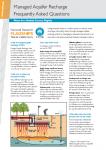
CSIRO (2010): Managed Aquifer Recharge. Frequently Asked Questions. Commonwealth Scientific and Industrial Research Organisation (CSIRO) URL [Accessed: 26.05.2019]This book repared by partners of the Sustainable Sanitation Alliance (SuSanA) network is a real eye-opener. It takes a look at some of the methods that have worked well in the past, to guide us in solving the problems of the future. By addressing sanitation as a key element of the urban metabolism, and by linking sanitation with urban planning and neighbouring sectors like solid waste management or waste recycling, it allows for a holistic approach. In the cities of tomorrow, we will need to focus more on recycling energy. A good example being biogas generation from wastewater and sludges. Water will also become an increasingly scarce commodity. Greywater (from showers and sinks) can be treated in urban constructed wetlands or used to water and fertilise urban green spaces. Such examples of productive sanitation systems will form an integral part of infrastructure in sustainable cities.
LUETHI, C. PANESAR, A. SCHUETZE, T. NORSTROEM, A. MCCONVILLE, J. PARKINSON, J. SAYWELL, D. INGE, R. (2011): Sustainable Sanitation in cities: a framework for action. Sustainable Sanitation Alliance (SuSanA) & International Forum on Urbanism (IFoU), Papiroz Publishing House, The Netherlands URL [Accessed: 26.05.2019]Biological Wastewater Treatment in Warm Climate Regions gives a state-of-the-art presentation of the science and technology of biological wastewater treatment, particularly domestic sewage. The book covers the main treatment processes used worldwide with wastewater treatment in warm climate regions given a particular emphasis where simple, affordable and sustainable solutions are required. The 55 chapters are divided into 7 parts over two volumes: Volume One (also available in the SSWM library): Introduction to wastewater characteristics, treatment and disposal; Basic principles of wastewater treatment; Stabilisation ponds; Anaerobic reactors; Volume Two: Activated sludge; Aerobic biofilm reactors; Sludge treatment and disposal.
SPERLING, M. von LEMOS CHERNICHARO, C.A. de (2005): Biological Wastewater Treatment in Warm Climate Regions Volume 2. London: International Water Association (IWA) Publishing URL [Accessed: 26.05.2019]Biological Wastewater Treatment in Warm Climate Regions gives a state-of-the-art presentation of the science and technology of biological wastewater treatment, particularly domestic sewage. The book covers the main treatment processes used worldwide with wastewater treatment in warm climate regions given a particular emphasis where simple, affordable and sustainable solutions are required. The 55 chapters are divided into 7 parts over two volumes: Volume One: (1) Introduction to wastewater characteristics, treatment and disposal; (2) Basic principles of wastewater treatment; (3) Stabilisation ponds; (4) Anaerobic reactors; Volume Two (also available in the SSWM library): (5) Activated sludge; (6) Aerobic biofilm reactors; (7) Sludge treatment and disposal.
SPERLING, M. von LEMOS CHERNICHARO, C.A. de (2005): Biological Wastewater Treatment in Warm Climate Regions Volume 1. London: International Water Association (IWA) Publishing URL [Accessed: 26.05.2019]The webpage of Midwest Rural Energy Council (MREC) provides a wide range of information on implementing small- and mid-scale biogas plantations in order to produce electricity.