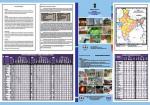
Statistics of availability and type of latrine facility.
CHANDRAMOULI, C. (2012): Availability and Type of Latrine Facility: 2001-2011. New Dehli: Census of India, Government of India URL [Accessed: 09.06.2019]Perspectives are different frameworks from which to explore the knowledge around sustainable sanitation and water management. Perspectives are like filters: they compile and structure the information that relate to a given focus theme, region or context. This allows you to quickly navigate to the content of your particular interest while promoting the holistic understanding of sustainable sanitation and water management.

Statistics of availability and type of latrine facility.
CHANDRAMOULI, C. (2012): Availability and Type of Latrine Facility: 2001-2011. New Dehli: Census of India, Government of India URL [Accessed: 09.06.2019]
How important is sanitation during a humanitarian crisis? Why is it important to explore ecological and sustainable sanitation? Groupe URD looks at the case of Eastern Chad, an example of a major long-term crisis. From an acute emergency in 2003, the crisis has gone through a number of phases. The appropriateness of aid mechanisms is currently being questioned, with a particular focus on sanitation. Sustainable sanitation can help to improve the quality of life of refugees and IDPs as well as local populations. From this perspective, what lessons from Eastern Chad could be useful in other contexts?
U.R.D. (2012): Humanitarian Crises and Sustainable Sanitation: Lessons from Eastern Chad. Plaisians: Groupe URD (Urgence Réhabilitation Développement) URL [Accessed: 09.06.2019]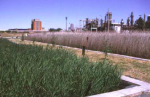
Presentation of different types of constructed wetlands for various types of wastewater.
VYMAZAL, J. SENGUPTA, M. ; DALWANI, R. (2008): Constructed Wetlands for Wastewater Treatment: A Review. (= Proceedings of Taal 2007: The 12th World Lake Conference ). Czech Republic: ENKI, o.p.s. and Institute of Systems Biology and Ecology, Czech Academy of Sciences URL [Accessed: 09.06.2019]
In many countries, knowledge about the potential for harm from health-care wastes has now become more prominent to governments, medical practitioners and civil society. The indiscriminate and erratic handling and disposal of waste within health-care facilities is now widely recognized as a source of avoidable infection, and is synonymous with public perception of poor standards of health care. Water pollution and inadequate wastewater treatment pose important risks to health.
WHO (2013): Safe Management of Wastes from Health-care Activities. (= Second Edition ). Geneva: World Health Organization (WHO) URL [Accessed: 09.06.2019]The objective of this SuSanA working group is to combine the knowledge from experts in the fields of sanitation with the knowledge from experts in the field of emergency response and reconstruction. The site includes documents, workshop inputs and presentations with best practice examples of sustainable sanitation options in emergency and reconstruction situations.
This document summarises the discussion and outcomes of an expert workshop in 2009, identifying useful ideas that can improve sanitation practices in terms of sustainability but are still suitable for emergency situations. It includes inputs from various experts from the sector.
RUBERTO, C. JOHANNESSEN, A. (2009): Innovations in Emergency Sanitation. International Water Association (IWA). (= 2-day Workshop, 11-13 February 2009 ). Stoutenburg: The Netherlands URL [Accessed: 09.06.2019]
This handbook has been developed as a practical tool to meet the needs of children and women affected by disasters. It is a very detailed document where a lot of information can be found by practioneers around the globe.
UNICEF (2005): Emergency Field Handbook. A Guide for UNICEF Staff. New York: The United Nations Children's Fund (UNICEF) URL [Accessed: 09.06.2019]
This technical note points out the importance of including the needs of vulnerable groups into public health programmes in general. It features a checklist for practically responding to gender and other socio-cultural issues and a case study from Pakistan (2005) where Oxfam adapted communal sanitation facilities for communities where women previously lived in seclusion.
OXFAM (n.y): Vulnerability and Socio-Cultural Considerations for PHE in Emergencies. Oxfam Technical Brief. Oxford: OXFAM URL [Accessed: 09.06.2019]The sanitation decision tool is based on the Eawag Sanitation Compendium and aims to give support in choosing the right sanitation chain components, from a spectrum of options. It shall help the user to find a tailored solution suitable for the specific context that the sanitation system will be placed in. The tool exists as a print and digital version.
This document compiles the experiences and lessons learnt from two urban sanitation projects: Maputo in Mozambique and Durban in South Africa
MORGAN, P. (2010): Challenges and Key Lessons in Improving Sanitation Services to the Urban Poor Drawing from East and Southern African Experience. Stockholm : Ecological Sanitation Research (EcoSanRes), Stockholm Environment Institute (SEI) URL [Accessed: 08.06.2019]
This study conducted using two-stage lab-scale Subsurface Flow (SSF) and Free Water Surface (FWS) constructed wetland under influence of magnetic field to treating the leachate. Furthermore it includes a general description about the constructed wetland systems free water surface flow and subsurface flow.
SA’AT (2006): Subsurface Flow and Free Water Surface Flow Constructed Wetland with Magnetic Field for Leachate Treatment. Johor Bahru: University Teknologi Malaysia URL [Accessed: 08.06.2019]
This six-page document describes the basic design of a landfill and specially focuses on the siting criteria.
COINTREAU, S. (2004): Sanitary Landfill Design and Siting Criteria. Washington, DC: The World Bank URL [Accessed: 08.06.2019]
This manual is a first approach to provide guidance on strategic planning of faecal sludge management. The study took place in the City of Nam Dinh, in Vietnam. The main principles for strategic sanitation planning have been adopted from the guide “Strategic Planning for Municipal Planning” from GHK Research and Training Ltd.
KLINGEL, F. MONTANGERO, A. KONE, M. STRAUSS, M. (2002): Fecal Sludge Management in Developing Countries - A Planning Manual. (= First Edition ). Duebendorf: Swiss Federal Institute for Environmental Science (EAWAG) URL [Accessed: 08.06.2019]
This book covers the principles and practices of technologies for the control of pollution originating from organic wastes (e.g. human faeces and urine, wastewater, solid wastes, animal manure and agro-industrial wastes) and the recycling of these organic wastes into valuable products such as fertilizer, biofuels, algal and fish protein and irrigated crops.
POLPRASERT, C. (2007): Organic Waste Recycling. Technology and Management. Bangkok, Thailand: Asian Institute of Technology URL [Accessed: 06.06.2019]