A field study to evaluate the use and performance of Biosand filters at the Artibonite Valley of Haiti. They found it as an attractive option for supplying safe water in rural areas of poorly developed countries with producing water in safe range in 97% of the cases
DUKE, W. BAKER, D. (2005): The Use and Performance of the Biosand Filter in the Artibonite Valley of Haiti: A Field Study of 107 Households. Victoria: University of Victoria URLLibrary
This paper gives a description of the process required to coordinate the human resources in a project.
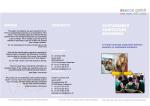
MISHRA, S. (2007): Human Resource Management in a Project. In: PM World Today: Volume 9This short flyer presents the project “Sustainable Sanitation Exchange” – a project that virtually brings together two school classes, one from the south, and one from the north, to discuss sustainable approaches towards sanitation and strengthen intercultural understanding.
SEECON (2010): Sustainable Sanitation Exchange. Basel: seeconThis paper explains how to use the Stan Software for the graphic representation of material flows under consideration of data uncertainties.
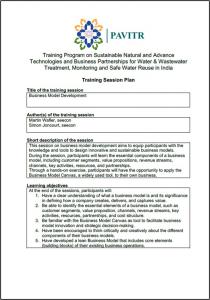
CENCIC, O. ; RECHBERGER, H. (2008): Material flow analysis with Software STAN. In: Journal of Environmental Engineering and Management: Volume 18 , 3-7.Session plan on Business Model Development
WAFLER, M. and JONCOURT, S. (2023): Business Model Development-Training Session Plan.. Training Program on Sustainable Natural and Advance Technologies and Business Partnerships for Water & Wastewater Treatment, Monitoring and Safe Water Reuse in India.. PDFEs un estudio sobre la utilización de sanitarios Ecosan y como estos según comparaciones hechas en laboratorios son más recomendables para ser usados en áreas rurales del Salvador.
COHEN, L. IZURIETA, R. GUZMAN, G. MOE, C. (2003): Letrinización y Prevalencia de Infecciones de Parásitos Intestinales en El Salvador Rural. El SalvadorLanguage: Spanish
This presentation of WAND-Foundation provides information on experiences achieved in the field of implementing various technologies of ecological sanitation in the Philippines. It contains a variety of local technologies (including arborloos), financing mechanisms and emerging opportunities.
SAYRE, E. WAND (2008): Practical Experiences in implementing Ecological Sanitation during Extreme Dry Regimes . Philippines: Water, Agroforestry, Nutrition and Development FoundationAfter an earthquake that struck the region of Arequipa, the existing water distribution network was destroyed. The communities and the Peruvian Red Cross prepared a project for safe water. Core elements of the project were the teaching and practise of the SODIS method, improved hygiene and health, and organizational strengthening of the communities. At the end of the project, 75% of the beneficiary population was using SODIS for water disinfection.
Peruvian Red Cross Society (n.y): SODIS – Water quality improvement at household level. A case example from Peru. pdf presentation. (= SODIS Project Case Study ). EAWAG/SANDECThis document can be used as an example of a tender document that was produced for the NaWaTech pilot plant involving anaerobic treatment and vertical flow constructed wetlands implemented at the COEP campus in Pune, India.
COEP CAMPUS OF ENGINEERING (2015): Tender Document for a Natural Wastewater Treatment System for COEP Campus. In: Tender Document produced during NaWaTech project:Urban on-site sanitation services present challenges for emptying, transporting, disposing and treating faecal waste. Transfer stations can be used by household-level emptiers to safely dispose of faecal sludge, but they rarely exist. Accra's use of transfer stations has provided an opportunity to research their functioning, as part of broader faecal sludge management arrangements. The paper discusses the benefits offered by use of transfer stations, as well as reasons currently limiting their operation. The paper concludes that correct use of transfer stations can provide improvements for existing faecal sludge management and reduce indiscriminate dumping.
BOOT, N. L. ; SCOTT, R. E. (2009): Faecal Sludge in Accra, Ghana: Problems of Urban Provision. In: Water Science Technology: Volume 60 , 623-631.A chapter about the impacts of climate change on human health. There is evidence that the climate change altered the distribution of some infectious disease vectors. The burden of diarrhoeal diseases will increase as well as the number of people which suffer from dengue as just to cite some effects of the ongoing climate change.
CONFALONIERI, U. MENNE, B. AKHTAR, R. EBI, K.L. HAUENGUE, M. KOVATS, R.S. REVICH, B. WOODWARD, A. Parry, M.L. ; Canziani, O.F. ; Palutikof, J.P. ; Linden, P.J. van der ; Hanson, C.E. (2007): Human Health. Climate Change 2007: Impacts, Adaptation and Vulnerability. Contribution of Working Group II to the Fourth Assessment Report of the Intergovernmental Panel on Climate Change. Cambridge: Cambridge University PressDecentralised wastewater management presents a comprehensive approach to the design of both conventional and innovative systems for the treatment and disposal of wastewater or the reuse of treaded effluent. Smaller treatment plants, which are the concern of most new engineers, are the primary focus of this book.
CRITES, R. TCHOBANOGLOUS, G. (1998): Small and Decentralized Wastewater Management Systems. New York: The McGraw-Hill Companies Inc