
This is the actual tutorial of the participative planning approach developed by NETSSAF, containing all the steps, sub-steps and case studies. It is freely available on the internet in French and English.
NETSSAF (2008): NETSSAF Participatory Planning-Approach. A tutorial for sustainable sanitation planning. Network for the Development of Sustainable Approaches for Large Scale Implementation of Sanitation in Africa (NETSSAF). [Accessed: 29.03.2010] PDFLibrary
This document provides the course outline to conduct two to three-days training for an introduction to HWTS.
CAWST (2009): Course Outline for Introduction to HWTS workshop. Alberta: Center for Affordable Water and Sanitation Technology (CAWST). [Accessed: 27.03.2010] PDFShort factsheet on the design, operation, maintenance and costs of aerated lagoons (partially mixed ponds) form the United States Environment Protection Agency.
EPA (2002): Aerated, Partial Mix Lagoons. (= Wastewater Technology Fact Sheet ). Washington, D.C.: United States Environment Protection Agency (US EPA) URL [Accessed: 26.03.2010]The wastewater from Manjuyod’s public market is treated in a decentralized system (DEWATS) composed of four different components: a settling tank; a anaerobic baffled reactor which reduces the BOD/COD content from 20% to 85%; a planted gravel filter; and finally a polishing pond.
BORDA (2008): Decentralized Wastewater Treatment System - DEWATS. Manjuyod Public Market. (= Sustainable Sanitation – Project Data Sheet ). Bremen: Bremen Overseas Research and Development Association (BORDA) URL [Accessed: 26.03.2010]An case study on restrictions for chemicals: After 1990, when Mongolia shifted to democracy, the Government developed and approved the Law on Protection from Toxic Chemicals in 1995 and updated a list of restricted or banned chemicals in Mongolia, including persistent organic pollutants, in 1997.
DOLGORMAA, L. (2004): Toxics Issues in Mongolia. WWF Mongolia Programme Office URL [Accessed: 26.03.2010]In this study, an anaerobic baffled reactor (ABR) was fed continuously with domestic wastewater at four HRTs ranging from 8 to 24 h and corresponds to organic loading rates ranging from 0.67 to 2.1 kg COD/m3/day. The ABR effluent was fed to a DWP operating at 10 and 15 days. The performance of the ABR at the four HRTs gave satisfactory results.
NASR, F.A. DOMA, H.S. NASSAR, H.F. (2008): Treatment of domestic wastewater using an anaerobic baffled reactor followed by a duckweed pond for agricultural purposes . pdf presentation. (= Environmentalist , 270 / 29 ). Egypt: Water Pollution Control Department URL [Accessed: 26.03.2010]This website was conceived in 2005 when it became more and more apparent that the UK was facing a future where current water supplies could not be guaranteed. Consumers and companies can get points of reference to find out about the hosepipe ban, water shortage and droughts in general.
Australia suffers from drought for a large part of the year. That is why the Sydney water council has a structure on how to act preventively to reduce negative consequences.
SYDNEY WATER (2010): Water Wise Rules Apply. SYDNEY WATER URL [Accessed: 26.03.2010]Worldwide, agriculture accounts for a large part of water usage. Illegal use of water in agriculture is a worldwide problem, and WWF presents different solutions – including restrictions – to tackle them.
WWF ; ADENA (2006): Illegal Water Use in Spain. Causes, Effects and Solutions. Madrid: URL [Accessed: 26.03.2010]This website is a useful tool to find strategies to save water at home, at school or at work. Water corporation also works in water restriction policy making.
This page explains in a very short and comprehensive way how activated sludge processes are applied for municipal wastewater treatment in France.
General Wikipedia article on activated sludge systems.
The Mountain Empire Community College ‘Water and Wastewater Distance Learning Course’ makes available all its documentation on the web. This section describes secondary treatment systems, including trickling filters, rotating biological contactors, activated sludge, operation and control, stabilization ponds, aerated lagoons and intermittent sand filters.
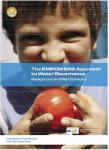
MECC (n.y): Course ENV149: Wastewater Treatment Plant Operation: Lesson 10: Secondary Treatment. (= Mountain Empire Community College. Water and Wastewater Distance Learning ). Big Stone Gap: Mountain Empire Community College (MECC) URL [Accessed: 18.03.2010]The booklet provides an explanation of the conceptual background to the EMPOWERS approach to water governance and is a companion volume to the “EMPOWERS Approach to Water Governance: Guidelines, Methods and Tools”. It helps to develop a deeper understanding of the approach.
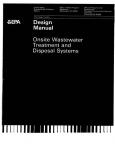
MORIARTY, P. BATCHELOR, C. LABAN, P. FAHMY, H. (2007b): INWRDAM The EMPOWERS Approach to Water Governance: Background and Key Concepts. Amman, Jordan: Inter-Islamic Network on Water Resources Development and Management (INWRDAM) URL [Accessed: 18.03.2010]Rather old design manual for onsite wastewater treatment options. However, valuable information on established systems such as septic tanks, sand filters, aerobic treatment units (suspended growth and fixed film), disinfection, nutrient removal as well as wastewater segregation and recycling are given. Additional information is given on disposal methods and appurtenances.
U.S.EPA (1980): Design Manual Onsite Wastewater Treatment and Disposal Systems. (= EPA 625/1-80-012 ). United States Environmental Protection Agency, Office of Water Office of Research and Development (U.S.EPA) URL [Accessed: 18.03.2010]The application of biological filters (fixed film processes) for the removal of ammonia from brackish or salt wastewaters from fish farms is discussed. The biological removal of ammonia in fixed-film processes is explained and design examples for ammonia removal in either trickling filters or rotating biological contactors are discussed.
HOCHHEIMER, J.N. WHETON, F.W. (1998): Biological Filters: Trickling and RBC Design. In: LIBEY, G.S. ; TIMMONS, M.B. (1998): Proceedings of the Second International Conference on Recirculating Aquaculture Roanoke. Virginia: 291–318. URL [Accessed: 18.03.2010]