Greg Kearsley’s website “Theory into Practice” is interesting for both beginners and general investigations and explains many different adult learning strategies.
Library
The site contains a list of books available in adult learning and some important web links on adult education.
Ten-page factsheet by the United States Environmental Protection Agency (U.S. EPA), describing the system, its applicability and design of a septic tanks for large-flow applications.
U.S. EPA (2000): Decentralized Systems Technology Fact Sheet: Septic Tank Systems for Large Flow Application. (= EPA 832-F-00 , 79 ). Washington, D.C.: United States Environmental Protection Agency, Office of Water Office of Research and Development. URL [Accessed: 15.04.2010]Four-page factsheet by the United States Environmental Protection Agency (U.S. EPA), describing septic tanks, their applicability and the design of septic tank systems for household-level black and greywater treatment.
U.S. EPA (2000): Decentralized Systems Technology Fact Sheet - Septic System Tanks. (= EPA 832-F-00 , 40 ). Washington, D.C.: United States Environmental Protection Agency, Office of Water Office of Research and Development (US EPA) URL [Accessed: 15.04.2010]This is a very basic sample evaluation form and not specified to a particular topic.
This guide aims to give an overview about the principles of evaluation while mentioning advantages and disadvantages of specific methods.
CROMPTON, P. (1999): Evaluation: A practical guide to methods. UK: LTDI URL [Accessed: 14.04.2010]The publication presents appropriate technologies for sanitation and highlights socio-economic aspects of planning and implementing. Emphasis is given to household-level sanitation improvements for urban areas, as well as rural areas and small communities. Background information on sanitation, in-depth technical information on the design, construction, operation and maintenance and project planning and development processes involved in projects and programmes complement the book.
WHO (1992): A Guide to the Development of On-site Sanitation. Geneva: World Health Organisation (WHO) URL [Accessed: 14.04.2010]This article highlights the importance of using different approaches for different stakeholders in the evaluation process.
NICKOLS, F. (2004): A stakeholder approach to evaluating training. USA: Distance Consulting URL [Accessed: 14.04.2010]This paper is a practical guide for lecturers interested in evaluating materials for their effectiveness in achieving specific learning objectives.
HARVEY, J. (1998): Evaluation cookbook. UK: LTDI URL [Accessed: 14.04.2010]The Kigali Institute of Science, Technology and Management (KIST) has developed and installed large-scale biogas plants in prisons in Rwanda to treat toilet wastes and generate biogas for cooking. After the treatment, the bio-effluent is used as fertiliser for production of crops and fuel wood.
ASHDEN (2005): Biogas plants providing sanitation and cooking fuel in Rwanda. London: The Ashden Awards for Sustainable Energy URL [Accessed: 13.04.2010]The Shaanxi Mothers' Environmental Protection Volunteer Association has installed 1,294 biogas plants in rural farming households in the Shaanxi Province of China since 1999. The plants produce biogas from pig and human waste.
ASHDEN (2006): Fuel, compost and sanitation from biogas in rural China. London: The Ashden Awards for Sustainable Energy URL [Accessed: 13.04.2010]This website is a useful tool to find relevant information in the field of water as well as different case studies related to water standards in India.
The resources gained from DEWATS-linked biogas digesters (gas for cooking), when combined with adequate social interventions, have resulted in increased acceptance of the DEWATS installations by communities and institutions. Two case studies in Bangalore, India illustrate this approach of the Bremen Overseas Research and Development Association (BORDA).
SINHA, S. KAZAGLIS, A. (n.y): BIOGAS and DEWATS, a perfect match?. Bremen: Bremen Overseas Research and Development Agency (BORDA) URL [Accessed: 13.04.2010]The Biogas Sector Partnership (BSP) in Nepal managed the installation of over 124,000 domestic biogas plants in Nepal between 1992 and 2005. The plants use cattle manure to provide biogas for cooking and lighting. In addition, about 75% of the plants incorporate toilets.
ASHDEN (2005): Domestic biogas for cooking and sanitation. London: The Ashden Awards for Sustainable Energy URL [Accessed: 13.04.2010]PDF-presentation on decentralised wastewater treatment systems (DEWATS) comprising a biogas settler; an anaerobic baffled reactor; a planted gravel filter and finally a storage tank for reuse for irrigation.
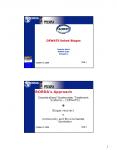
SINHA, S. (2005): DEWATS linked Biogas. (= PDF presentation ). Bangalore: Bremen Overseas Research and Development Agency (BORDA) India URL [Accessed: 13.04.2010]Case study form a agricultural complex (containing farm, restaurant and slaughter house), which uses an integrated concept where wastewater and waste of the entire farm (agricultural activity, households, slaughter house and restaurant) are beneficially reused in a biogas plant. Today, about 10% of the German agricultural biogas plants are co-digesting household sewage along with the animal wastes. Unfortunately, the European standard for organic agriculture is not (yet) allowing this practise for certified agriculture.
MUENCH, E. MANG, H.P. SCHULTES, G. PANESAR, A. (2005): Ten years of operational experiences with the ecosan-biogas plant at a family-owned farm and restaurant in Germany. (= 3rd International Conference on Ecological Sanitation 23 - 26 May 2005, Durban, South Africa ). Pretoria: Council for Scientific and Industrial Research (CSIR) URL [Accessed: 13.04.2010]The Vietnamese and Netherlands Governments signed a Memorandum of Understanding for the implementation of a domestic biogas dissemination project in 10 provinces of Vietnam in January 2003. The project supports the agricultural sector in several provinces in Vietnam and uniquely joined Vietnams technical knowledge on fixed dome plant design and construction with Netherlands experience with large-scale dissemination of domestic biogas.
PBPO (2006): Support Project to the Biogas Programme for the Animal Husbandry Sector in some Provinces of Vietnam. (= BP I Final Report ). Hanoi: Provincial Biogas Project Office Hanoi URL [Accessed: 13.04.2010]Short factsheet on the design, operation, maintenance and costs of facultative ponds in the United States.
EPA (2002): Facultative Lagoons. (= Wastewater Technology Fact Sheet ). United States Environment Protection Agency URL [Accessed: 12.04.2010]