This paper highlights some inherent lacunae of UASB technology for sewage treatment based on a set of case studies, effluent data of UASB systems and a long-term monitoring of the performance of pilot plants in Kantapur (India).
TARE, V. NEMA, A. (n.y): UASB Technology-expectations and reality. United Nations Asian and Pacific Centre for Agricultural Engineering and Machinery URL [Accessed: 29.04.2010]Library
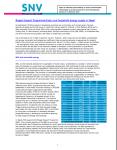
The widespread adoption of biogas technology in Nepal is due to its modular and easy to construct design, its proven reliability, the immediate noticeable benefits and the long term financial incentives provided by the government and international donors. The early involvement and active entrepreneurship of the private sector has been crucial to the success. Despite the economic, technical and social barriers discussed, the success of biogas support programme (BSP) evolves around institutional sustainability, technical sustainability and financial sustainability. And by introducing a strong quality management component to the programme, it helps to ensure that supply-side actors remain fully accountable to their customers.
SNV (2010): Biogas Support Programme fuels rural household energy supply in Nepal. Netherlands Development Organisation (SNV) URL [Accessed: 28.04.2010]Anama Energies Pvt. Ltd. (Formerly known as Anama Consultants) is a cogeneration plant designer and manufacturer located in India. The official homepage of ANAMA provides up to date information on biogas based cogeneration plants.
This Source Book is directed towards municipal solid waste management decision makers of developing countries and countries in transition, non-governmental organisations and community-based organizations involved in waste management. The book serves as a general reference guide to researchers, scientists, science and technology institutions and private industries on a global state-of-the-art on environmentally sound technologies for municipal solid waste management. It provides a list of information sources and overviews of practices in the world regions relating to environmentally sound management of municipal solid waste (waste reduction, collection and transfer, composting, incineration, landfills, special wastes, waste characterization, management and planning, training, public education and financing). Parts of the book can be viewed within this website.
UNEP ; IETC (1996): International Source Book on Environmentally Sound Technologies for Municipal Solid Waste Management. United Nations Environment Programme (UNEP) and International Environmental Technology Centre Japan (IETC) URL [Accessed: 28.04.2010]Appropedia is the site for collaborative approaches to sustainability, poverty reduction and international development. This article is about simple and sustainable biogas production and use.
This Flickr slideshow shows different low-cost biogas plants from all over the world.
The project built a biogas digester in a School in Ecuador into which human and animal waste is deposited in order to produce biogas (methane), and fertilizer. During the school year, the waste of 500 people is required to operate the system effectively. During the summer, manure from surrounding farms and vegetable matter is used.
GEF (n.y): Biogas from Sewage and Residual Waters in an Educational Institution, Ecuador. The Global Environment Facility (GEF) Small Scale Grants Programme, United Nations Environment Programme (UNEP) URL [Accessed: 28.04.2010]The initiative “Water, Land and People: Voices and insights from three continents“ promoted by the Swiss Agency for Development and Cooperation (SDC) aims at sharing and deepening the knowledge base of SDC and partners in order to improve the development strategies and policies with regard to Integrated Water Resource Management (IWRM) with emphasis on the aspect Water for Food.
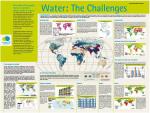
This poster is very helpful for to giving an overview on the challenges related to water today, including issues such as water stress, sharing water, the different water uses, health etc. The second page of the poster presents some case studies for sustainable water use.
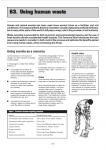
WWAP (2006): Water – the challenges. Educational Poster Prepared for the United Nations World Water Development Report 1. Paris and London: UNESCO and Earthscan URL [Accessed: 27.04.2010]This Technical Brief introduces the main issues one needs to consider to both control the process and optimize the benefits gained from using human waste, whilst minimizing the risks.
WELL (n.y): Using Human Waste. (= WELL Technical Briefs , 63 ). Loughborough: Water and Environmental health at London and Loughborough (WELL) URL [Accessed: 26.04.2010]This webpage presents the proceedings of the International Seminar on Biogas Technology for Poverty Reduction and Sustainable Development, jointly sponsored by the United Nations Economic and Social Commission for Asia and the Pacific (UNESCAP) and the Ministry of Agriculture of China (MOA) (18 to 20 October, 2005, Beijing). Utilisation of household biogas systems and large-scale biogas systems as a means to boost rural economy, while contributing to rural poverty reduction and sustainable development are discussed.
This review is intended to up-date students, practitioners and consultants concerned with Biogas technologies, and to contribute to bringing biogas systems to a more advanced stage, and thereby to achieve a palpable impact in developing countries. Technical, social, environmental ad economic issues are addressed.
Online construction manual of the 2047 design GGC model biogas plant (Nepalese biogas plant model).
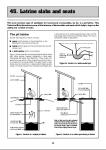
This technical brief describes pit latrines and possible slabs and seats to cover them.
WELL (n.y): Latrine Slabs and Seats. (= WELL Technical Briefs , 45 ). Loughborough: Water and Environmental health at London and Loughborough (WELL) URL [Accessed: 26.04.2010]The national biogas extension programme in Nepal has been carried out successfully by the biogas support partnership (BSP). Their homepage reflects and capitalizes their experience in small-scale anaerobic biogas digester dissemination and construction.