A short summary about the role of facilitators. This includes a table with points of attention and guidelines that should be considered.
Library
This site contains modules about effective facilitation.
This site is intended to serve as a focal point for professionals to not only discover new things that they can do to boost their training, but also to serve as a social exchange space.
This paper gives an overview about how to manage the time efficiently during a meeting and explains for example how to set an agenda and ground rules.
REBORI, M. K. (n.y): Time and Meeting Management Skills. Nevada: UNCE URL [Accessed: 17.05.2010]This article gives a general overview about facilitation. It explains the role of a facilitator as well as what to do in order to make facilitation successful.
A manual for group facilitators which highlights some basics qualities and responsibilities of a facilitator.
Cap-Net has produced a brief and easy-to understand tutorial on IWRM. It is aimed at policy makers, water managers, trainers and educators who want a basic understanding of IWRM principles. The main “flow” of the tutorial is brief, but it allows you to branch out to environment, agriculture, water supply and sanitation and what IWRM can mean for these sectors.
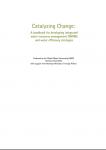
This handbook seeks to provide countries with the knowledge they need to act on the WSSD action target in the way that is most useful for them. Strategies should catalyze action, not retard it. Each country must decide the scope and timeline for change based on its goals and its resources. The important thing is to take the first steps.
GWP (2004): Catalyzing Change: A handbook for developing IWRM and water efficiency strategies. Stockholm: Global Water Partnership (GWP) URL [Accessed: 16.05.2010]En este documento se explica la situación respecto al agua en países de la región Andina. Se describen los principios, instrumentos de la GIRH y se hace una relación con el cambio climático y la agricultura.
INDIJ, D. SCHREIDER, M. (2011): Gestión Integrada de los Recursos Hídricos (GIRH) y su Aprovechamiento para la Agricultura frente al Cambio Climático en la Región Andina. Perú: GIZ GmbH–Deutsche Gesellschaft für Internationale Zusammenarbeit URL [Accessed: 16.05.2010]Language: Spanish
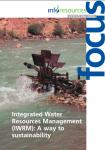
This issue of InfoResources Focus is dedicated entirely to IWRM. It explains the concept as such, discusses the challenges to sustainable water management, focuses on the implementation of IWRM at the policy level and also presents concrete IWRM experiences from the field. InfoResources is funded by the Swiss Agency for Development and Cooperation (SDC).
INFORESOURCES FOCUS (2003): Integrated Water Resources Management. Inforesources Focus. URL [Accessed: 16.05.2010]The IWRM ToolBox is a free and open database with a library of case studies and references that can be used by anyone who is interested in implementing better approaches for the management of water or learning more about improving water management on a local, national, regional or global level.
GWP (2008): GWP Toolbox. Integrated Water Resources Management. URL [Accessed: 16.05.2010]An article of the German ministry for the environment on the potential of terra preta sanitation (TPS) for regional resource management.
Another website that describes different seating arrangements with their respective advantages and disadvantages.
Some people might think it is not so important where and how students sit in the classroom. This guide explains that it very well is – and explains more about seating arrangement.
A practical guide on the importance of room setups.
WALLACE, M. (2002): Guide on the Side - Room Setups for Presentations & Training - One Size Does NOT Fit All. California : Law and technology resource legal professionals URL [Accessed: 13.05.2010]This website by the Global Water Challenge provides resources and documents on creative and sustainable solutions for universal access to safe drinking water and sanitation.