The document compiles the assessment of different UDDTs designs with respect to the construction materials used (e.g. country burned bricks, cement hollow blocks, ferro-cement, etc.) and their associated construction costs. Optimization and cost estimates are based upon the assessment of various designs of UDDTs applied in India and bills of quantity (BOQ).
WAFLER, M. (2008): Assessment of Urine-Diversion Dehydration Toilet Designs with Respect to Construction Materials Used and Associated Costs. URL [Accessed: 07.07.2010]Library
Design and construction manual on that also provides information on the nutrient value of human urine and faecal matter, general hygiene aspects, the reuse of sanitized urine and faecal matter, and costs of various Indian UDDT designs.
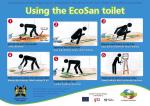
ESF (2009): Urine Diversion Dehydration Toilet (UDDT) - Construction Manual. Pune: Ecosan Services Foundation (ESF) URL [Accessed: 07.07.2010]This poster illustrates and explains how to properly used a urine-diversion dehydration toilet.
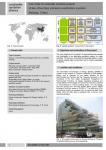
ECOSAN PROMOTION PROJECT (2008): Using the Ecosan Toilet. URL [Accessed: 07.07.2010]Urine diversion vacuum flush toilets were installed in an urban building. Urine collected in the source-separation sitting/squatting toilets as well as the waterless urinals is drained by gravity. Faeces are withdrawn by vacuum suction. There is currently no reuse of urine and brownwater, but they flow to the sewer.
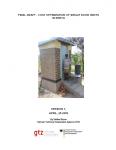
GERMER, J. (2009): Urine-diverting vacuum sanitation system, Beijing. (= SuSanA - Case Studies ). Eschborn: Sustainable Sanitation Alliance (SuSanA) URL [Accessed: 07.07.2010]The report provides a detailed description and cost analysis for single door double-vault urine diversion dehydration toilets (UDDTs) in Kenya. Furthermore, optimizations are identified for different components of the UDDT design.
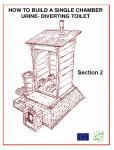
BLUME, St. (2009): Cost Optimization of Single Door UDDTs - Final Draft. URL [Accessed: 07.07.2010]This training material is comprised of flipchart illustrations on how to use a UDDT and a note to community officers on how to use the flipcharts.
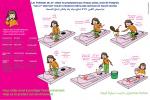
NETSSAF (n.y): Ecosan Latrine Training — Section 2. URL [Accessed: 07.07.2010]This trilingual (French, English, and Arabic) poster illustrates and explains how to properly used a urine-diversion dehydration toilet.
UNKNOWN (n.y): The 21st Century Toilets Produce Fertilizer Instead of Waste Water. URL [Accessed: 07.07.2010]Urine diversion low-flush toilets where installed in public toilet blocks of the Olympic park. Urine was collected for reuse and brownwater was treated in a septic tank and moving bed reactor before being transformed into compost. The aim of the system was to interlink the sanitation material flows as a water and nutrient source with the green areas of the park as a water and nutrient sink. Reduced water and energy demand as well as the substitution of fertilizer by urine and faeces-derived manure were expected advantages.
GERMER, J. KANGNING, X. (2009): Urine diversion sanitation in Olympic Forest Park. (= SuSanA - Case Studies ). Eschborn: Sustainable Sanitation Alliance (SuSanA) URL [Accessed: 07.07.2010]This site describes the effect of chlorination on inactivating selected pathogens.
This video explains how to produce active chlorine with WATA devices. FRENCH
Awareness raising material on water, sanitation and hygiene (only available in French).
300in6 is an initiative to provide 300 million people with safe drinking water in 6 years with a focus on home water treatment options that include chorine.
This video explains how to use active chlorine produced with the WATA device for drinking water, disinfection and cleaning. It explains also how to use the tests to control disinfection and residual chlorine concentrations. FRENCH
User guide for WATA kit and quality control reagents.
The department of Water and Sanitation in Developing Countries (SANDEC) at the Swiss Federal Institute of Aquatic Science (EAWAG) is a centre of excellence in the domain of faecal sludge treatment and management and many helpful publications can be downloaded.
This article analyses and discusses the performances of low-cost technology for treating faecal sludges in developing countries. It shows that where septic tanks are the predominant type of on-site sanitation installations, septage is the only or predominant type of faecal sludge generated. It also shows that constructed wetlands, settling tanks/ponds, or unplanted drying beds might prove suitable as a pre-treatment.
KONE, D. STRAUSS, M. (2004): Low-cost Options for Treating Faecal Sludges (FS) in Developing Countries - Challenges and Performance. Duebendorf: Water and Sanitation in Developing Countries (SANDEC), Swiss Federal Institute for Environmental Science (EAWAG) URL [Accessed: 23.06.2010]The objective of this paper is to render planners, decision makers, and consultants aware that faecal sludge management (FSM) should form an integral part of the urban development planning process. For this, three illustrative cases are presented, based on which an array of measures or tools, as well as institutional/regulatory, financial/economic, and technical aspects are discussed.
STRAUSS, M. ; BARREIRO, W.C. ; STEINER, M. ; MENSAH, A. ; JEULAND, M. ; BOLOMEY, S. ; MONTANGERO, A. ; KONE, D. (2003): Urban Excreta Management - Situation, Challenges, and Promising Solutions. In: IWA Asia-Pacific Regional Conference Bangkok, Thailand: URL [Accessed: 23.06.2010]