
A short description how a spate irrigation system works.
SPATE IRRIGATION NETWORK (n.y): What is Spate Irrigation? . Hertogenbosch: Spate Irrigation Network URL [Accessed: 12.07.2010]Library
KRETSCHMER, N. RIBBE L. GAESE, H.
(2003):
Wastewater Reuse for Agriculture.
Technology Resource Management & Development - Scientific Contributions for Sustainable Development
URL
[Accessed: 12.07.2010]
FAO
(2001):
Integrated agriculture-aquaculture.
(= FAO Fisheries Technical Paper - T407
).
URL
[Accessed: 12.07.2010]
EIJKELKAMP
(n.y):
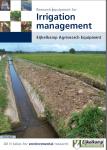
Research equipment for Irrigation management.
Giesbeek:
Eijkelkamp
URL
[Accessed: 12.07.2010]
REES, J.
(2006):
Urban Water and Sanitation Services. An IWRM Approach.
(= Global Water Partnership Technical Committee (TEC) No. 11
).
Stockholm:
GWP
URL
[Accessed: 12.07.2010]
TNAU
(2008):
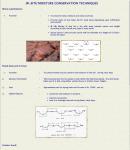
IN-SITU MOISTURE CONSERVATION TECHNIQUES.
Coimbatore:
TNAU Agritech Portal
URL
[Accessed: 12.07.2010]
SCIENCE DAILY
(2009):
Harvest and Save Water To Increase Crop Yields, Say Researchers.
Dallas:
Science Daily
URL
[Accessed: 12.07.2010]
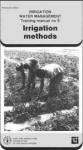
This report — the full version only available on-line — shortly explains various irrigation techniques and contains pictures of all the different methods.
FAO (1988): Irrigation Water Management: Irrigation Methods. (= Training manuals - 5 ). Rome: Food and Agriculture Organization of the United Nations (FAO) URL [Accessed: 12.07.2010]
U.S. EPA
(2008):
Aquaculture Operations.
Kansas City:
National Agriculture Compliance Assistance Center
URL
[Accessed: 12.07.2010]
http://www.ostara.com
[Accessed: 09.07.2010]
Commercial large-scale production of struvite from sludge digester supernatant in North America.
http://www.phosphorusfutures.net/
[Accessed: 09.07.2010]
Website of the Global Phosphorus Research Initiative (GPRI), a collaboration between independent research institutes in Europe, Australia and North America. The main objective of the GPRI is to facilitate quality interdisciplinary research on global phosphorus security for future food production. In addition to research, the GPRI also facilitates networking, dialogue and awareness raising among policy makers, industry, scientists and the community on the implications of global phosphorus scarcity and possible solutions.
http://www.eawag.ch/stun
[Accessed: 09.07.2010]
Project website on "Struvite recovery from urine in Nepal" with plenty of downloadable resources.
SCHERTENLEIB, R.
MOREL, M.
(2003):
The Household-Centred Environmental Sanitation Approach (HCES).
(= Paper presented at the 3rd World Water Forum, Kyoto 16-23 March 2003
).
URL
[Accessed: 08.07.2010]
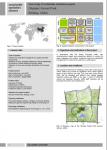
Urine diversion low-flush toilets where installed in public toilet blocks of the Olympic park. Urine was collected for reuse and brownwater was treated in a septic tank and moving bed reactor before being transformed into compost. The aim of the system was to interlink the sanitation material flows as a water and nutrient source with the green areas of the park as a water and nutrient sink. Reduced water and energy demand as well as the substitution of fertilizer by urine and faeces-derived manure were expected advantages.
GERMER, J. KANGNING, X. (2009): Source separating sanitation in Olympic Forest Park, Beijing. (= SuSanA - Case Studies ). Eschborn: Sustainable Sanitation Alliance (SuSanA) URL [Accessed: 07.07.2010]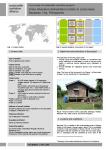
In Bayawan City (Philippines), UDDTs were installed on household and public level. Vegetable growers and small-scale farmers use the fertilising products.
LIPKOW, U. (2009): Urine-Diversion Dehydration Toilets in Rural Areas, Bayawan City, Philippines. (= SuSanA - Case Studies ). Eschborn: Sustainable Sanitation Alliance (SuSanA) URL [Accessed: 07.07.2010]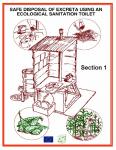
This training material is comprised of flipchart illustrations on how to use a UDDT and a note to community officers on how to use the flipcharts.
NETSSAF (n.y): Ecosan Latrine Training — Section 1. URL [Accessed: 07.07.2010]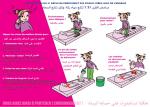
This bi-lingual (French and Arabic) poster illustrates and explains how to properly used a urine-diversion dehydration toilet.
UNKNOWN (n.y): Les toilettes du 21 Siècle ne produisent pas d’eaux usées, mais de l’engrais. URL [Accessed: 07.07.2010]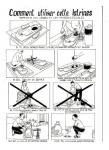
This poster illustrates and explains the “Do’s” and “Don’ts”
UNKNOWN (2006): Comment Utiliser Cette Latrines. URL [Accessed: 07.07.2010]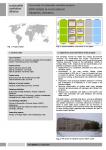
This case study reports the establishment of a sustainable, affordable and safe school sanitation system in a rural area in Armenia. A total number of 7 Double-Vault UDDTs serve ca. 350 students (females and males) and 26 staff members. Urine is stored for 6 months before application.
DEEGENER, S. SAMWEL, M. ANAKHASYAN, E. (2009): UDD Toilets in Rural School Hayanist, Armenia. (= SuSanA - Case Studies ). Eschborn: Sustainable Sanitation Alliance (SuSanA) URL [Accessed: 07.07.2010]