Wikipedia article about internal combustion
Library
The Pipeline Newsletter was formerly edited by the National Small Flows Clearinghouse (NSFC) and is now edited by the National Environmental Service Center based at the West Virginia University (USA). Popular with small community officials, citizens, maintenance and inspection personnel, and community educators, each quarterly issue of Pipeline focuses on a single wastewater topic and presents it in an easy-to-read format. This issues deals with on-site treating of commercialy generated wastewater, as well as treating non-residential wastewater to an acceptable level.
NSFC (2003): High Strength Flows - Not your Average Wastewater. (= Pipeline , 3 / 14 ). Morgantown: National Small Flows Clearinghouse URL [Accessed: 09.08.2010]The World Business Council for Sustainable Development (WBCSD) is a CEO-led, global association of some 200 companies dealing exclusively with business and sustainable development. There is also a section on water.
Definition of field capacity
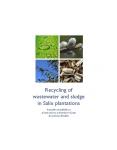
An eight-page factsheet on the reuse of wastewater and sludge in willow plantations, also presenting some case sties from Europe.
AGROBRAENSLE ; SWEDISH ENERGY AGENCY ; SWEDISH UNIVERSITY OF AGRICULTURAL SCIENCES ; SWECO VIAK (2000): Recycling of wastewater and sludge in Salix Plantations. Sustainable and profitable use of waste resources and farmland in Europe for production of biofuels. URL [Accessed: 09.08.2010]These Guidelines have been prepared to support ongoing improvements in the quality of EC development assistance. Part 2 offers an excellent description of the logical framework approach and how to construct the logframe matrix.
EUROPEAN COMMISSION (2004): Aid Delivery Methods, Project Cycle Management Guidelines . Brussels: European Commission - EuropeAid Cooperation Office URL [Accessed: 07.08.2010]This guide will lead trainers through project proposal writing sessions and exercises. It enables the user to: improve participants’ skills in developing quality project proposals, show them how to manage projects within an organisation; and help them to understand a project’s value as a tool to achieve and further the organisation’s mission.
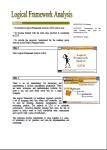
NEBIU, B. (2002): Developing Skills of NGOs, Project Proposal Writing. Szentendre: The Regional Environmental Centre for Central and Eastern Europe URL [Accessed: 07.08.2010]This presentation gives an introduction to the Logical Framework Analysis (LFA) and its uses, so the readers will become familiar with the main steps in conducting LFA. It also gives the necessary background for to prepare the Project Planning Matrix.
UNSO (2000): Logical Framework Analysis. Beirut (Lebanon): Office to Combat Desertification and Drought (UNSO). Presentation at the Capacity Building Workshop for Dryland Management, May 3-5 2000. [Accessed: 06.08.2010] PDFLink to the website of British Broadcasting Cooperation, which has covered an interesting news on cloth filter and its relation to cholera death with views of an expert.
This weblink contains descriptions of different water treatment methods and a comparison on their effectiveness.
German engineers have developed a high-rate processing plant that generates biogas from sewage.
EDIE NEWSROOM (2002): Germany boosts biogas from new sewage treatment plant. URL [Accessed: 06.08.2010]This short tutorial presents a three stages process to prepare the Logical Framework Matrix, with examples and tips.
BOND (2003): Logical Framework Analysis. London: BOND (Networking for International Development) URL [Accessed: 06.08.2010]A French carbon dealer (ecosur) has registered a waste-to-energy carbon-offset project in Côte d'Ivoire under the Kyoto Protocol's Clean Development Mechanism. The project is based on the anaerobic digestion of municipal solid waste. It's the first CDM project in the West African Economic and Monetary Union (UEMOA), and one of the few in sub-Saharan Africa outside of South Africa.
The paper presents the findings of a survey of 70 households using compost bins in Gampaha Municipality. During the study two compost samples from each of the bins were also tested.
LEKAMMUDIYANSE, L.M.M.U. ; GUNATILAKE, S.K. (2009): Efficiency of the Household Compost bin as a Waste Management Technique in Sri Lanka . In: International Journal of Basic & Applied Sciences IJBAS-IJENS: Volume 10 , 89-94. URL [Accessed: 05.08.2010]This study evaluated the feasibility of using anaerobic pre-treatment before aerobic polishing treatment for high-strength industrial wastewater (BOD values ranging form 200 to 5000 mg/L). The results indicated an economic feasibility at water strengths above 1000 mg/L, but treatability evaluation would be required for every specific industrial wastewater to confirm the technical feasibility.
ECKENFELDER, W.W. ; PATOZKA, J.B. ; PULLIAM, G.W. (1988): Anaerobic Versus Aerobic Treatment in the USA. In: Proceedings of the 5th International Symposium of Anaerobic Digestion: , 105-114 . URL [Accessed: 05.08.2010]PDF-presentation on biogas technology basics and its potential for sustainable energy supply in rural areas.
NEMA, P.P. (n.y): Biogas Technology for Poverty Reduction and Sustainable Development. In: International Seminar on Biogas Technology for Poverty Reduction and Sustainable Development: URL [Accessed: 05.08.2010]This paper describes a household composting project implemented by SEVENATHA in Dehiwala Mt. Levenia Municipal Council near Colombo in Sri Lanka with support from UNDP.
PREMAKUJMARA, D.G.H. (2000): Compost Bins as an Alternative Solution to the Problem of Household Waste Problem in Urban Areas. URL [Accessed: 05.08.2010]Article on vermicomposting in the Global Oneness Commitment encyclopedia.
A "Sustainable Sanitation Practice" journal by Ecosan Club, focussing on the use of urine and presenting some case studies.
ECOSAN CLUB (2010): Use of Urine. (= Sustainable Sanitation Pracice , 3 ). Vienna: Ecosan Club URL [Accessed: 05.08.2010]