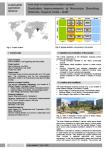
This case study reports design and construction of UDDTs at 3 primary boarding schools (with up to 210 pupils each) in rural Gujarat, India. The “compost” (i.e. desiccated faeces and cover material) and urine are applied as soil conditioner and nitrogen-rich liquid fertilizer to flower beds, kitchen gardens, etc.
WAFLER, M. (2009): Sanitation Improvements at Navsarjan Boarding Schools, Gujarat, India – Draft. (= SuSanA - Case Studies ). Eschborn: Sustainable Sanitation Alliance (SuSanA) URL [Accessed: 11.08.2010]Library
Green Toilet Talks (Part 2): A Documentary on Ecological Sanitation, explaining compost toilets
This case study reports pilot-scale implementation of UDDTs for eight households in Arusha, Tanzania. The UDDT technology was adopted from the NGO EEPCO (Environmental Engineering and Pollution Control Organization), and chosen due to the fact that the structure is permanent and there is the possibility of using the products from the toilet for local agriculture. Urine is used at the farms around the households as fertilizer.
SENZIA, M.A. (2010): Urine Diversion Dehydration Toilets for Households, Arusha, Tanzania – Draft. (= SuSanA - Case Studies ). Eschborn: Sustainable Sanitation Alliance (SuSanA) URL [Accessed: 11.08.2010]This document is an example of a community action plan in Ache. The document gives a good introduction to the community action plan and explains it principles and how to apply.
UNDEP (n.y): Ache-Nias Settlement Support Program. ANSSP Guidelines. CAP community action plan and Village Mapping. [Accessed: 11.08.2010] PDFPublication database from the SANDEC/EAWAG on co-composting of organic waste and faecal sludge.
Homepage of a Swedish urine diversion flush toilet supplier (only in Swedish).
This is the main homepage of the SANIRESCH project (SANItaryRecycling ESCHborn) which focuses on the treatment and recycling of the urine, brown- and greywater collected at the headquarters of the German Technical Cooperation (GTZ) GmbH in Eschborn, Germany.
PDF-presentation on urine diversion flush toilet systems at the GTZ headquarter.
RUED, S. ; WERNER, C. (2007): Ecological sanitation within GTZs main building in Eschborn - A demonstration and research project. In: Proceedings of the International Conference on Sustainable Sanitation: Eco-Cities and Villages, 26-31 August 2007, Dongsheng/Erdos: URL [Accessed: 10.08.2010]This site explains what a problem tree is, when and how to use this method and contains some good examples.
In 1994 the BSU (“Office for urban development and environment”) developed a general concept for the construction and maintenance of the public toilets in order to reduce annual operation and maintenance costs. All urinals installed in Hamburg’s public toilets today are waterless urinals (instead of conventional water flushed urinals which use 4-6 L per flush). In eleven urinal sheds, urine storage tanks were also installed. This urinal sheds have reduced costs than the other public urinals and it is possible, that the collected urine will be used in agriculture in the future.
WINKER, M. GROENWALL, P.N. (2010): Waterless urinal sheds in the inner city, Hamburg, Germany. (= SuSanA - Case Studies ). Eschborn: Sustainable Sanitation Alliance (SuSanA) URL [Accessed: 10.08.2010]This document gives a good overview why and how to conduct a problem tree analysis.
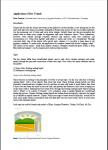
FOODGRAINS BANK (n.y): The Problem Tree. (= Infosheet 103 ). Winnipeg: Canadian Foodgrains Bank URL [Accessed: 10.08.2010]Short description on the use of dry urinals in Germany based on long term testing.
DEMIRIZ, M. (2005): Application of Dry Urinals Study Report. Gelsenkirchen: Gelsenkirchen University of Applied Sciences URL [Accessed: 10.08.2010]This document contains construction procedures for sewer systems and contains indications for each step and element (based on the example of Hilton Head Island).
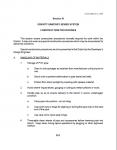
HHPSD (2000): Section XI: Gravity Sanitary Sewer System. Construction Procedures. In: HHPSD (2000): Administrative Procedures and Guidelines for Water and Sanitary Sewer System Desig. . URL [Accessed: 10.08.2010]International supplier of urine diversion composting toilets.
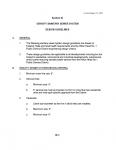
Technical characteristics and dimensions for designing a gravity sewer system (based on the example of the Hilton Head Island).
HHPSD (2000): Section IX: Gravity Sanitary Sewer System. Design Guidelines. In: HHPSD (2000): Administrative Procedures and Guidelines for Water and Sanitary Sewer System Desig. . URL [Accessed: 10.08.2010]Homepage of a Swedish urine diversion flush toilet supplier.
Novaquatis – a cross-cutting Eawag research project was concerned with urine source separation as a new element in wastewater management.