Library
This study suggests a social business format, founded on social entrepreneurship for the water sector, which appears suitable in Bangladesh. The paper provides an overview of a successful social business format composed from the nine cases of social business enterprises and the eight non-profit social enterprises in the water sector. Similarities between the social businesses’ formats indicated by the social business enterprises’ cross-case analysis include business mission, market exploitation, direct relationship dynamics and the basis for differentiation.
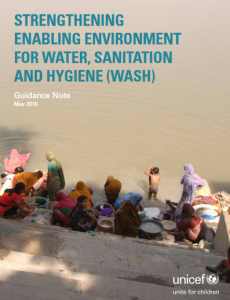
HOQUE, M. ; NAHID, K. (2015): Business Format in Social Entrepreneurships for Bangladesh’s Water Sector. In: Journal of Global Entrepreneurship Research : Volume 5 URL [Accessed: 20.04.2018] PDFThis Position Paper addresses three key issues that are receiving limited attention in the water and sanitation sector discussions on (blended) finance:
- The lack of finance for strengthening the enabling environment
- The untapped use of micro and blended finance
- The inequities in allocation of finance in the sector
This paper showcases innovative microfinance approaches to bring affordable safe water to the poor. In Kenya, a collaborative program is bringing together community-based organizations and micro-lenders to provide better water services to poor people and generates lessons for similar initiatives.
MEHTA, M. VIRIEE, K NJOROGE, S. (2007): Helping a New Breed of Private Water Operators Access Infrastructure Finance: Microfinance for Community Water Schemes in Kenya. (= 25 ). Washington: World Bank URL [Accessed: 18.04.2018] PDFThis paper examines how monitoring and evaluation has been strengthened rural water supply programmes in Uganda in recent years and what various challenges are still remaining, considering their implications for realising the human right to water.
QUIN, A. BALFORS, B. KIELLÉN, M. (2016): Monitoring and Evaluation of Rural Water Supply in Uganda: Implications for Achieving the Human Right to Water. In: Riedel, E. ; Rothen, P. (2006): The Human Right to Water. 33-54. URL [Accessed: 18.04.2018]A broad collection of impact measurement tools and indicators designed to consolidate otherwise fragmented impact measurement and management (IMM) resources and direct users to those that are best tailored to their needs.
GLOBAL IMPACT INVESTORS NETWORK (2018): Impact toolkit. URL [Accessed: 18.04.2018]