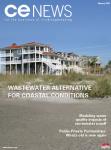
In the coastal area of Holden Beach (North Carolina), an AIRVAC vacuum wastewater collection system offers installation and operation advantages compared with gravity systems.
GARRET, C.S. (2008): Wastewater Alternative for Coastal Conditions. ceNEWS URL [Accessed: 29.05.2019]Library
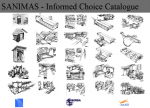
This informed choice catalogue for community based wastewater treatment technologies helps to identify suitable sanitation options and facilitates the assessment of different sanitation system components with regard to stakeholder preferences. A powerful tool for technical bottom-up planning giving overall information about technical options at a "glance".
SANIMAS (2005): Informed Choice Catalogue. pdf presentation. BORDA and USAID URL [Accessed: 29.05.2019]These pages describe advantages, applications, the functional principle and technical components of vacuum sewer systems.
ROEDIGER (2007): RoeVac Vacuum Sewer System. Hanau: Roediger Vacuum GmbH URL [Accessed: 29.05.2019]Kennedy/Jenks Consultants was asked to solve a common waterfront problem – failing septic systems. After analysing the situation, the experts chose a grinder pump system.
MAYHEW, C. FITZWATER, R. (1998): Engineering Low Pressure Grinder Pump Sewer Systems. United States: Kennedy/Jenks Consultants URL [Accessed: 29.05.2019]This paper summarise the most common types of field failure modes in water supply mains and pressure sewers and associated fittings and appurtenances.
WSAA (2003): Common Failure Modes in Pressurised Pipeline Systems. Melbourne and Sidney: Water Services Association of Australia URL [Accessed: 29.05.2019]On this link you can find a short movie how a vacuum sewer system works.
These specifications give the minimum requirements for installation of pressure sewer lines, force mains and appurtenances in the City of Tullahoma, Tennessee.
TUB (2014): Design Criteria and Specifications for Pressure Sewers, Force Mains, Grinder Pumps and Appurtenances. Tullahoma: Tullahoma Utility Board (TUB) URL [Accessed: 29.05.2019]This wastewater technology fact sheet is a detailed description of the pressurised sewer system. This factsheet describes the pressurised sewer system as an alternative option to conventional sewers. It describes the system as well as advantages/disadvantages, performance, costs and applicability.
U.S. EPA (2002): Pressure Sewer. Pennsylvania: United States Environmental Protection Agency (US EPA) URL [Accessed: 29.05.2019]Over the coming 90 years, combined sewer systems will be phased out in the Municipality of Aalborg. Instead, the Municipality will introduce separate systems for stormwater and sewage.
LADEN, B. (2010): No more overloaded sewer systems. Copenhagen: Information Center for Climate Change Adaptation, Danish Ministry of Climate and Energy, Danish Energy Agency URL [Accessed: 28.05.2019]A study on management and institutional aspects regarding the challenges and possible improvements in managing faecal sludge.
STRAUSS, M. MONTANGERO, A. (2002): FS Management – Review of Practices, Problems and Initiatives. London and Duebendorf: DFID Project R8056, Capacity Building for Effective Decentralised Wastewater Management, Swiss Federal Institute of Aquatic Science (EAWAG), Department of Water and Sanitation in Developing Countries (SANDEC) URL [Accessed: 28.05.2019]The purpose of this document is to disseminate the simplified sewer technology more widely in the developing world, so that it can be used in peri-urban sanitation programmes and projects to improve health of poor communities. The document contains chapters on theory, planning and also practical advice.
MARA, D. SLEIGH, A. (2001): PC Based Simplified Sewer Design. Leeds: University of Leeds URL [Accessed: 28.05.2019]This document is the final report of the MAPET project in Dar es Salaam, Tanzania. Project objectives were to contribute to the improvement of environmental sanitation in unplanned areas by facilitating an effective and hygienic pit emptying services, and to improve the informal traditional pit emptying method by making it more efficient and hygienic.
MULLER, M.S. RIJNSBURGER J. (1992): MAPET. A neighbourhood based pit emptying service with locally manufactured hand pump equipment in Dar es Salaam, Tanzania. Gouda: WASTE advisers on urban environment and development URL [Accessed: 28.05.2019]The Henderson Water Utility (HWU) webpage contains useful information which shows the difference between combined and separated sewer systems.
This factsheet deals with technical aspects of gravity sewers: applicability, advantages and disadvantages, design criteria, performance, O&M, costs, etc.
U.S. EPA (n.y): Sewers, Conventional Gravity. (= Collection Systems Technology Fact Sheets ). United States Environmental Protection Agency (EPA) URL [Accessed: 28.05.2019]This document was orginially presented for MSc Course on "Renewable Energy and the Environment” at the University of Reading. It present basic therotical principals for the technical design of biogas burners.
FULFORD, D. (1996): Biogas Stove Design. A short course. Kingdom Bioenergy Ltd.; University of Reading URL [Accessed: 28.05.2019]This technical brief describes several possibilities of emptying pit latrines and helps to find the most suitable method.
PICKFORD, J. SHAW, R. (1997): Emptying Pit Latrines. (= Technical Briefs, No. 54 ). Loughborough: Water and Environmental health at London and Loughborough (WELL) URL [Accessed: 28.05.2019]This short document describes the functioning of the gulper technology to empty pit latrines or septic tanks.
IaW (2007): The Gulper – a manual latrine/drain pit pump. Phnom Penh/Casteren: Ideas at Work (IaW) URL [Accessed: 28.05.2019]