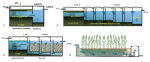
This work seeks to expand upon the body of knowledge pertinent to enhance the treatment efficacy of Imhoff tanks within Honduras. It also includes a definition for what an Imhoff tank is and explanation of how the system works.
McLEAN, R.C. (2008): Honduras Wastewater Treatment: Chemically Enhanced Primary Treatment and Sustainable Secondary Treatment Technologies for Use with Imhoff Tanks. Pomona: California State Polytechnic University URL [Accessed: 01.06.2019]Library
This site is based on the book “Home Composting Made Easy,” which has sold more than one million copies in the US.
Factsheet on the operation and maintenance of vermi-composts.
DICKERSON, G. (2004): Vermicomposting. Guide H-164. New Mexico: New Mexico State University (NMSU), Cooperative Extension Service, College of Agriculture and, Home Economics URL [Accessed: 01.06.2019]This 12-page factsheet reflects the existing management systems practiced in various areas of Nepal in managing solid waste and contains initiatives of Municipalities; national and local NGOs/CBOs; public and private entities. The paper helps to transfer the lessons and existing practices regarding solid waste management and encourages urban, peri-urban and emerging towns for similar initiatives in urban sanitation.
WATERAID NEPAL ; ENPHO (2008): Solid Waste Management in Nepal. Facsheet. Kathmandu: WaterAid Nepal Environment and Public Health Organization (ENPHO) URL [Accessed: 01.06.2019]All about dry urine diversion toilets, from the principles, design, construction and operation
DEGENER, S. SAMWEL, M. GABIZON, S. (2006): Urine Diverting Toilets Principles, Operation and Construction. Utrecht/Munich: Women in Europe for a Common Future (WECF) URL [Accessed: 01.06.2019]This 4-page factsheet provides information on making composting by worms at household level.
KOFF, J.P. de LEE, B. MICKELBART, M.V. (2008): Household Composting with Worms. (= Home and Environment, HENV-104-W ). Purdue University URL [Accessed: 01.06.2019]The earthquake that struck Haiti in January 2010 and the cholera epidemic that followed from October 2010, resulted in one of the largest humanitarian relief efforts in history. Many of the internally displaced persons camps were located in urban neighbourhoods with high groundwater, making onsite sanitation extremely difficult. In response to these unique conditions a small local organization, SOIL, partnered with Oxfam Great Britain to pilot urine diversion EcoSan toilets in camps throughout Port-au-Prince. This briefing paper covers this pilot project from March 2010 through March 2012. During that 2-year period, SOIL’s toilets served over 20,000 people and treated more than 400,000 gallons of human waste, converting it to rich compost.
KILBRIDE, A. KRAMER, S. PRENETA, N. (2013): Delivering Water, Sanitation and Hygiene Services in an Uncertain Environment: Piloting Ecological Sanitation (EcoSan) in the Emergency Context of Port-au-Prince, Haiti, after the 2010 Earthquake. (= WECD International Conference , 36 ). Oakland: Sustainable Organic Integrated Livelihoods (SOIL) URL [Accessed: 01.06.2019]This is the case of a small farmer who chose to be different from the typical resource-poor farmers struggling to make a living in the degraded drylands. His deep ‘love for life’ has not only earned him a decent living, but more importantly, it has inspired many other farmers to emulate him.
AME FOUNDATION (2007): Vermi-Composting brings better yields and returns – A farmer shows the way. (= AMEF Case Study Series 6 ). Bangalore: AME Foundation URL [Accessed: 01.06.2019]This third publication in the series aims to capture the current trends in waste management with the assistance of 20 case studies from around the world.
UN-HABITAT (2010): Solid Waste Management in the World’s Cities. Pre-publication presentation. Nairobi: United Nations Human Settlements Programme (UN-HABITAT) URL [Accessed: 01.06.2019]This publication presents the findings of a research on “Promoting Composting as a Business for the Urban Poor” in the form of guidelines based on case studies from India, Bangladesh, Sri Lanka, Pakistan and Ethiopia.
ALI, M. (2004): Sustainable Composting Case Studies and Guidelines for Developing Countries. Leicestershire: Water Engineering and Development Centre, Loughborough University URL [Accessed: 01.06.2019]This article presents the findings of a survey of 76 home compost bin users in Kathmandu, which was done about one year after the compost bins were sold at a subsidized rate to residents by Kathmandu Metropolitan City by the municipality.
TULADHAR, B. (2004): User Survey Indicates the Success of “Saaga” Home Compost Bins. In: ENPHO Magazine 2004: URL [Accessed: 01.06.2019]The website of BORDA explains what DEWATs are, describes why DEWATS are necessary, shows good practices for hospitals, agroindustries and communities and lists benefits of decentralized wastewater treatment.
BORDA (2014): DEWATS / Decentralized Wastewater Treatment. Bremen: Bremen Overseas Research and Development Association (BORDA) URL [Accessed: 31.05.2019]Short general and technical description on single-vault UDDTs.
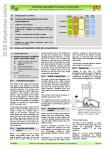
GTZ (2006): Dehydration Toilets. Single-vault Dehydration Toilets with Urine-diversion . (= Technical Data Sheets for Ecosan Components, 02-B2 ). Eschborn: German Agency for Technical Cooperation (GTZ) GmbH URL [Accessed: 31.05.2019]A 2-page factsheet summarizing the EcoSanRes ‘Guidelines on the Use of Urine and Faeces in Crop Production’ publication with short information on urine as a fertilizer, application rates etc.
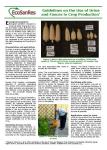
ECOSANRES (2008): Guidelines on the Use of Urine and Faeces in Crop Production. Factsheet. (pdf presentation). (= EcoSanRes Factsheet , 6 ). Stockholm: Stockholm Environment Institute URL [Accessed: 31.05.2019]This presentation offers the chance to learn about how to make different kinds of pedestals.
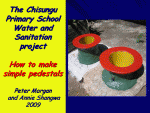
MORGAN, P. SHANGWA, A. (2009): How to Make Simple Pedestals. The Chisungu Primary School Water and Sanitation project. Stockholm : Ecological Sanitation Research (EcoSanRes), Stockholm Environment Institute (SEI) URL [Accessed: 31.05.2019]Case study from urine crop trials in Arba Minch, Ethiopia, showing the possibility for improving soil fertility and increasing crop yield.
KASSA, K. ; MEINZINGER, F. ; ZEWDIE, W. (2010): Urine diversion dry toilet (UDDT) for Agafari´s household Arba Minch, Ethiopia. In: ECOSANCLUB: URL [Accessed: 31.05.2019]Short general and technical description on double-vault UDDTs.
GTZ (2006): Dehydration Toilets. Double-vault Dehydration Toilets with Urine-diversion . (= Technical Data Sheets for Ecosan Components, 02-B1 ). Eschborn: German Agency for Technical Cooperation (GTZ) GmbH URL [Accessed: 31.05.2019]This is a short presentation about an innovative sanitation solution in floating communities in Cambodia.
HAGAN, J. BROWN, M. (2011): Design for Sustainable Sanitation - Floating Toilets. (= Pdf Presentation ). Phnom Penh and Melbourne: Live and Learn Environmental Education and Engineers without Borders URL [Accessed: 31.05.2019]Description of some examples of construction plans for dehydration toilets.
GTZ (2006): Dehydration Toilets. Dehydration toilets Construction Plans – selected examples. (= Technical Data Sheets for Ecosan Components, 02-C1 ). Eschborn: German Agency for Technical Cooperation (GTZ) GmbH URL [Accessed: 31.05.2019]This lecture note, which is specifically prepared for the diploma level environmental health students, addresses the problem of human waste disposal or management. Different appropriate latrine technologies and on-site wastewater containment and treatment facilities are listed; their construction methods and the advantages/ disadvantages of each are included.
FARIS, K. ALEMAYEHU, T. WUBSHET, M. HAILU, D. (2002): Human and other Liquid Waste Management. Jimma and Atlanta: Jimma University URL [Accessed: 31.05.2019]