This brochure gives you an overview about several wastewater treatment solutions.
AQWISE (2010): Integrated Water & Wastewater Treatment Solutions. Herzliya: Aqwise - Wise Water Technologies Ltd URL [Accessed: 03.06.2019]Perspectives are different frameworks from which to explore the knowledge around sustainable sanitation and water management. Perspectives are like filters: they compile and structure the information that relate to a given focus theme, region or context. This allows you to quickly navigate to the content of your particular interest while promoting the holistic understanding of sustainable sanitation and water management.

This brochure gives you an overview about several wastewater treatment solutions.
AQWISE (2010): Integrated Water & Wastewater Treatment Solutions. Herzliya: Aqwise - Wise Water Technologies Ltd URL [Accessed: 03.06.2019]
This technical factsheet describes the treatment of wastes through anaerobic digestion and biogas production at large-scale in a very comprehensive way. The treatment of different wastes, including sewage sludge, agricultural and industrial wastes or solid municipal wastes, is emphasised.
GATE (2000): Anaerobic Methods of Waste Treatment. Technical Information W2e. Frankfurt (Germany): German Agency for Technical Cooperation GmbH (GTZ) and German Appropriate Technology Exchange (GATE) URL [Accessed: 03.06.2019]
Exhaustive report on technological, operational and economic aspects of decentralised waste water treatment systems. Spreadsheet examples support the reader in designing and planning waste water treatment systems components.
SASSE, L. BORDA (1998): DEWATS. Decentralised Wastewater Treatment in Developing Countries. Bremen: Bremen Overseas Research and Development Association (BORDA) URL [Accessed: 03.06.2019]
Case study about a combined pond / constructed wetland system in cold climate for 160 peoples, a dairy and food processing workshop, a bakery and a laundry. A vertical flow constructed wetlands was installed for pre-treatment, followed by a deep enhanced facultative pond, three aerated stabilization ponds, a planted sand filter and finally tow horizontal-flow constructed wetlands.
BROWNE, P.D. ; JENSSEN, P.D. (2005): Exceeding Tertiary Standards with a Pond/Reed Bed System in Norway. In: Journal of Water Science and Technology: Volume 51 , 299-306. URL [Accessed: 03.06.2019]
Scientific article on advanced integrated wastewater pond systems.
GREEN, F.B. ; BERNSTONE, L.S. ; LUNDQUIST, T.J. ; OSWALD, W.J. (1996): Advanced Integrated Wastewater Pond Systems for Nitrogen Removal. In: Water Science and Technology : Volume 33 , 207-217. URL [Accessed: 03.06.2019]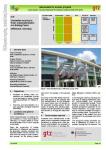
This project aimed to reduce drinking water consumption and wastewater amount to be discharged to sewer through recycling greywater for internal re-use in a four star hotel in Germany. A new greywater biological treatment technology was trailed and demonstrated for the first time: Greywater from baths/showers in the guest rooms is separately collected and transferred to settling tanks. After preliminary sedimentation the greywater is treated continuously in a six-stage Rotating Biological Contactor (RBC) system.
GTZ (2006): Greywater recycling in Hotel Arabella Sheraton Am Buesing Palais Offenbach, Germany. (= data sheets for ecosan projects , 18 ). Eschborn: German Agency for Technical Cooperation (GTZ) URL [Accessed: 03.06.2019]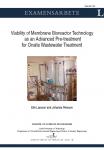
This master thesis was a part of a research program at Colorado School of Mines. The objectives are threefold. Initially, the purposes were to increase the state of the knowledge using MBR in wastewater treatment and evaluate a pilot-scale MNR during start-up and steady state conditions, in respect of nutrient and organic compounds removal and overall system performance. A second objective was to evaluate the performance of the MBR during different stress conditions (power failure, high loading rate and high flux) in respect of nutrient and organic compounds removal and overall system performance. A third objective was to investigate permeate quality with respect of nutrients and organic compounds after infiltration through soil columns. The purpose was to assess if the effluent quality was suitable for direct discharge into the underlying groundwater or surface water.
LARSSON, E. PERSSON, J. (2004): Viability of Membrane Bioreactor Technology as an Advanced Pre-Treatment for Onsite Wastewater Treatment. (= Master Thesis ). Lulea: University of Technology URL [Accessed: 03.06.2019]
The information service on biogas technology has been developed and produced on the behalf of the GTZ project Information and Advisory Service on Appropriate Technology (ISAT). Volume I tells you all you need to get an overview on biogas sanitation systems, from history over process and operation parameters to social, political and cultural issues.
ISAT ; GTZ (1999): Biogas Basics. (= Biogas Digest , 1 ). Information and Advisory Services on Appropriate Technology (ISAT) and German Agency for Technical Cooperation GmbH (GTZ) URL [Accessed: 03.06.2019]
This paper sets out a framework for the delivery of non-sewered sanitation services that last, are accessible to all and are at scale. The framework is based on IRC International Water and Sanitation’s (IRC) experience and lessons learnt from its engagement in non-sewered sanitation service at scale.
VERHAGEN, J. CARRASCO, M. (2013): Full-Chain Sanitation Services That Last. Non-Sewered Sanitation Services. The Hague: International Water and Sanitation Center (IRC) URL [Accessed: 03.06.2019]
Activated Sludge and Aerobic Biofilm Reactors is the fifth volume in the series Biological Wastewater Treatment. The first part of the book is devoted to the activated sludge process, covering the removal of organic matter, nitrogen and phosphorus. A detailed analysis of the biological reactor (aeration tank) and the final sedimentation tanks is provided. The second part of the book covers aerobic biofilm reactors, especially trickling filters, rotating biological contractors and submerged aerated biofilters. For all the systems, the book presents in a clear and informative way the main concepts, working principles, expected removal efficiencies, design criteria, design examples, construction aspects and operational guidelines.
SPERLING, M. von (2007): Activated Sludge and Aerobic Biofilm Reactors. (= Biological Wastewater Treatment Series , 5 ). London: International Water Association (IWA) Publishing URL [Accessed: 03.06.2019]
This paper discusses the Membrane Bioreactor (MBR) process and its suitability for Australian water reuse applications. With the current focus on water reuse projects and the role they play in the water cycle, the search for cost competitive advanced wastewater treatment technologies has never before been so important.
CHAPMAN, S. LESLIE, G. LAW, I. (n.y): Membrane Bioreactors (MBR) for Municipal Wastewater Treatment – An Australian Perspective. Sidney: The University of New South Wales (UNSW) URL [Accessed: 03.06.2019]
This paper shows the effectiveness and limitations of source control sanitation concepts with pre-treatment by pre-composting tanks (Rottebehaelter) to recover the particulate fraction of nutrients from household wastewater.
GAJUREL, D.R. ; LI, Z. ; OTTERPOHL, R. (2010): Investigation of the Effectiveness of Source Control Sanitation Concepts Including Pre-Treatment with Rottebehaelter. In: Water Science and Technology : Volume 48 , 111–118. URL [Accessed: 02.06.2019]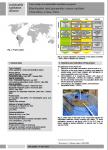
The following technologies were installed in the education centre “San Christoferus”: Constructed wetland for greywater treatment; compost filter for blackwater treatment; and double-vault urine diversion dehydration toilets. The aim of the project was to reduce water consumption and limit the wastewater flowing to the public sewer system, of which the largest part is discharged without treatment.
HOFFMANN, H. RUEN, S. SCHOEPE, A. (2009): Blackwater and greywater reuse system, Chorrillos, Lima, Peru. (= SuSanA - Case Studies ). Eschborn: Sustainable Sanitation Alliance (SuSanA) URL [Accessed: 02.06.2019]
This paper explains the problem of conventional sanitation systems and provides solutions. How can nutrients be reused, how can wastewater be treated ecologically and how should water be managed.
OTTERPOHL, R. (2000): Design of Highly Efficient Source Control Sanitation and Practical Experiences. Wageningen: EURO-Summer School DESAR URL [Accessed: 02.06.2019]
All about dry urine diversion toilets, from the principles, design, construction and operation
DEGENER, S. SAMWEL, M. GABIZON, S. (2006): Urine Diverting Toilets Principles, Operation and Construction. Utrecht/Munich: Women in Europe for a Common Future (WECF) URL [Accessed: 01.06.2019]
The earthquake that struck Haiti in January 2010 and the cholera epidemic that followed from October 2010, resulted in one of the largest humanitarian relief efforts in history. Many of the internally displaced persons camps were located in urban neighbourhoods with high groundwater, making onsite sanitation extremely difficult. In response to these unique conditions a small local organization, SOIL, partnered with Oxfam Great Britain to pilot urine diversion EcoSan toilets in camps throughout Port-au-Prince. This briefing paper covers this pilot project from March 2010 through March 2012. During that 2-year period, SOIL’s toilets served over 20,000 people and treated more than 400,000 gallons of human waste, converting it to rich compost.
KILBRIDE, A. KRAMER, S. PRENETA, N. (2013): Delivering Water, Sanitation and Hygiene Services in an Uncertain Environment: Piloting Ecological Sanitation (EcoSan) in the Emergency Context of Port-au-Prince, Haiti, after the 2010 Earthquake. (= WECD International Conference , 36 ). Oakland: Sustainable Organic Integrated Livelihoods (SOIL) URL [Accessed: 01.06.2019]
This 4-page factsheet provides information on making composting by worms at household level.
KOFF, J.P. de LEE, B. MICKELBART, M.V. (2008): Household Composting with Worms. (= Home and Environment, HENV-104-W ). Purdue University URL [Accessed: 01.06.2019]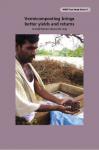
This is the case of a small farmer who chose to be different from the typical resource-poor farmers struggling to make a living in the degraded drylands. His deep ‘love for life’ has not only earned him a decent living, but more importantly, it has inspired many other farmers to emulate him.
AME FOUNDATION (2007): Vermi-Composting brings better yields and returns – A farmer shows the way. (= AMEF Case Study Series 6 ). Bangalore: AME Foundation URL [Accessed: 01.06.2019]