This article presents a review of the technologies and processes which are used for water and wastewater treatment in order to remove the various constituents of the polluting load: solids organic carbon, nutrients, inorganic salts and metals, pathogens. A second part describes the advanced processes to reuse treated municipal effluents in agriculture and industries and the main technologies used for desalination.
BOARI, G. ; MANCINI, I.M. ; TRULLI, E. (1997): Technologies for Water and Wastewater Treatment. Entradas: Séminaires Méditerranéens: Volume 31 , 261-287. URL [Visita: 22.05.2019]Library
Check out the movie about this low cost rollable water container for developing countries
This document is about the combination of ultrafiltration and reverse osmosis for the production of deionised water from surface waters.
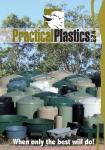
CLEVER, M. ; JORDT, F. ; KNAUF, R. ; RABIGER, N. ; RUDEBUSCH, M. ; HILKER-SCHEIBEL, R. (2000): Process Water Production from River Water by Ultrafiltration and Reverse Osmosis . Entradas: Desalination: Volume 131 , 325-336. URL [Visita: 22.05.2019]This brochure gives an overview of the large assortment of water storage plastic tank products.
PRACTICAL PLASTICS (n.y): Product Catalogue. Darwin: Practical Plastics Ltd URL [Visita: 22.05.2019]This study evaluated changes in drinking water quality resulting from an intervention that provided large closed water storage tanks (2,500-gallons) to individual homes lacking a piped water supply.
GRAHAM, J.P. ; VANDERSLICE, J. (2007): The Effectiveness of Large Household Water Storage Tanks for Protecting the Quality of Drinking Water. Entradas: Journal of Water and Health: , 307-313. URL [Visita: 22.05.2019]This document includes course contents on advanced treatment plants including suspended and dissolved solid removal, phosphate removal, dissolved organic compounds removal with different techniques.
SUBRAMANIAN, M.S. (n.y): Advanced Waste Water Treatment . Module 1.5. Entradas: NPTEL: URL [Visita: 22.05.2019]This website provides an introduction of membrane processes including microfiltration nanofiltration, and ultrafiltration.
This document gives an overview on the role of chlorination in disinfecting drinking water. It includes information on chlorine and waterborne disease, disinfection by-products, and compares chlorine to alternative disinfection methods such as ozone and ultraviolet radiation.
C4 (2003): Drinking Water Chlorination. A Review of Disinfection Issues and Practices. Chlorine Chemistry Council (C3) and Canadian Chlorine Coordinating Committee (C4) URL [Visita: 22.05.2019]This document summarises main advancements performed within European projects in the field of membrane technologies for water treatment
EC (2010): Membrane Technologies for Water Applications. Highlights from a selection of European research projects. Brussels: European Commission (EC) URL [Visita: 22.05.2019]This publication describes the combination of ozone and ultrasounds for the disinfection and discoloration of domestic wastewater treatment plant effluents for reuse purposes.
SELCUK, H. ; NADDEO, V. ; BELGIONO, V. (2007): Advanced Treatment by Ozonation and Sonolysis for Domestic Wastewater Reuse. Entradas: Proceedings of the 10th International Conference on Environmental Science and Technology: URL [Visita: 21.05.2019]Factsheet on the principles, construction, operation and maintenance of kanchan filters (for arsenic and pathogen removal) for drinking water treatment at household level.
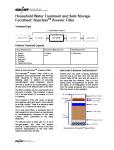
CAWST (2009): Kanchan Filter. Fact Sheet - Academic. (= Household Water Treatment and Safe Storage Fact Sheet - Academic ). Centre for Affordable Water and Sanitation Technology (CAWST) URL [Visita: 21.05.2019]These equipment packages have been devised by the Oxfam Public Health Engineering Team and others to help provide a reliable water supply, primarily for emergency situations such as in refugee camps and disaster-relief operations. The equipment is designed to be readily available, easily transported, simple to use, rapidly assembled, and fully self-contained, to provide an adequate water supply at moderate cost.
OXFAM (2000): Water, Sanitation, and Shelter Equipment. For Emergencies and Longer Term Use. Oxford: OXFAM URL [Visita: 21.05.2019]This document presents the results of a pilot study aiming at removing water micropollutants at the Lausanne (Switzerland) wastewater treatment plant.
MARGOT, J. ; MAGNET, A. ; THONNEY, D. ; CHEVRE, N. ; ALENCASTRO, F. de ; ROSSI, L. (2011): Traitement des Micropolluants dans les Eaux Uses-Rapport Final sur les Essais Pilotes a la STEP de Vidy (Lausanne). Entradas: Ed. Ville de Lausanne : URL [Visita: 21.05.2019]